Charlotte is no longer a housing bargain

Add Axios as your preferred source to
see more of our stories on Google.
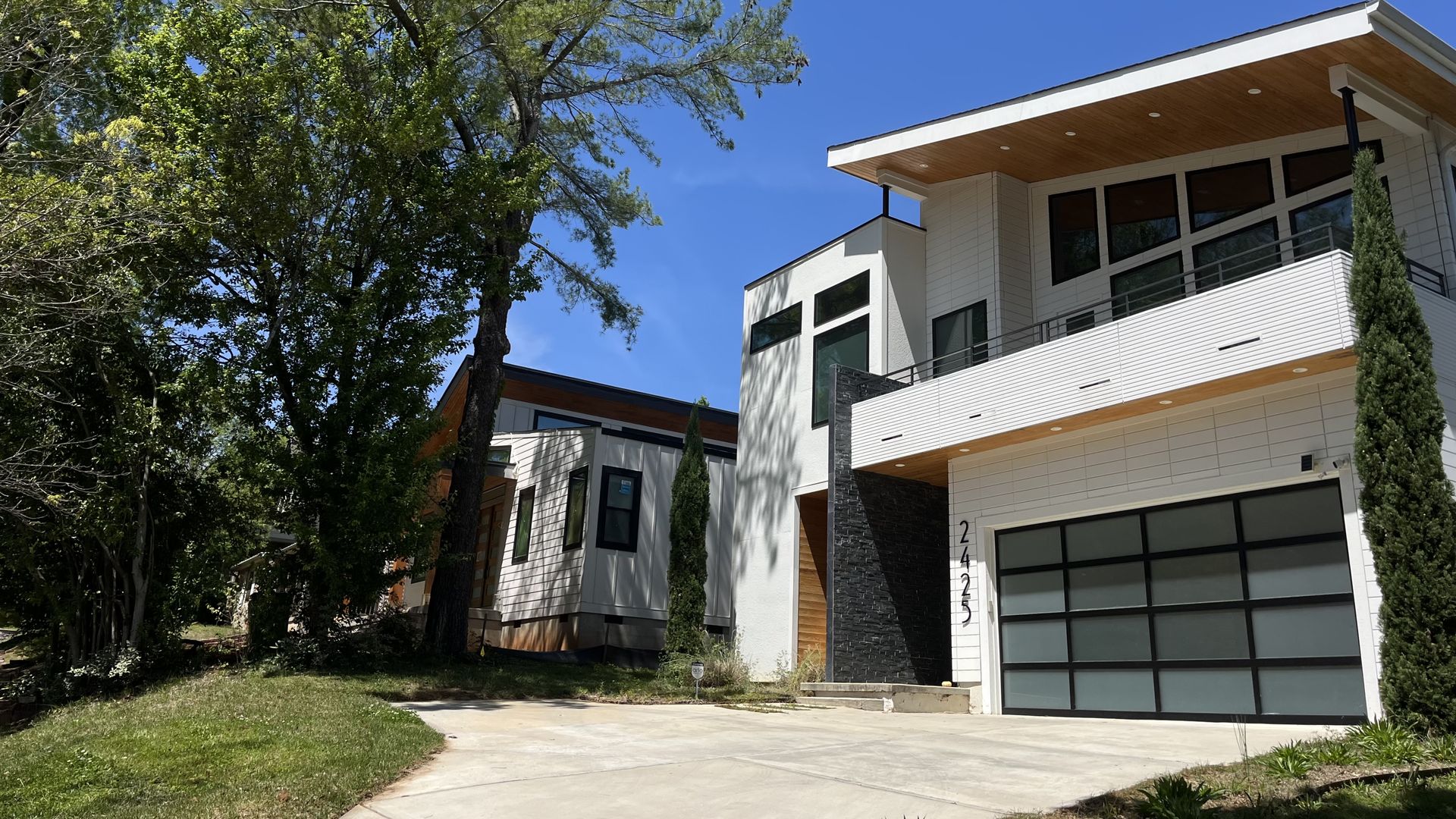
Photo: Alexandria Sands/Axios
Charlotte-area home prices now exceed the national median by about $5,000, according to a recent report from Homes.com.
Why it matters: This marks a notable flip from pre-pandemic days, when the gap between the median home price in Charlotte and nationally was significantly larger.
By the numbers: For-sale home prices in the Charlotte metropolitan area reached $385,000 in March 2025 — up about 2.7%, or $10,000, from the year before, according to Homes.com.
- That's slightly higher than the national median home price, which rose $8,000 from $372,000 to $380,000, or 2.2%, over the same period.
Flashback: In March 2019, the median home price in the Charlotte metro area was $225,000, compared to roughly $247,000 nationwide, says Chuck McShane, senior director of market analytics for CoStar and Homes.com.
Yes, but: Charlotte prices are growing slower than the 6% annual gain seen through 2024.
The big picture: Historically, Charlotte's relatively affordable real estate market has attracted out-of-state movers. But that demand from migration is now driving home price increases that outpace the rest of the country.
What they're saying: "We're still affordable compared to some of these larger markets, like larger coastal markets, major dense urban markets," McShane says. "But it is going to become a less affordable market for people who've been here for a while."
Go deeper: Charlotte homeowners stay put amid market slowdown
Zoom out: The Charlotte metro's 2.7% price growth in March tied with Dallas-Fort Worth, was behind Nashville at 2.8% and ahead of Raleigh at 2.4%, per Homes.com.
- Meanwhile, Florida markets — such as Orlando, Jacksonville and Tampa — are seeing prices drop off.
- Floridians are increasingly moving to North Carolina, contributing to the state's population growth. Plus, the rising cost of insurance is also driving coastal homeowners to list.
- Northeastern and Midwestern cities, such as Chicago and New York, lead in the largest price jumps.
What's next: McShane predicts this trend will drive more townhome and small-lot construction, as well as ramped-up development in outlying areas where land prices are cheaper.
The bottom line: "We have a lot of people who want to live here," McShane says.