Tariffs brew uncertainty for Charlotte's coffee scene

Add Axios as your preferred source to
see more of our stories on Google.
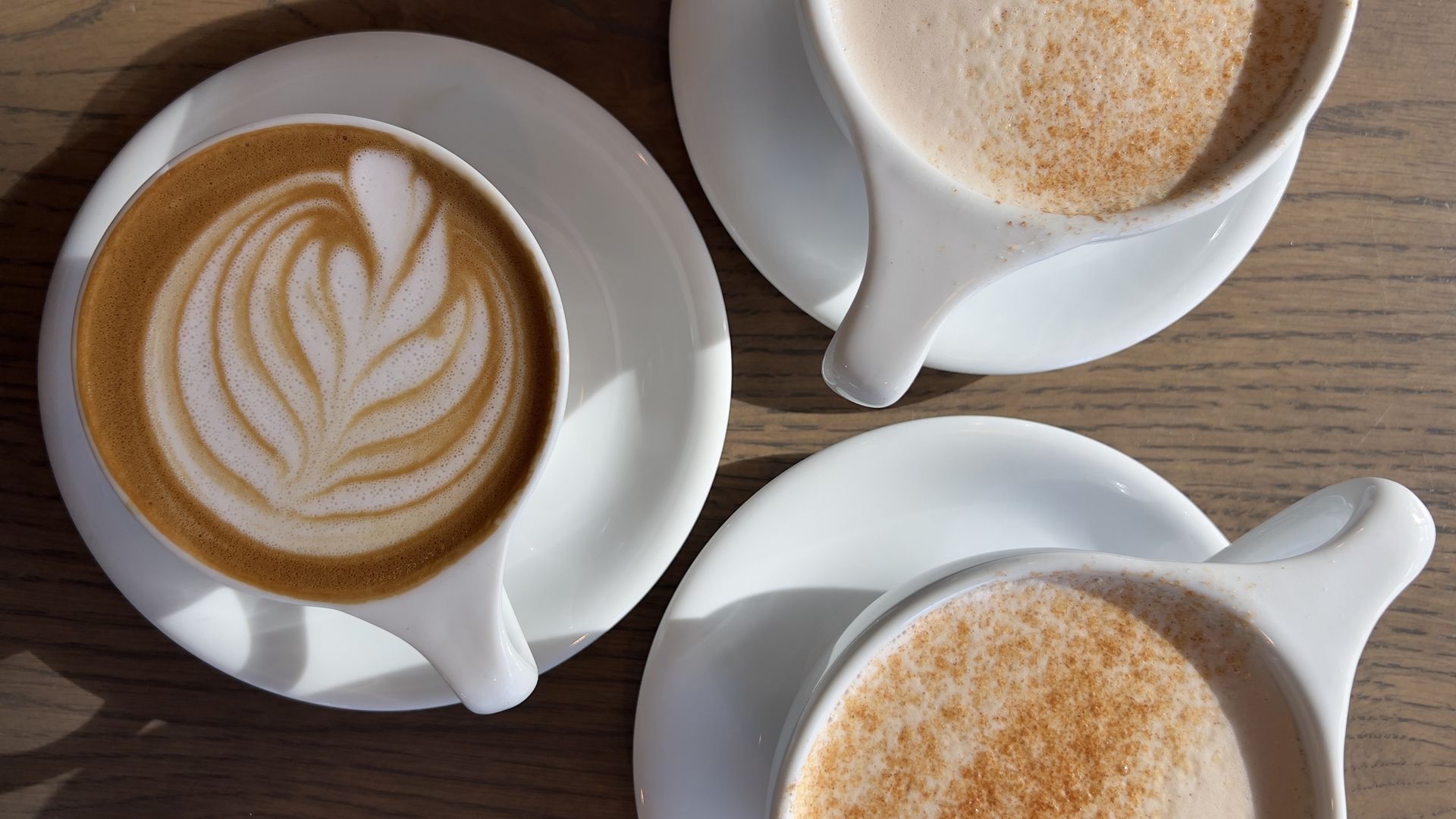
Photo: Kendra Barker
Charlotte has a booming coffee scene, but local roasters tell Axios they're feeling a one-two punch between the rising cost of beans and the Trump administration's tariffs.
Why it matters: No one wants to raise their prices, but if tariffs stick, your daily cup of coffee could go up by $1.50-$2 by the end of 2025, Hex Coffee owner Chandler Wrenn tells Axios.
Catch up quick: Several roasters tell Axios they raised their prices in the last few months because of the record-high commodity market, meaning the beans themselves have become more expensive.
- Charlotte roasters say they don't want to raise their prices again now that tariffs are in play.
State of play: President Trump issued a 90-day pause on "reciprocal" tariffs Wednesday, but kept 10% baseline tariffs on several countries and increased tariffs on China to 125%.
- "If these tariffs do go into place...then it absolutely will increase the cost to consumers, because if our green coffee goes up 10% that's a big jump for us," Night Swim owner James Yoder tells Axios.
Context: The argument for tariffs is to return production to the United States, but North Carolina, and much of the United States for that matter, isn't suitable for growing coffee beans, roasters tell Axios.
- Hawaii and Puerto Rico are the only places growing coffee here, and it's a very small fraction compared to what the rest of the world produces, according to the National Coffee Association (NCA).
- Most of the coffee coming into the United States comes from countries hit with tariffs, Yoder says.
Between the lines: Coffee grows best in what's known as the "Coffee Belt," a region around the equator between the Tropics of Cancer and Capricorn, according to the NCA.
Zoom out: Tariffs impact more than just coffee beans. Printed goods — everything from coffee bags to cups — are typically produced in China, local roasters tell Axios.
- Enderly Coffee Co. has already paid thousands of dollars due to tariffs on their bags, owner Tony Santoro tells Axios. They use a California company that prints in China. This comes after months of navigating coffee prices being at an all-time high, Santoro says.
- Meanwhile, HEX Coffee's owners have stopped working with longtime suppliers because of the tariffs. "We can't afford to work together anymore," Wrenn says.
Yest, but: Some local coffee brands, like Summit Coffee, which has 19 cafes, can offset the cost because of the size of their businesses.
- Summit Coffee owner Brian Helfrich says he's hopeful they'll navigate tariffs without having to raise prices because of them.
The bottom line: How tariffs will impact local roasters in the coming months remains unclear, but the last thing local owners want to do is offset the cost onto consumers.