Charlotte wins "Worst Economic Development Deal" award for $650M Panthers stadium renovations

Add Axios as your preferred source to
see more of our stories on Google.
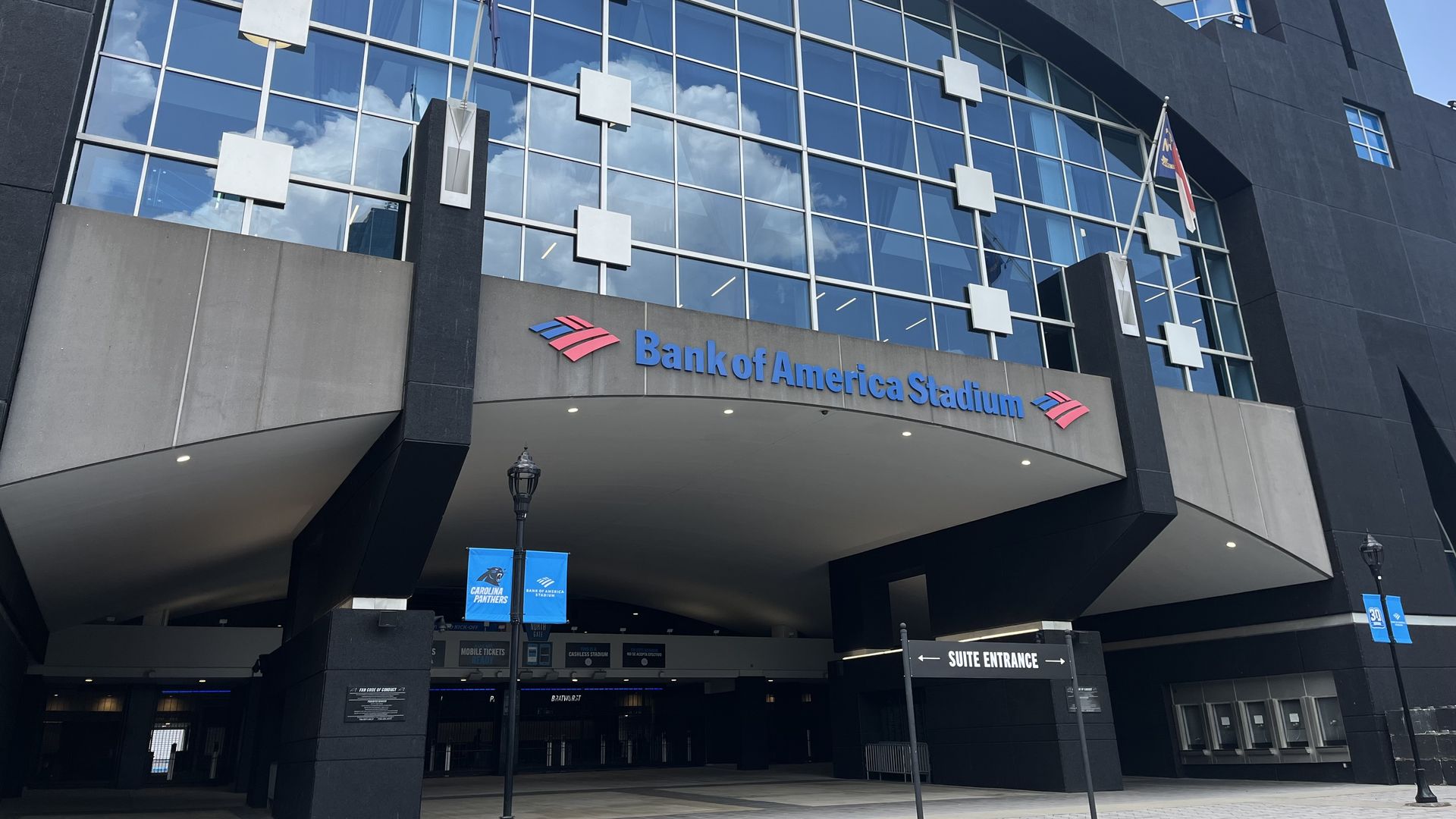
Bank of America Stadium. Photo: Alexandria Sands/Axios
The City of Charlotte's $650 million contribution to Bank of America Stadium was the nation's "Worst Economic Development Deal" of 2024, according to one watchdog group.
Why it matters: Bestowed by The Center for Economic Accountability, the award is validation (and a "told-you-so" moment) for opponents of the project and others who criticized the city's lack of transparency throughout the process.
What they're saying: "This is an incredibly expensive stadium renovation project with very flimsy economic justifications, agreed to behind closed doors with a partner who deserves plenty of due diligence," CEA president John Mozena said in a release.
- "To top it all off, they're not even getting a good football team out of it."
How it works: CEA considered economic development projects nationwide and took nominations.
- In recent years the group has presented its boondoggle award to North Carolina for its $846-plus million subsidy for a new corporate Apple campus in the Research Triangle Park, as well as Tepper's deal with Rock Hill for a Panthers headquarters and practice field facility.
Catch up quick: In June Charlotte City Council agreed to spending hospitality and tourism taxes on the Bank of America Stadium project.
- The entire $800 million undertaking includes upgraded seating, locker rooms, restrooms, sound equipment, modernized boards, an "elevated" façade and other improvements at the 1996 stadium.
- As part of the deal, Tepper Sports & Entertainment agreed to keep the Carolina Panthers and Charlotte FC in Charlotte for at least another 20 years.
Between the lines: CEA is a nonprofit advocacy organization founded in 2018 and headquartered in Michigan, according to its website. Its president is a former public relations professional.
- The award recognizes a "government subsidy of a private company in the name of 'job creation' and economic growth that goes further than any other that year across the nation to exemplify the wastefulness and ineffectiveness of economic development subsidy programs," according to a release.
The other side: Many business owners supported Panthers owner David Tepper in securing the public dollars. They argue the games and concerts at Bank of America Stadium pack hotels, restaurants and bars with paying customers.
- "As has been discussed publicly, Bank of America Stadium hosts more than 40 events per year, which attracts hundreds of thousands of people every year to our region and generates thousands of jobs and billions of dollars in economic impact," the city said in a response to the CEA award.
Yes, but: As CEA notes, economists widely agreed that sports venues' economic impacts are limited. Consumers will still spend money elsewhere, although the effect isn't as visible as in crowded sports bars or on streets on a game day.
What's next: Charlotte expects to begin negotiations in 2037 to help build a new stadium by 2046, when Bank of America Stadium is 50 years old.
- CEA highlighted UNC's Kenan Stadium and NC State's Carter-Finley as two stadiums that are older and not slated for replacement.
- "[T]he idea that sports stadiums are disposable and you need to replace them every 30 to 50 years is ridiculous," Mozena said.
The City of Charlotte's full response:
Each public-private partnership is unique depending on each market and legal and regulatory requirements specific to each jurisdiction so comparing different agreements will never be an apples-to-apples comparison. The funds being used for this project are legally required to be spent on projects to support the city's tourism economy and cannot be used for other uses such as public safety. The city conducted a number of public briefings, including a specially-called meeting to publicly discuss this agreement. As has been discussed publicly, Bank of America Stadium hosts more than 40 events per year, which attracts hundreds of thousands of people every year to our region and generates thousands of jobs and billions of dollars in economic impact.