How Harris Teeter's changed, and how it hasn't, in the 10 years since its sale to Kroger

Add Axios as your preferred source to
see more of our stories on Google.
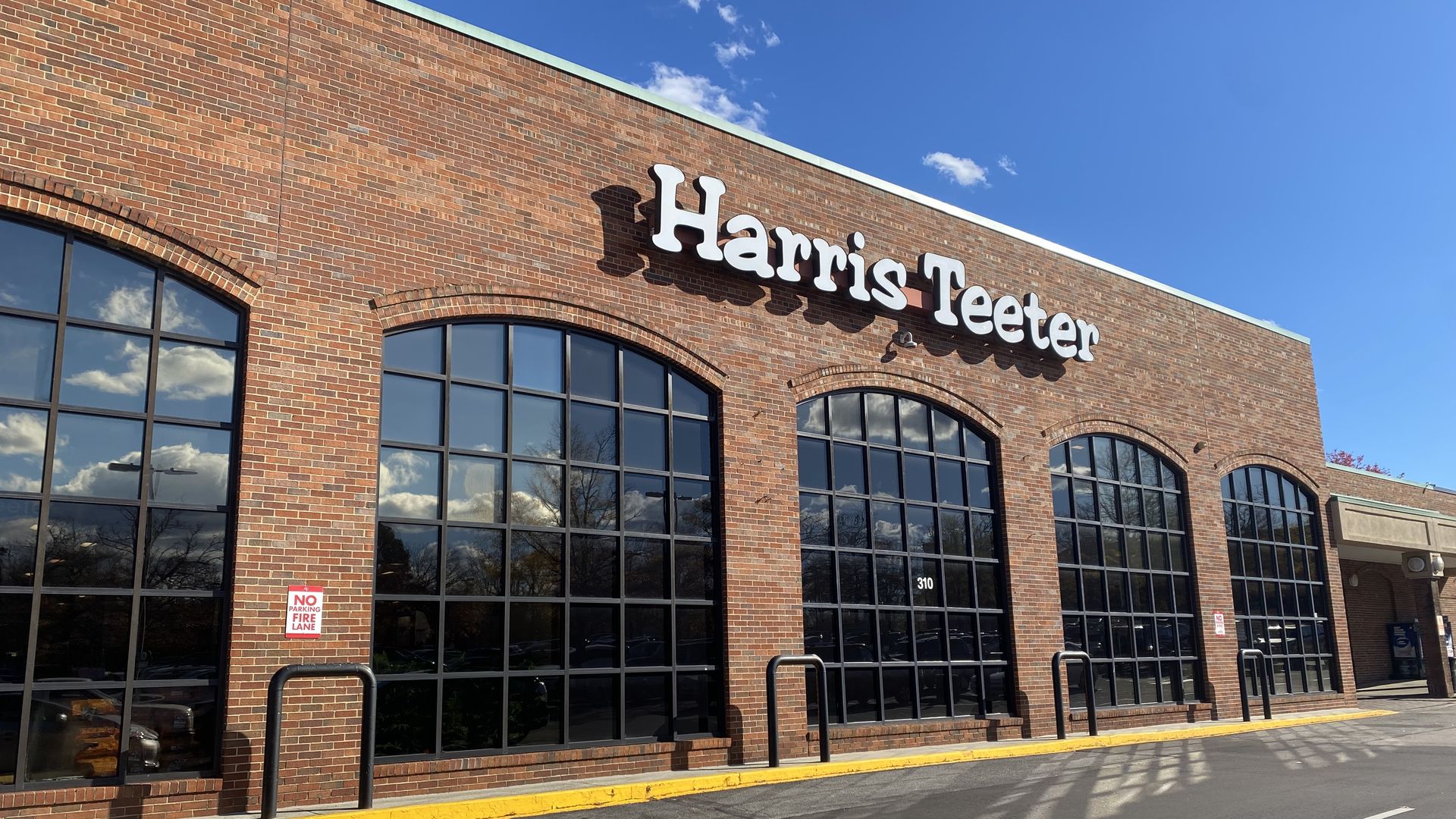
Harris Teeter in Carrboro. Photo: Katie Peralta Soloff/Axios
It's been a decade since the retail giant Kroger bought Harris Teeter. While the changes haven't been nearly as dramatic as longtime shoppers might have feared, Kroger's implemented subtle to maximize its investment and enhance the local brand's competitiveness.
Why it matters: Harris Teeter, which began as a family business more than 60 years ago, is a household name in North Carolina. Shoppers tend to have fierce loyalties to and strong opinions about their grocery stores — whether it's because of prices, selection, location or service.
- Harris Teeter is a preferred grocer in large markets like Charlotte and Raleigh, consistently ranking among the top in terms of market share.
The latest: Kroger, based in Cincinnati, continues to try to grow. It's now fighting to push forward with a $24.6 billion merger with the grocery giant Albertsons, a deal that's embroiled in several legal challenges.
Flashback: For years, Kroger-branded stores experienced flat sales in North Carolina, a highly competitive market. "They did not gain the kind of traction they were expecting," says Roger Beahm, a marketing professor at Wake Forest University.
- Instead, the retailer decided to acquire Harris Teeter in 2014 for $2.4 billion and converted many of its North Carolina Kroger-branded locations to Harris Teeter. It saw buying Harris Teeter as a way to tap into a known brand with a loyal following.
- In 2018, Kroger announced plans to leave the state, closing 14 stores in the Triangle, though eight of those were turned into Harris Teeters, ABC11 reported.
What they're saying: "Rather than try to push water uphill, [Kroger] decided to go ahead and make the acquisition ... and make that conversion of Harris Teeter[s] their strategy in this area," Beahm says.
Between the lines: After the purchase, one priority for Kroger was to not change too much, he adds.
- Some key features that made Harris Teeter so attractive were its solid business performance, dedicated customer base and good loyalty programs. Kroger didn't want to disrupt those things.
- Harris Teeter's headquarters remain in Matthews, for instance. And visible changes to the stores have been minimal.
Zoom in: Kroger introduced a few of its own private label brands that have higher profit margins than national brands, including the Simple Truth organic line, to Harris Teeter following the merger.
- Still, you won't find any "Kroger"-specific branded products at Harris Teeter stores.
- Kroger, known for its data analytics, has also worked to enhance its marketing and customized promotion to loyal Harris Teeter customers by tapping into data it collects about their shopping habits, Beahm says.
- Among the less visible changes: Kroger's used its massive supply chain to improve logistics and trim costs for Harris Teeter, and it's tried to bolster the online shopping experience.
Zoom out: North Carolina's rapid population growth has turned the state into a hotbed for fierce grocery competition in recent years.
- Two of the nation's most popular grocers converged here in the last decade. From the South, Florida-based Publix entered the market with a store in Charlotte in 2014. From the North, New York-based Wegmans opened its first North Carolina store in Raleigh in 2019, drawing huge lines of eager shoppers.
- Other out-of-town grocers including Lidl and Sprouts have debuted in North Carolina in the last 10 years.
- All the while, Harris Teeter's looked for ways to stand out — by keeping its shopping experience interesting (via renovating with amenities like wine bars and Starbucks cafes) and opening new stores in Charlotte to Apex.
- The grocer now operates more than 250 stores across the Southeast, up from 227 stores at the time of its merger.
What they're saying: The "synergy" from the merger allowed Harris Teeter to streamline operations and share resources with Kroger, creating "significant cost savings," Harris Teeter spokesperson Danna Robinson said in a statement.
- "We passed these savings on to our customers through more competitive prices. This collaboration strengthened our ability to serve our customers effectively and provide even greater value," Robinson said.
- Harris Teeter declined an interview for this story.
By the numbers: Kroger "has a proven track record" of investing in businesses it acquires, a spokesperson said in a statement to Axios.
- "Kroger has invested more than $125 million to lower prices at Harris Teeter stores and an average of $2.5 million per store to improve the customer experience since the merger closed in 2014," the statement read.
Between the lines: To many longtime Harris Teeter shoppers, the grocer today is probably a lot different from what they used to know. Little things, like the fact that there's no longer a little ride featuring the supermarket's mascot, Harry the Happy Dragon, out front.
- Harris Teeter no longer has a balloon corral for kids — though that went away during a helium shortage a few years ago, not because of the merger.
- A cherished store tradition for years, the free sugar cookies at Harris Teeter were removed during the pandemic, but the grocer brought them back earlier this year.
Some customers might say the service has changed, or that Harris Teeter doesn't have as much of a "hometown" feel as before. But Beahm says that's likely more of a function of the retailer getting bigger and evolving, and less the result of the merger.
- "[Marketers] follow a principle of evolution not revolution. If you're going to make certain changes, you evolve them; you don't make dramatic changes overnight."
Editor's note: This story has been updated to include a statement from Kroger.