Lake Norman towns explored using Elon Musk’s tunnel company to connect to Charlotte

Add Axios as your preferred source to
see more of our stories on Google.
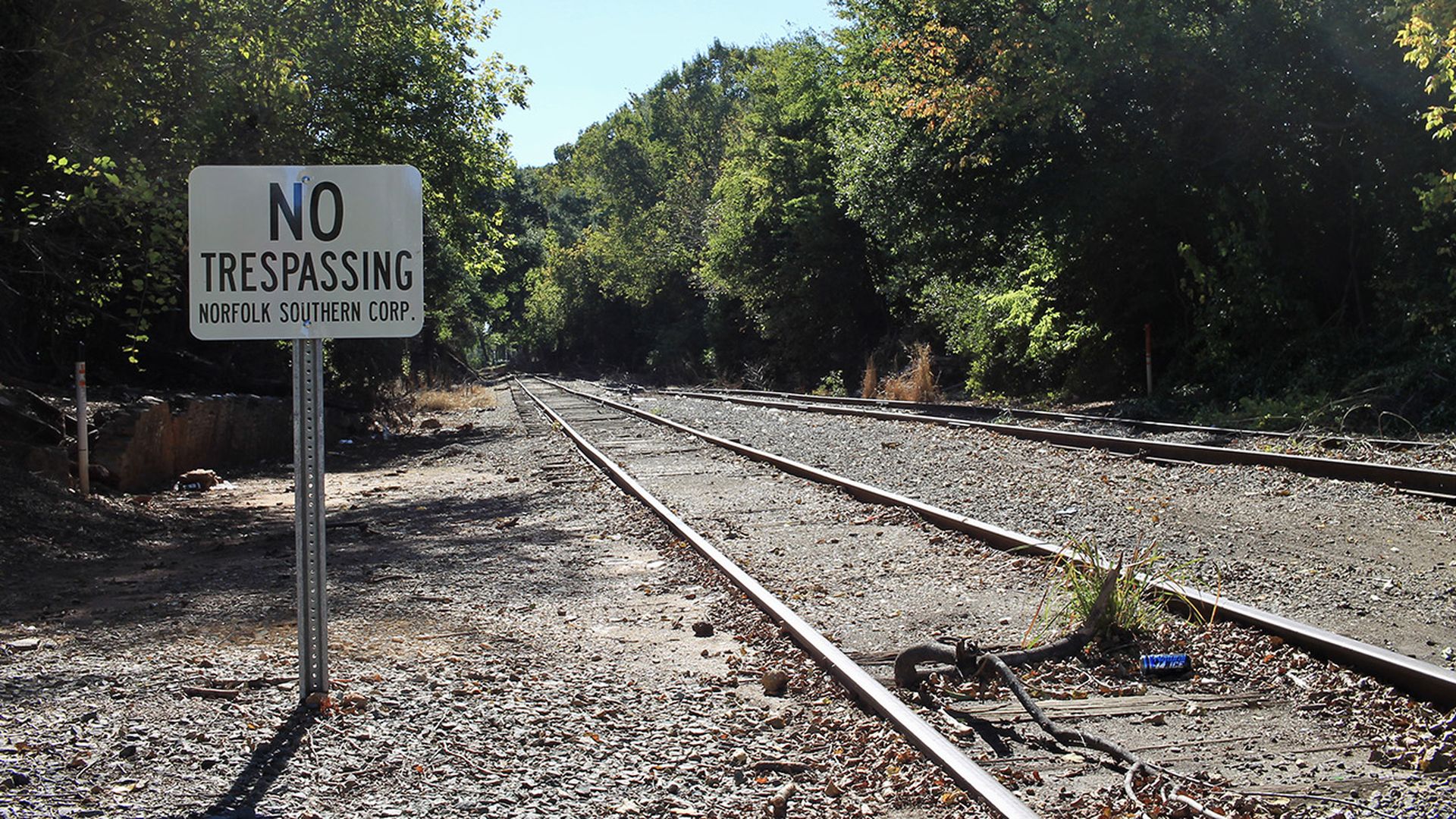
Norfolk Southern Red Line
It sounds like something out of Back to the Future: What if you could hop into an autonomous Tesla in north Mecklenburg that zips through a tunnel at up to 150 miles per hour, and arrive in Charlotte in about 15 minutes?
Driving the news: This isn’t the plot of a science fiction movie. Mecklenburg County officials met with The Boring Company, founded by Elon Musk, to discuss the idea last year, records Axios obtained last week show.
Context: Local leaders have for years proposed building the Red Line commuter rail connecting Charlotte to Cornelius, Huntersville, Mooresville and Davidson. But that plan is at an impasse because Norfolk Southern is unwilling to share its tracks for the project.
Why it matters: Even if it’s far from reality, the conversations reveal how far leaders are willing to go to bring transportation that connects Charlotte and its northern suburbs amid a lack of progress on the Red Line.
Reality check: The Boring Company has yet to pull off the idea successfully. It has only completed one tunnel open to the public in Las Vegas at its convention center. But the vehicles aren’t autonomous, and they only travel about 30 miles per hour on a 1.6-mile loop.
- Musk’s firm has repeatedly backed out of promises to cities like Chicago and Los Angeles, The Wall Street Journal reported last month.
- Musk himself is under fire after his takeover of Twitter.
Representatives from The Boring Company did not respond to a request for comment.
Details: The tunnel was allegedly cheaper and would be built faster than a train, says Davidson Mayor Rusty Knox, who, along with the mayors of Cornelius and Huntersville, met with the company. According to documentation sent after the meeting, the tunnel would cost $10 million per mile. The company claims its machines dig about a mile of tunnels each week.
- CATS doesn’t have a price tag specifically for the Red Line. But the transit plan as a whole, which includes the Red Line, Silver Line and other projects, is estimated to cost $13.5 billion.
/2024/01/06/1704504437669.png)
What they’re saying: Knox said the idea was to use the right-of-way where the Norfolk Southern “O” line is (mostly parallel to Interstate 77), which he says is about 50 feet on either side, for three underground tunnels: One where the cars go to Charlotte, one where they travel north from Charlotte, and one for maintenance. And Cornelius Mayor Woody Washam tells me it could’ve extended to the airport.
But CATS and the city of Charlotte weren’t interested after speaking with the mayors of the three towns, Knox says, citing potential issues like right-of-ways and environmental concerns. The proposal never went anywhere after that.
- “I was really excited about it,” he says. “But then as time went on, our dialogues just died because it lost steam after we couldn’t get Charlotte engaged … There’s no way the three towns collectively with what, 200,000 people up here roughly, we don’t have the budget or finances or anything to do this on our own.”
- In the end, given The Boring Company’s track record, Knox said he’s glad they dropped the conversations.
The other side: City spokesperson Lawrence Corley confirmed that in April 2021, city staff, including former Charlotte Area Transit System CEO John Lewis, former city planning director Taiwo Jaiyeoba and Liz Babson, director of the Charlotte Department of Transportation, met with Boring Company representatives to discuss the Red Line.
- The city requested more information about how the company’s approach could apply to the Red Line since there were no examples of it being used for similar projects, he said in an email.
- There are numerous challenges with creating underground transit tunnels, he wrote, including “environmental impacts, avoiding or relocating underground utilities, the depth of the tunnels in relation to the distance to surface connections (the deeper the tunnel the further out the surface connections need to be) and emergency access.”
- Ultimately, decisions on the Red Line would have to go through the Metropolitan Transit Commission, or MTC, he says.
But CATS wouldn’t say whether its officials met with The Boring Company, only that there “may have been conversations with former CATS CEO John Lewis on this topic.”
- “CATS has not evaluated any tunnel concepts for transit service to northern Mecklenburg,” the statement read. “We are currently moving forward with planning and design for the proposed Red Line commuter rail service, per MTC direction at the Sept. 28, 2022 MTC meeting.”
Yes, but: Washam says it was an appealing concept, but it would have to be studied more since it was so new, especially to receive federal funding. And ultimately, leaders had to decide where to focus their energy.
- “You can’t be going down dual paths to try to achieve what we need to achieve with mass transit in the region,” he says.
Between the lines: In March of last year, Charlotte City Council member Tariq Bokhari made headlines and met with The Boring Company after suggesting the idea of building tunnels under busy intersections to alleviate traffic. But the firm’s focus was on longer tunnels, and he said there wasn’t a great use case for that at the time.
- The point of the conversation, Bokhari tells me, was to think creatively about what technology could look like in transportation 20 years from now.
What’s next: CATS is spending $5 million to “advance” the Red Line, despite having no timeline, agreement with Norfolk Southern or cost estimate, Axios’ Alex Sands reported. Even without those hurdles, the city still doesn’t have a funding source for its transit plan.
The bottom line: Futuristic-seeming concepts like autonomous tunnels might become the norm before the Red Line ever comes to fruition.