The school board race in east Mecklenburg County is a fight over data

Add Axios as your preferred source to
see more of our stories on Google.
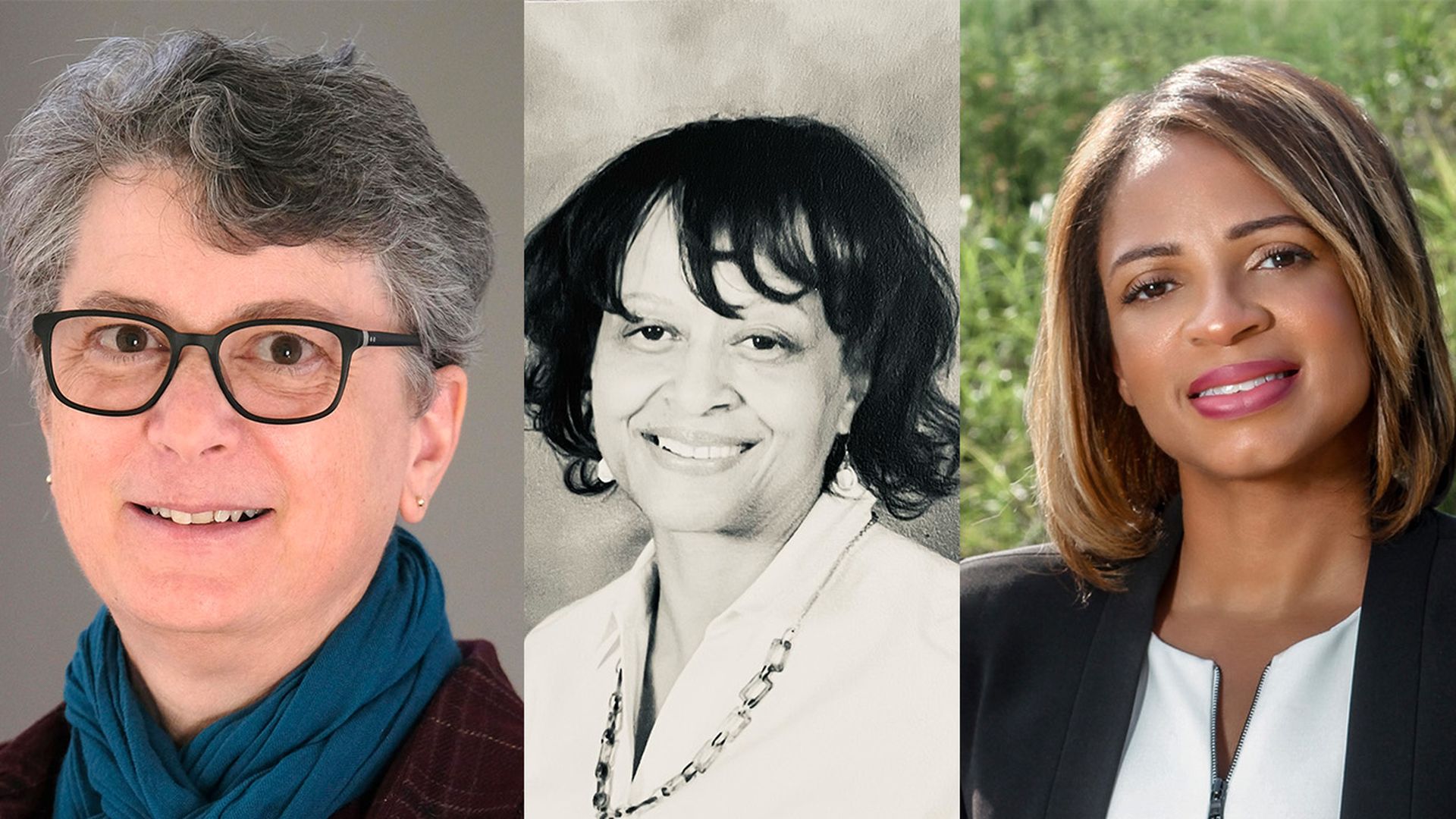
Left to right: Carol Sawyer, Clara Kennedy Witherspoon, Stephanie Sneed. Photos courtesy of candidates
The rematch for the District 4 school board seat in Mecklenburg County is heating up.
Carol Sawyer is striving to retain her position for a second term. She’s challenged again by Stephanie Sneed.
- Sawyer defeated Sneed by 2,722 votes in 2017. Sneed ran again in 2019 for an at-large seat and only lost by 195 votes.
Plus, there’s an underdog in the race who brings a unique experience. Clara Kennedy Witherspoon was a CMS student through the years of segregation to integration and busing. She just retired as a counselor for the district in January.
Why it matters: Voters are asking themselves whether they trust the current school board to make good on its promises to improve academic results — or if they’d prefer a slate of new leaders.
- At least two sitting board members are not seeking re-election. There could be up to six new faces on the nine-person board.
This race could be a referendum on local students’ academic achievement. Charlotte-Mecklenburg students outperformed other urban districts nationwide on the 2022 National Assessment of Educational Progress, but students of color continue to lag behind, as WFAE reported this week.
[Go deeper: Axios voter guide for the November 2022 elections in Mecklenburg County]
Context: Sawyer has served an unusually long term — it’s going on five years. The 2020 census prolonged redrawing of districts and delayed the election. At one point she was accused of attempting to gerrymander Sneed out of her district.
State of play: On the surface, the three candidates appear similar. All boast impressive and relevant resumes, possess similar priorities related to student outcomes and are registered Democrats.
- Yet, the District 4 race is one of the most impassioned and divisive locally right now.
- Amid alarming test scores, some voters want to replace sitting members with fresh leadership who will drive change in the school system. The Black Political Caucus did not name a single incumbent in its influential endorsements for this year’s election, The Charlotte Ledger noted.
- District 4, home to a list of low-performing schools (for example, Albemarle Road Middle and Rocky River High), is at the center of the debate.
“Most of those parents I talk to say, ‘Oh, no, my children don’t go to CMS. That’s a D school. That’s an F school,” Witherspoon says. “And we’re talking parents of color.”
Flashback: The problem reached a tipping point in 2021 as county commissioners threatened to restrict $56 million from CMS until the school board came up with a plan to address student achievement. The two boards went into mediation over the dispute.
- At the time, Sneed was the chair of the Black Political Caucus. She was urging county leaders to take action.
- Sawyer says this tactic was destructive and divisive, and the restrictions would have only harmed classrooms. “There’s this … myth that somehow withholding that money made CMS do better,” she says. “We’d started on our student outcomes-focused governance work well before that whole kerfuffle.”
Zoom in: Sneed and Sawyer have taken to social media with their interpretations of the data in District 4. They each say they’re sourcing the North Carolina Department of Public Instruction.
- Sawyer wrote on Twitter: “94% of D4 schools met or exceeded growth, which is better than the 83% of all CMS schools and 55% of charter schools.”
- Sneed posted on Facebook: “The number of low performing schools has increased from 42 to 50 with 65% of the schools in District 4 rated D or F.”
- Witherspoon, who isn’t as active online, told Axios she is concerned about the number of D and F schools and low reading scores.
All three candidates have posed solutions.
Sawyer accuses Sneed of using data as “a weapon.” But Sawyer agrees academic achievement is clearly the greatest issue the district faces.
- She believes the key is continuing the student-outcomes focused governance. (The board has adopted four goals related to reading and math scores and graduating seniors with “meaningful diplomas.” It hears presentations on the progress each month.)
- In October, the board reviewed the percent of students projected to earn a diploma endorsement, which signals a student is prepared for college or a career and took the necessary courses.
- “It is being very thoughtful about what we talk about as a board,” Sawyer says. “We’re less distracted by other issues.”
Sneed says the goals are not aggressive enough. She regularly states that CMS is in a “state of emergency.”
- For example, one of the district’s four goals focuses on raising reading levels among Black and Hispanic third graders. But Sneed questions how that helps the students who are already moving onto fourth grade and beyond.
- “We have to capture them before they enter a middle school,” she says. She adds that CMS should craft a plan.
Witherspoon believes in an approach called the multi-tiered support system. As a counselor, she was assigned the role of MTTS specialist but doesn’t believe it was implemented properly.
- The idea of the framework is to focus on students in tiers, the first tier being the school as a whole.
- If instruction and the other essential components of a school are on point, there should only be a minority of students, maybe 20%, who are not performing well, Witherspoon explains. They should be easily identifiable and able to target on another tier, and budgeting should prioritize resources in schools. (She points to the clear backpacks CMS bought last year and had to sell as an example of poor budgeting.)
- “If we do the work that needs to be done around MTSS, we can change the direction of our school system,” Witherspoon says.