Fresh renderings: Charlotte museum renamed for famed Captain Sully to break ground soon

Add Axios as your preferred source to
see more of our stories on Google.
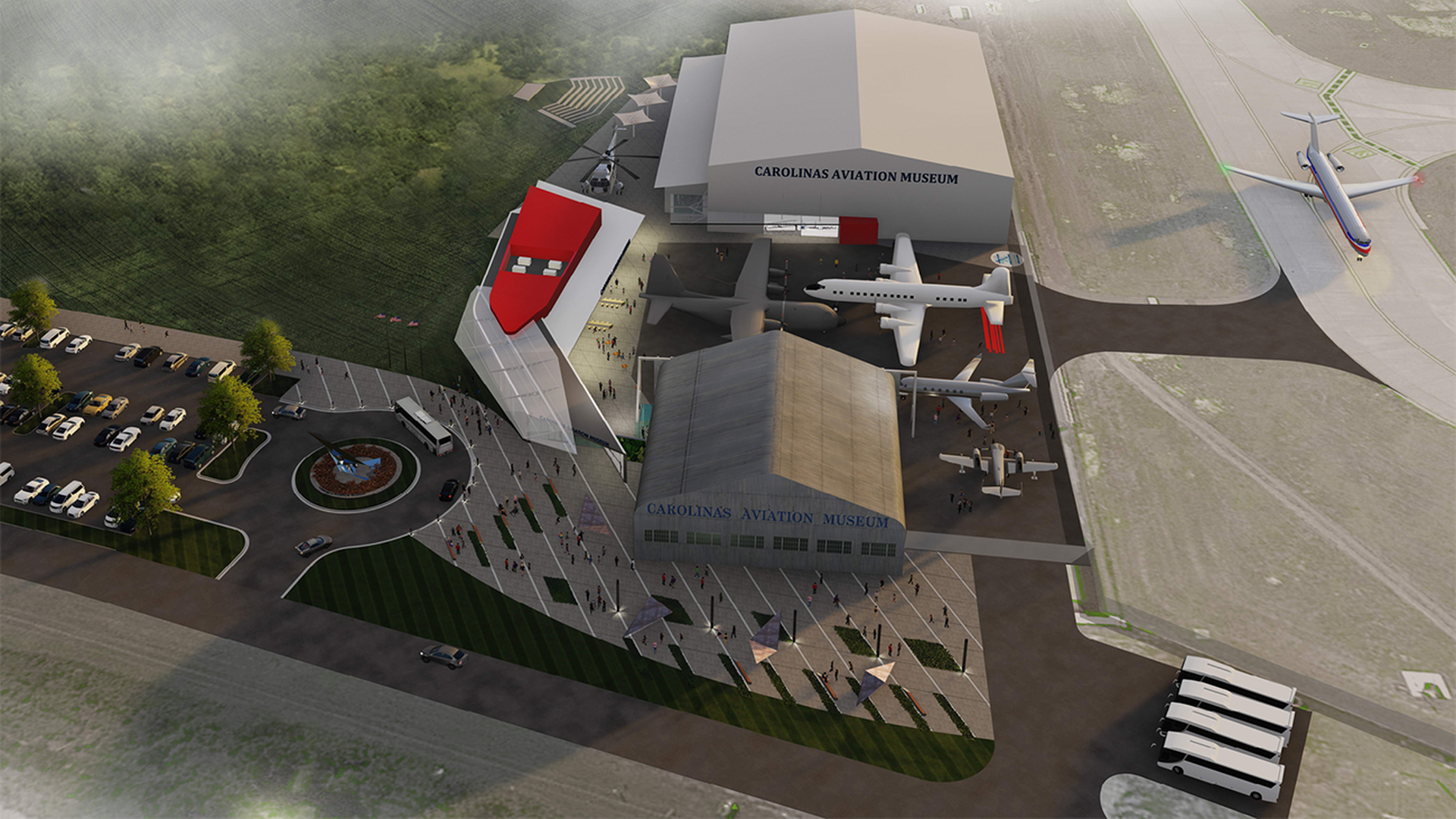
Rendering courtesy of Carolinas Aviation Museum
The Carolinas Aviation Museum’s new facility will break ground on Sept. 27.
State of play: The museum has been closed since July 2019 in preparation for the transition.
- Charlotte Douglas International Airport will manage the project’s site development, which includes two phases.
- The first phase is scheduled to open by the end of 2023, per a statement from the museum Tuesday.
Why it matters: The space is anticipated to serve not only as an educational resource but also as a catalyst for economic growth for west Charlotte.
- Museum leaders expect 120,000 visitors annually along with more than 15,000 students using the space for STEM programming and career development labs. The museum attracted 74,000 visitors in 2019, its final year before closing, as CBJ reported.
- “For centuries humans dreamed of flying, and now this museum will utilize the wonder of flight to inspire the next generation into the STEM fields and to celebrate our state’s growing aviation and aerospace industries,” said Stephen Saucier, president of the Carolinas Aviation Museum.
/2024/01/06/1704505284499.png)
Details: The new 105,000-square-foot museum will be renamed in honor of Capt. C.B. “Sully” Sullenberger, who landed Charlotte-bound US Airways Flight 1549 safely in the Hudson River in 2009. The plane from the flight is the museum’s featured exhibition.
- Architects Progressive AE and exhibit designers Freeman Ryan Design will help the museum develop the new campus, which will include three buildings and an outdoor plaza where you’ll see historic aircraft and have a view of Charlotte Douglas’ active runways.
- The new museum will be located at the historic W.P.A. Douglas hangar, which was originally built in 1936-1937 by the Works Progress Administration.
- Expect more than 45 historic planes, a multi-building campus, flight simulators, multimedia and interactive exhibitions, plus STEM education programs once the museum is complete.
By the numbers: The public-private partnership is expected to cost around $30 million, and the museum’s Lift Off Capital Campaign has raised more than $27 million so far. It’s the largest fundraising effort in the museum’s 30-year history.
- On the public side, the project received $10 million from the state, $3 million from Mecklenburg County and a $5 million matching grant from Charlotte Douglas and the city of Charlotte’s non-taxpayer fund.
- On the private side, several individual donors and corporations have made contributions, such as Honeywell, which donated $1.5 million. Red Ventures CEO Ric Elias, who was a passenger on flight 1549, donated $1 million, and Lonely Planet, a Red Ventures brand, donated $500,000.
- Spearheading the campaign is Marc Oken, chairman of Falfurrias Capital, the firm co-founded by Hugh McColl.
Zoom out: The museum will also be part of UNC Charlotte’s Charlotte Aviation Innovation and Research (AIR) Institute.
- “Our continued success as a city, county and state depends on innovative collaboration across sectors – this new museum will help make those connections,” Charlotte Douglas CEO Haley Gentry said in the statement.
Editor’s note: This story was updated to reflect Ric Elias’ $1 million donation and Lonely Planet’s $500,000 donation.
/2024/01/06/1704505284828.png)