Designing Charlotte’s future bus hub will cost $18M

Add Axios as your preferred source to
see more of our stories on Google.
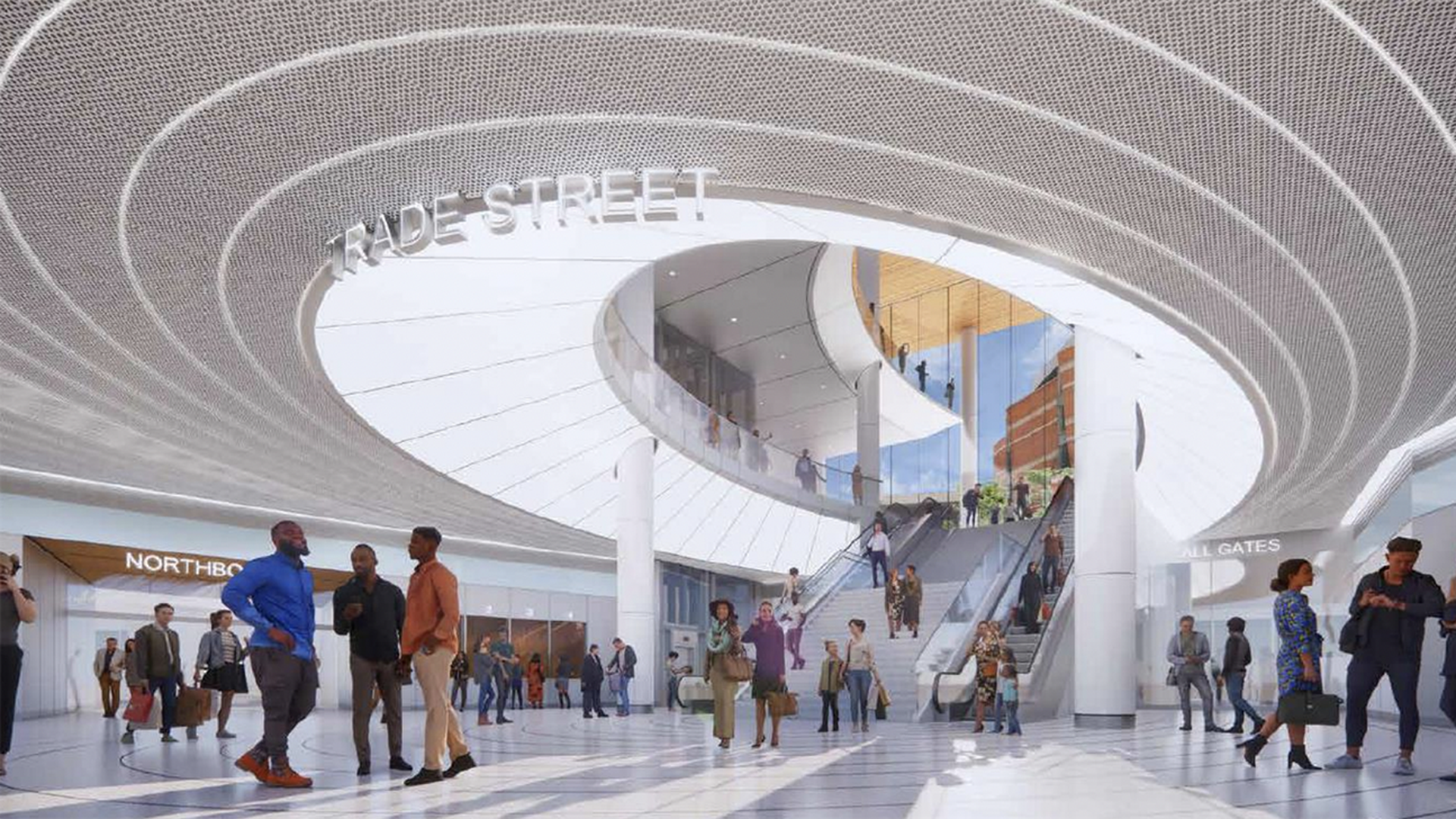
Rendering by Perkins Eastman, courtesy city of Charlotte
Although the total project cost is unknown, the City of Charlotte has named its price for designing a new Uptown (and possibly below-ground) bus hub: $18 million.
- Sometime in the next 45 days, city council will discuss where the main bus station is rebuilt and whether it’s underground, as has been proposed, a city spokesperson told Axios.
- The anticipated $18-million price tag includes architecture and engineering work to create a temporary transit facility on a neighboring property so that bus services continue during construction.
What’s happening: As it works through a stacked agenda Monday, city council will vote on a $2.9-million contract with WPTP Brevard Holdings to reimburse design costs for the reimagined multimodal center. The LLC is affiliated with Charlotte-based White Point Partners.
- “The design reimbursement is solely dedicated to the interim and permanent bus facility to better understand how it will impact construction costs and timing for the larger facility,” the city spokesperson told Axios.
Details: White Point Partners and Dallas-based Dart Interests are working on a private, mixed-use development as part of the CTC overhaul.
- Plans include approximately 1 million square feet of office, hotel, and retail, according to the agenda.
Flashback: The City of Charlotte will also pay $60 million for a new Charlotte Hornets practice facility on top of the current CTC site, along with $215 million renovations at the basketball team’s home arena, the city-owned Spectrum Center.
- Moving the buses below ground would clear the way for an entertainment district above. Ideally, the nearby EpiCentre would contribute to the liveliness, even though its future is unknown.
- If the underground idea turns out to be unfeasible, the practice facility will go on a gravel lot next to the arena, Axios’ Ashley Mahoney reported.
Zoom out: Constructed in 1995, the CTC is “beyond its economic useful life,” according to the council’s agenda.