CMPD ahead of the curve in reporting 2021 crime data


Add Axios as your preferred source to
see more of our stories on Google.
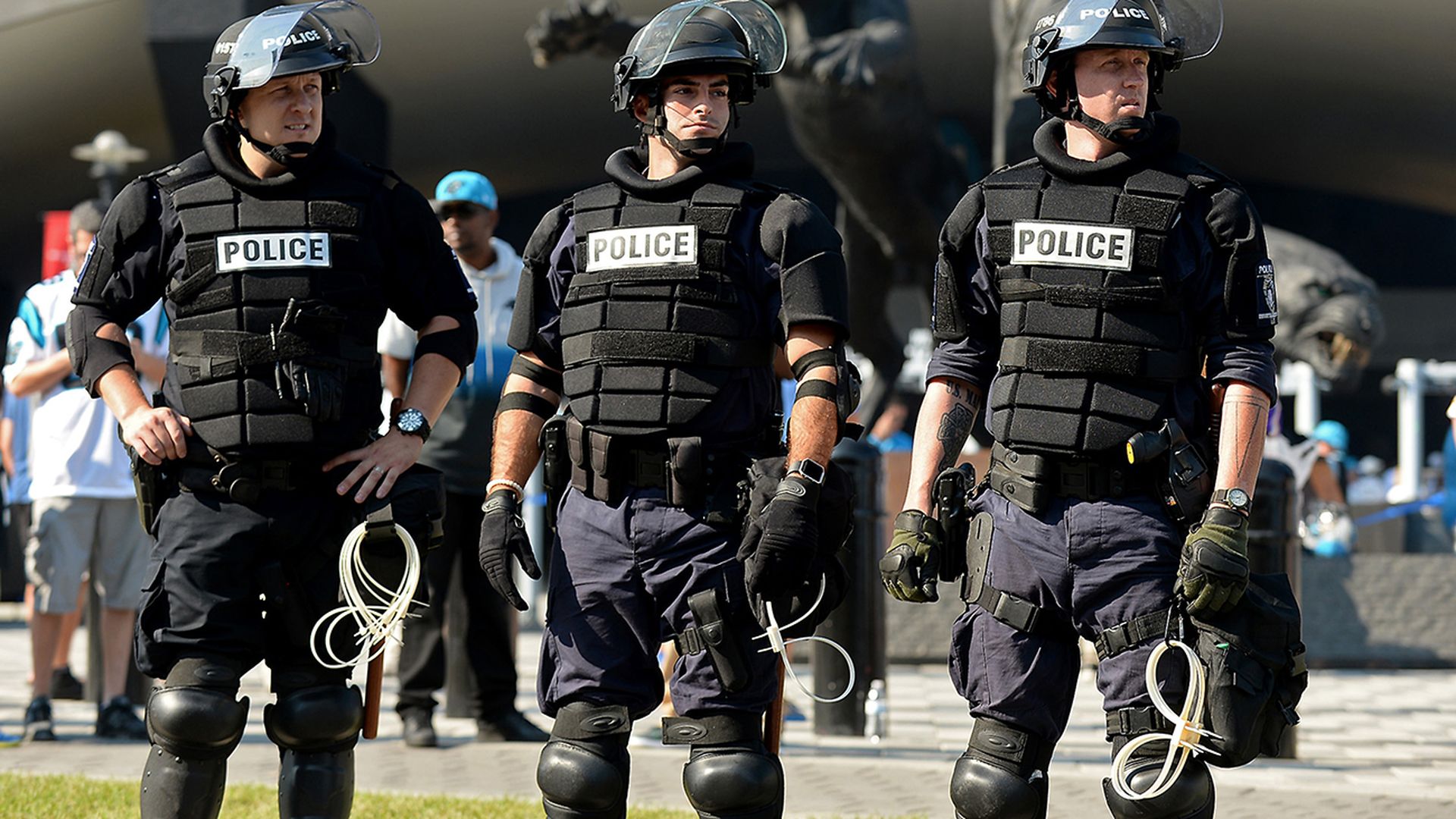
Jeff Siner/Charlotte Observer/Tribune News Service via Getty Images
Most of the Charlotte area’s law enforcement agencies reported full crime data to the FBI in 2021, even as 40% of law enforcement agencies nationwide failed to do so, according to data provided to Axios from a partnership with The Marshall Project.
Why it matters: Our region bucked a trend that will result in a data gap that makes it harder to analyze crime trends and fact-check claims politicians make about crime.
State of play: Last year, the FBI retired its nearly century-old national crime data collection program and switched to a new system, the National Incident-Based Reporting System (NIBRS), which gathers more specific information on each incident.
- The FBI announced the transition years ago, yet some 7,000 of the nation’s 18,000 law enforcement agencies didn’t report 2021 data.
- “It’s going to be really hard for policymakers to look at what crime looks like in their own community and compare it to similar communities,” Jacob Kaplan, a criminologist at Princeton University, told The Marshall Project, a nonprofit, nonpartisan U.S. criminal justice watchdog.
Nearly all agencies around Charlotte were on top of it, though.
Data: FBI, The Marshall Project; Chart: Jared Whalen/Axios Visuals
The Charlotte-Mecklenburg Police Department uses an automated report system called KBCOPS, which logs the data required by the FBI, CMPD’s chief public information officer Lt. S.A. Fischbach tells Axios.
- “So the FBI’s transition to a new reporting system did not create any issues for the CMPD in reporting the data,” he added.
- The FBI’s data shows there were 8,015 violent crime incidents, 31,211 property crimes and 119 murders in 2020 in Charlotte-Mecklenburg, which is similar to data the agency has reported publicly.
Meanwhile, Union County, just east of Charlotte, was one of the first in North Carolina to report in the FBI’s new system, Union County Sheriff’s Office crime analyst L. Kiker said in a statement provided to Axios.
- Kiker started with the sheriff’s office in 2008, just after it had purchased the software that set up the county to report as required by the FBI.
- The state started transitioning to the FBI’s new system in August 2020, and Kiker says the Union County office assisted five or six other agencies.
Yes, but: Kiker says one of the biggest challenges with the new reporting system has been figuring out how to separate the number of crimes that occurred in one incident, and if the suspects acted in concert.
- “The biggest complaint over the last several years has been the amount of time it takes to complete two incident reports when most people feel as if it should be one incident,” Kiker says.
- “Using the NIBRS way does allow you to capture the correct number of crimes that occur, but it is very time-consuming when it comes to writing two separate reports.”
Other counties: Iredell, Gaston and Cabarrus all reported full data to the FBI last year. Stanly County reported partial data — 11 months’ worth — per the Marshall Project’s analysis.