What to do about those pesky stink bugs

Add Axios as your preferred source to
see more of our stories on Google.
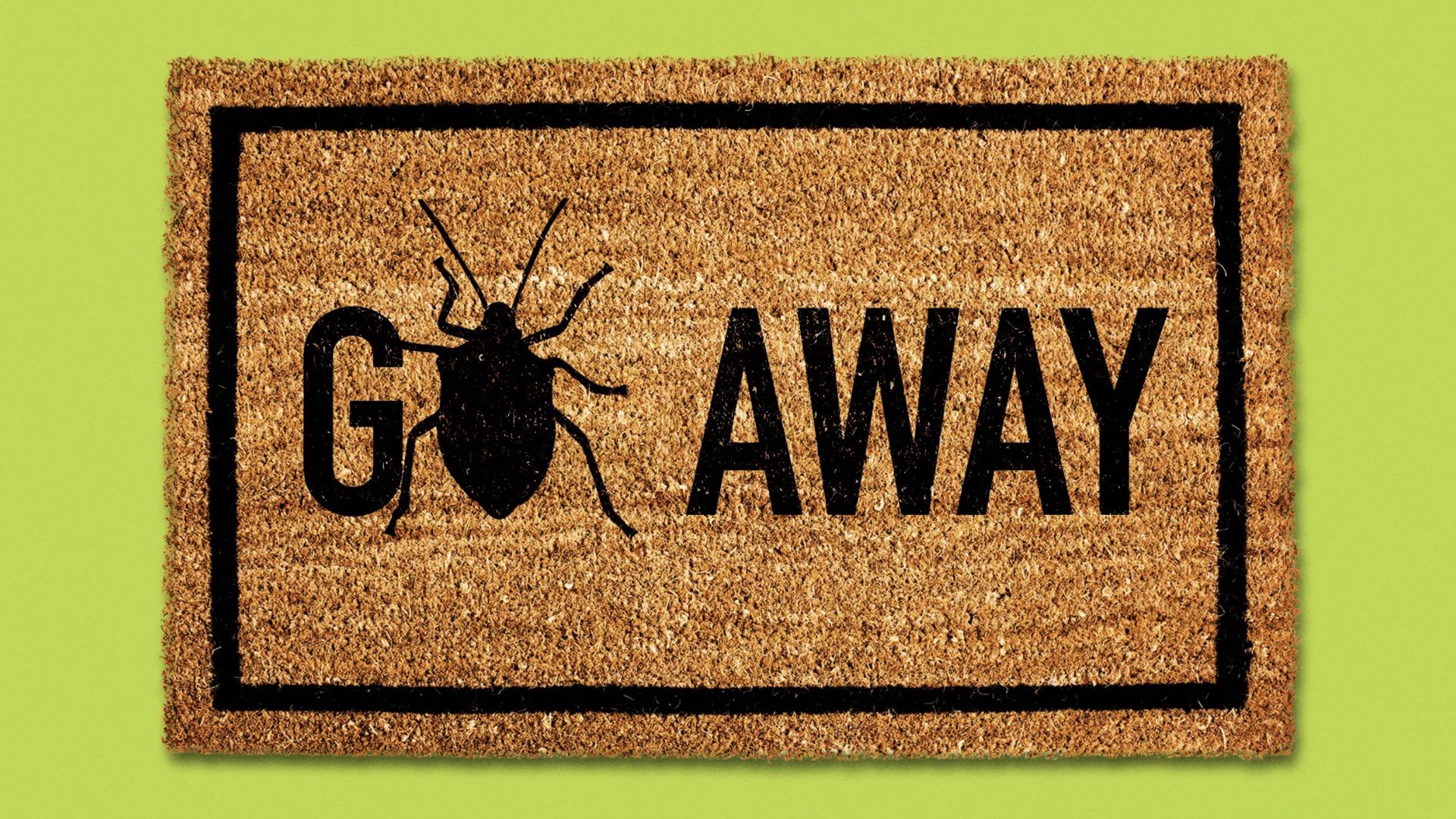
Illustration: Maura Losch/Axios
Each year around this time, stink bugs invade Charlotte.
Even if you’re on the top floor of an apartment building, you’ve probably found one or two inside.
“The main ones people are concerned about are the brown marmorated stink bugs,” explains Jeff Gillman, an entomologist at UNC Charlotte.
Why it matters: It’s an invasive bug that attacks our fruits, vegetables and other crops.
- Plus, they’re annoying. And icky. And nearly impossible to get rid of with pesticides.
The brown marmorated stink bugs are not native to North Carolina and are “the worst,” according to Gillman.
- The first brown marmorated stink bug was introduced in Pennsylvania from Asia in the late 1900s.
How it works: Stink bugs aren’t like flies or mosquitos, which lay larvae in the winter.
- Rather, they have what’s called a “nymphal state,” meaning they continue to molt until they become adults. 🤢
- Yes, a few of them die off in the winter, but many “crawl into nooks and crannies where you won’t think they’ll be able to fit,” Gillman says.
- The average lifespan of a brown marmorated stink bug is roughly six to eight months.
“It’s a difficult pest to kill,” Gillman says.
Pesticides and other conventional approaches are often ineffective because the stink bugs “stand on their tiptoes, and they don’t have a lot of direct contact with the leaves.”
- Also, they have “piercing-sucking mouth guards,” kind of like a straw, which helps them bypass poison.
Yes, but: Not all stink bugs are bad, Gillman explains. “Some are predacious and eat bad insects.”
- For gardeners, Gillman says to “make sure it’s stink bugs causing damage.”
Solution: Gillman recommends stink bug traps, or, his favorite method: fruit bags —”they’re not going to kill good insects, just going to prevent bad insects from getting in.”
The bottom line: Stink bugs are tip-toeing all over your house, piercing through your fruits and veggies, living their best lives. But they’re not harmful to you or your animals.