A $250 million racial equity effort is marred by controversy

Add Axios as your preferred source to
see more of our stories on Google.
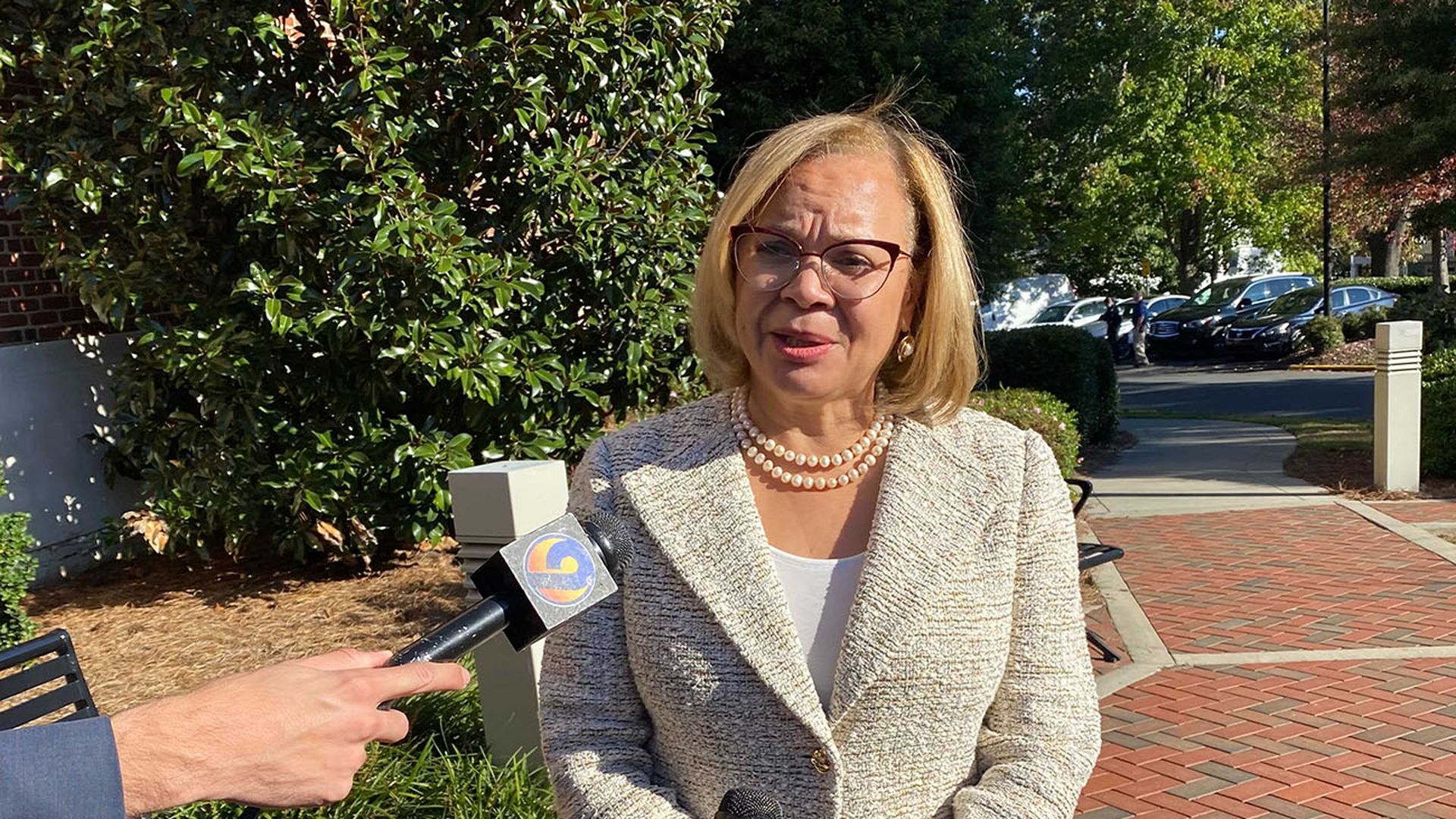
Mayor Vi Lyles at a press conference announcing her Racial Equity Initiative. Photo: Danielle Chemtob/Axios
To the public, the mayor’s $250 million Racial Equity Initiative first exuded possibility.
A photo published in the Charlotte Observer captured an emotional Mayor Vi Lyles with her head on the shoulder of Hugh McColl, the former Bank of America CEO and a titan who helped shape the city. Charlotte’s biggest corporate players lined up last fall to fund the kind of work advocates have pushed for over decades.
- But criticism of the initiative started months before, and has since dogged what promises to be a transformative effort to undo centuries of systemic racism.
The latest: Kimberly Henderson, who was hired to lead part of the initiative, resigned Sunday after media reports showed she was the subject of a requested criminal investigation of her handling of unemployment money with the Ohio Department of Job and Family Services, where she last worked.
- “We are deeply sorry for the distraction this has caused to work that is critically important to our community,” leaders from the Charlotte Regional Business Alliance and mayor’s Racial Equity Initiative said in an open letter announcing Henderson’s resignation Monday.
- Still, some community advocates I’ve spoken with say they are more focused on the need for the work on racial justice in a city ranked last for economic mobility.
Why it matters: The legacy of racism is embedded in virtually every institution in our society. But time and again, wrestling with that history, and achieving justice, are fraught.
Details: Some racial justice advocates have charged that closed-door conversations on the initiative have not included the communities most impacted by inequities, and fail to include restitution for past actions like the bulldozing of Brooklyn.
- In response, Lyles told the Charlotte Observer that the equity initiative goes beyond Brooklyn — once the largest Black neighborhood in Charlotte before the city destroyed it. The mayor has said her broad goal is to repair harm caused by systemic racism.
- The program has four focus areas: Bridging the digital divide, bringing economic development to underserved areas, investing in the historically Black Johnson C. Smith University and hiring diverse candidates with local employers.
The other side: Transparency concerns surround the initiative, which was discussed for months before being publicly announced last November.
- Lyles apologized to Charlotte City Council after members said they had not been involved with the initiative.
What they’re saying: Societal struggles and a political tug-of-war to act on racial equity have left people like Jacqueline Stowe waiting for justice. She lived in Brooklyn before her family was displaced and moved to west Charlotte. She’s struggling to afford the rising cost of living on a fixed income.
- “They’re going to get $250 million and not even throw us a bone?” she said. “That’s a smack in the face, too.”