Charlotte food banks face ‘unbelievable’ demand during the pandemic

Add Axios as your preferred source to
see more of our stories on Google.
Second Harvest Food Bank of Metrolina
Between job losses, the lack of easily accessible meals at schools, and the fact that seniors are homebound, the demand for food across the Charlotte region these days is “unbelievable,” says Kay Carter, CEO of the Second Harvest Food Bank of Metrolina.
Second Harvest supplies food to more than 800 partner agencies — pantries, shelters, and other nonprofits — across the 24-county region. It is part of a network of 200 food banks nationally that supplies to every county in the U.S. In addition to its wholesale functions, Second Harvest runs backpack programs for children in need, as well as a homebound senior program.
The uneven supply/demand dynamic plays out in all parts of the food bank ecosystem.
By the numbers: From mid-March through the end of November, Second Harvest delivered 16 million more pounds of food than it did in the same period in 2019.
- On average, it is distributing 2 million more pounds per month this year than it did last year, Carter says.
Last year, Loaves & Fishes, a Second Harvest partner, fed about 80,000 people in Charlotte, says Tina Postel, the food pantry’s executive director.
- Loaves & Fishes surpassed that number by September, she tells the Agenda. They’ve now fed over 110,000, just as the holidays get underway.
- This spring, the organization also added a food share program to receive and distribute produce and dairy products that would’ve gone to restaurants. So far, Loaves & Fishes has served 35,000 people locally through the program.
“I’ve been at the food bank for 17 years. I have never seen the need as high as it has been during Covid,” Carter of Second Harvest tells the Agenda.
Second Harvest has worked through all sorts of disasters over the years, from recessions to hurricanes. Covid, she adds, is multi-layered, meaning its cuts across a wide range of people in need.
Why it matters: Coronavirus has worsened food insecurity in the Charlotte area.
“There are a tremendous number of people in our community who were food insecure before Covid,” Carter says. “The need has risen significantly. Many of the people who are asking for our help have never asked for our help before.”
In some parts of the U.S., the need is so dire that people are stealing food to survive, as the Washington Post recently reported.
At Loaves & Fishes, half of the people the organization serves are children and seniors, Postel says.
“What I’m worried about is the individual who is skipping meals and who is not feeding their kids much as they should because they’re too ashamed to ask for help,” she adds.
Adding to the strain on banks like Second Harvest is availability of volunteers during the pandemic. Many of the people who regularly pack boxes and hand out food for the organization are older and at home right now, Carter says.
/2024/01/05/1704495199401.jpg)
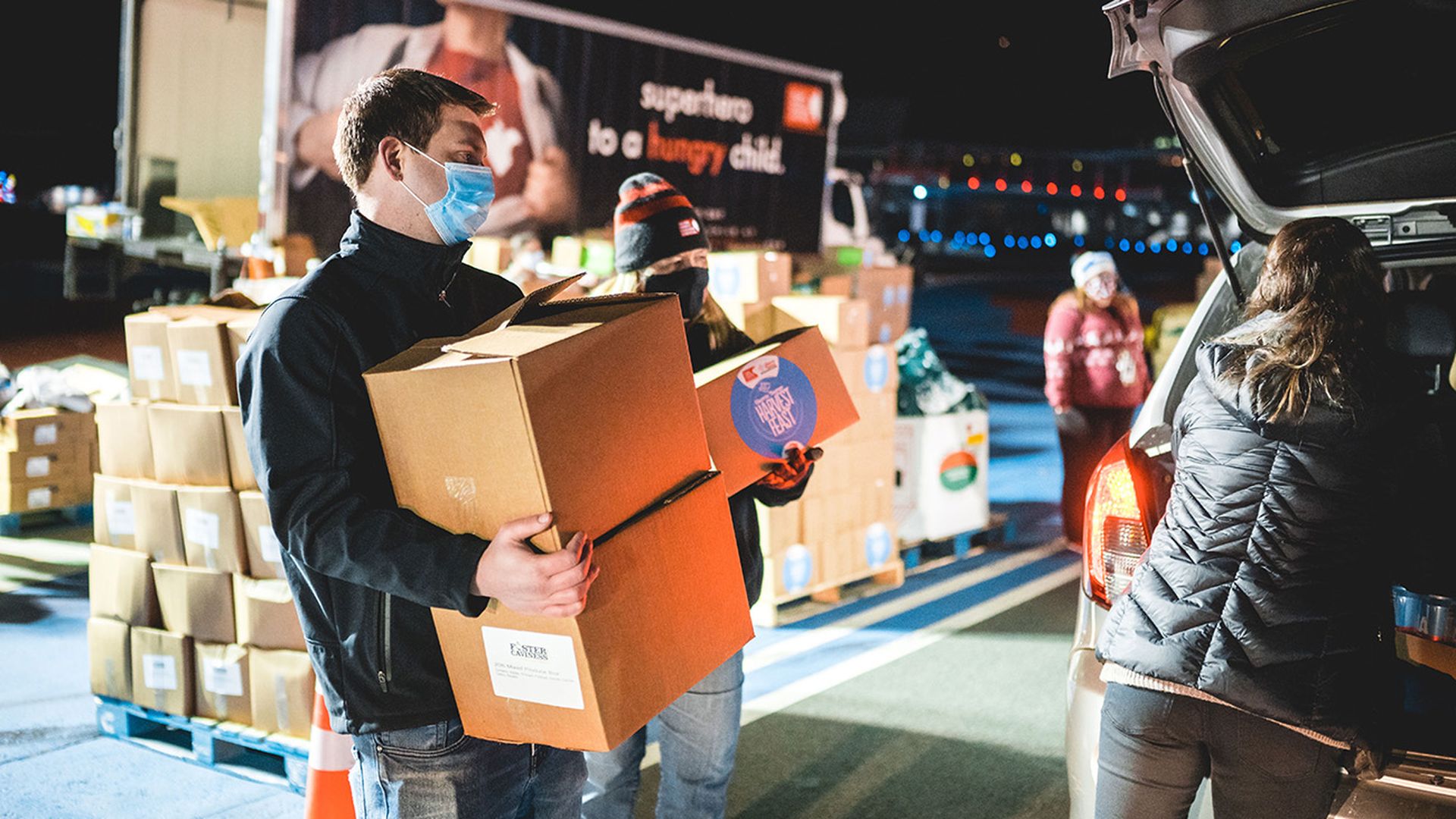
And because of the pandemic, Second Harvest recently changed its distribution model: It’s no longer handing out food directly to people, but prepackaging and delivering it by car.
“When you go from packing a few thousands boxes a week to 13,000-15,000, you’re going to need more (help),” Carter says. To fill the gap, the Second Harvest staff has worked overtime.
Loaves & Fishes changed its model too to mobile and contactless. Currently, instead of operating its 41 brick-and-mortar locations, the organization offers drive-thru pickup of nutritious boxed food. For those in need who can’t drive there, Loaves & Fishes has a home delivery service. During the pandemic, they’ve delivered food to more than 5,000 individuals.
“The fortunate thing is that we’re meeting the demand,” Postel says.
Also adding to the strain: Grocery stores that food banks like Second Harvest normally rely on are themselves facing inventory issues as people stockpile. The food bank has had to reach out to grocers all over the country to fill in.
“If we have to go to Kansas to get peanut butter or Michigan to get cereal, that’s what we’re going to do. So much of what we do is prepackaged,” Carter says.
The cost of sourcing groceries from thousands of miles away adds up, she adds.
What you can do: There are plenty of ways to help, if you are interested and able to.
- Give financially to Second Harvest or Loaves & Fishes.
- Volunteer your time to pack boxes or deliver food at either nonprofit.
- Donate canned and dry goods.
Carter says it’s easier for volunteers to sort and pack items that the food bank buys in bulk on pallets, so donating money is probably the best option. But, she adds, “We can use any help we can get.”
Subscribe: Join 55,170 smart Charlotteans and subscribe to our daily newsletter here.