Harold Easter died in CMPD custody. Here’s what 17 body-cam videos tell us


Add Axios as your preferred source to
see more of our stories on Google.
Harold Easter
After Harold Easter pulled over and parked next to a soccer field in the Greenville neighborhood just north of Uptown on January 23, some of his first words to the CMPD officers approaching his car were, “We had some weed. That’s all.”
But when the officers arrived at the driver’s side window, he started shoveling something in his mouth, presumably cocaine, according to what the officers at the scene said on their body-worn cameras.
“Don’t eat it!” the officer at the driver’s side door said to Easter, while tugging on Easter’s red hoodie sweatshirt. “He’s eating it,” the officer says to the other officers approaching.
At that moment, or shortly thereafter, the officers should’ve called medics, according to department policy. But they didn’t, and the 41-year-old Easter died in their custody three days later. And now, nine months later, all the officers involved have lost their jobs.
/2024/01/05/1704497009410.jpg)
Body camera footage released: CMPD distributed 17 body-worn camera videos of the incident on Thursday morning. The highly anticipated release, granted by a Superior Court judge, tells more of the story behind what happened before and after his death.
He was left alone in an interview room for nearly 40 minutes. Citing a policy that says officers should check on someone in custody every 15 minutes, new CMPD chief Johnny Jennings, who took over the department in July, two weeks ago recommended that five officers in the case be dismissed. Ahead of the video release, they resigned, the Charlotte Observer reported this week.
The employees were sergeant Nicolas Vincent, who had 12 years with the department, along with officers Brentley Vinson, Michael Benfield, Michael Joseph, and Shon Sheffield.
Vinson’s name may be familiar. He was the officer who shot and killed Keith Lamont Scott during an arrest in September 2016, setting off a week’s worth of protests in the city. Vinson is a Charlotte native and former Ardrey Kell High football standout whose father was a CMPD officer.
District Attorney Spencer Merriweather said last month he would not file criminal charges against the officers.
What the videos from the scene of the arrest show: After the initial encounter, the arrest carried on without incident for about 15 minutes as officers rifled through the car, looking under scratch-off lottery tickets in the glove box and cash in the console. While they did that, another officer patted down Easter.
“You got a bunch of pockets. I like your jeans though,” the officer said.
Then they put him in the cruiser. By now a handful of other CMPD officers were on the scene, and people from the community showed up to watch on the sidewalk.
“We have some Greenville celebrities here, man,” one officer said. This officer is clearly familiar with the neighborhood. “That’s his house up there,” he told another officer, “the yellow house on the corner.”
In the back of the cruiser, Easter complained of having to pee, then of being thirsty.
On the short car ride to the police station, Easter made small talk, going back and forth between subjects, from saying he was “just about to get my driver’s license next Wednesday,” to recapping the arrest, to asking for a sip of water.
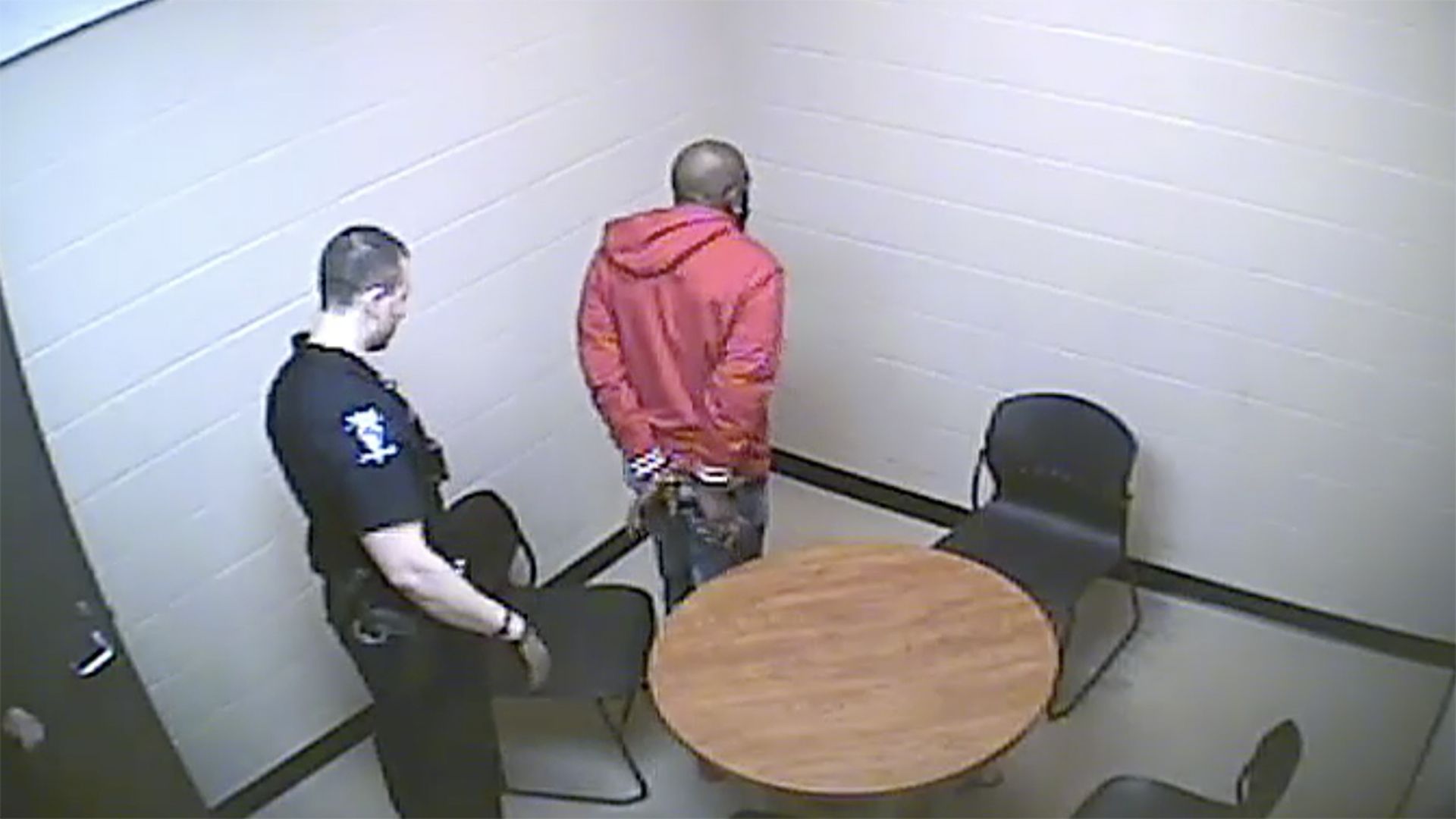
What the videos from the interview room show (warning, some of this may be difficult to read): When they arrived at the CMPD station, an officer took Easter to an interview room and searched him. Easter complained about being made to stay put, saying again that he has to pee.
During the exchange, Easter was coherent but acted erratically. He swayed back and forth as he talked, then complained about the strip search that happened a moment earlier. “All I asked you was to respect me like a man and let me hold my own ass cheeks,” Easter said to the officer. He repeated that he didn’t have any dope on him; just some weed. He complained about having to answer questions.
“In about five minutes, I’m going to come back to get you,” the officer said.
“You sure of that?” Easter asked.
“Yeah,” the officer said.
The officer did not return in five minutes like he said he would. Roughly 15 minutes later, a different officer gave Easter a cup of water, then quickly left.
Alone, Easter stood at the table, yelling but appearing OK. He continued to talk loudly, though it’s unclear to whom, for nearly 30 minutes. Soon, it’s clear he was unwell. At one point, he said loudly, “You think … I’m gonna die.”
He stood at the table, grasping both sides, yelling indecipherably and then singing. Multiple times, Easter asked the officers if he could get more water. “Can I get some water? I’m dehydrated. Please.”
A few minutes later, he fell face first on the table and went quiet, then slumped over and fell to the floor and began seizing. He was breathing heavy breaths, then choking, then seizing again.
While this was happening, officers walked past the door several times, the hallway footage shows. Easter remained alone in the room for several minutes until officers returned and called a medic. All told, nearly 10 minutes had passed since he’d dropped to the table.
The next video shows officers trying to resuscitate Easter after his apparent medical episode. The video shows Easter on the floor, blood flowing from his mouth. Officers gave him two doses of Narcan, an emergency medicine used to counter the effect of opioid overdoses. They then carried Easter into the carpeted hallway. They couldn’t find a pulse. They administered CPR.
Toward the end of that video, the officer wearing the body-worn camera was asked by another what happened. Easter, the officer said, tried eating cocaine when officers walked up to his car, but they stopped him from eating it.
“We didn’t think anything was wrong,” the officer said.
What the policy said: In a press conference Thursday, Chief Jennings said the officers should’ve called medics the minute they knew Easter had consumed narcotics. He said they should’ve checked on him after no longer than 15 minutes.
“I don’t believe these officers had malicious intent, but they did make a bad decision and they didn’t follow policy. Those bad decisions have consequences,” Jennings said. “Had those officers followed policy there may have been a different outcome.”
What the policy now says: The new department policy, adopted shortly after Easter’s death, is to constantly monitor someone in custody, either face to face or through video cameras, Jennings says. He also says that CMPD would not hire officers who’d resigned instead of being terminated from another agency.
What the mayor said: Charlotte Mayor Vi Lyles said that this has been tragic for the Easter family. She commended CMPD for making changes to its policy.
“You can see the differences in the policies that Chief Jennings has instituted. You can see the differences in the way that he’s approached this investigation. … That’s what’s necessary for us to understand: change is taking place.”