Charlotte is planning for 2040. What does that mean for today?

Add Axios as your preferred source to
see more of our stories on Google.
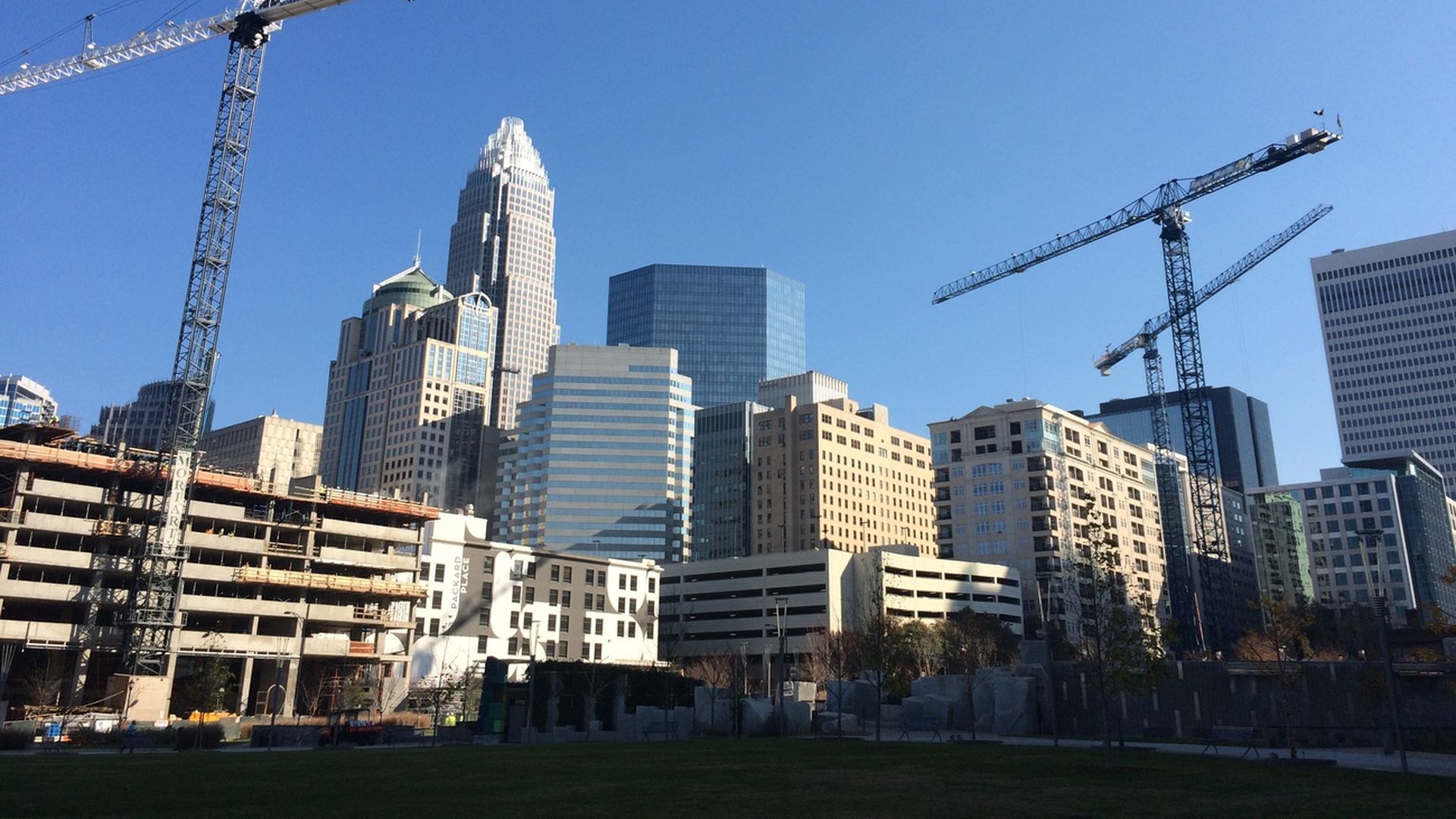
For years, Charlotte’s development process has been more about cutting deals than actual planning.
Projects come before the City Council one by one, more often decided based on political considerations than design principles. The city does have a few plans for specific areas of town, but most of them are old and outdated.
As Charlotte booms, the city now wants to change all that. Under new director Taiwo Jaiyeoba, the planning department has embarked on an ambitious project to map out how Charlotte should grow for the next two decades.
Called the Charlotte Future 2040 Comprehensive Plan, this document is intended to guide what projects the city approves, where development can occur, and what neighborhoods will look like at the end of the next stage of the city’s growth.
Along the way, they hope to encapsulate our civic values and what Charlotte aspires to be.
“It’s a generational type of a project,” assistant city manager Danny Pleasant told a City Council committee this week.
Here’s what you need to know about this plan.
Where did this come from?
The last time Charlotte made a comprehensive plan was 1975, making our city the largest in the Southeast without an updated one.
This specific Charlotte Future plan is an expansion of the work the city had already been doing to modernize the city’s development ordinance, which governs things like how many parking spaces buildings need to have. The current rules were developed in 1992, contradictory, hard to understand and didn’t fit anymore.
That process had chugged along slowly, especially after former planning director Debra Campbell was promoted out of that role in 2014. After Jaiyeoba was hired, he decided to expand the scope of the review.
/2024/01/05/1704481512972.jpg)
What all is going to be in the 2040 plan?
The plan will focus on the physical development of the city — serving as a guide to both the private sector and government investment.
A lot of it will have to do with what types of buildings we want where. It will also attempt to define different types of places within Charlotte — neighborhoods, transit corridors, industrial zones — and lay out what types of development we want in each. There will be rules for open space, where schools and fire stations should be built, and what kind of housing we want in Charlotte.
The plan will incorporate different types of transportation, from cars to bikes and pedestrians. And it will also attempt to define and address inequality in Charlotte, creating more diverse neighborhoods.
Overall, it should set the ground rules so developers know in advance what they need to do to get approval.
What does this mean for today?
Over the next two years, expect the city of Charlotte to spend a lot of time trying to gather your input on what you want your neighborhood to look like. Public engagement keeps coming up as a cornerstone of the project.
But this plan could also frame local politics for the next year or so. There will be at least one City Council election between now and when the plan is finalized.
What is the timeline for this plan? When will it be complete?
Right now, Charlotte is in the first phase of the plan, which is mostly about auditing current policies and gathering baseline information on what Charlotte is like today. But it’s also the beginning of trying to distill what the vision is for what Charlotte wants to be.
Phase 2 begins in early 2019 and mainly involves modeling out different growth scenarios likely for the next 20 years. Will Charlotte keep adding 60+ new people per day? The City Council will have to pick one, and base the plan off of it.
In late 2019 and into mid-2020, the city will actually write the plan. Then there will be nearly a year of gathering feedback on it and revising it.
The idea is to have a finished projected voted on and approved by April 2021.