Someone’s eventually going to get killed on a scooter, but that won’t mean they’re unsafe

Add Axios as your preferred source to
see more of our stories on Google.
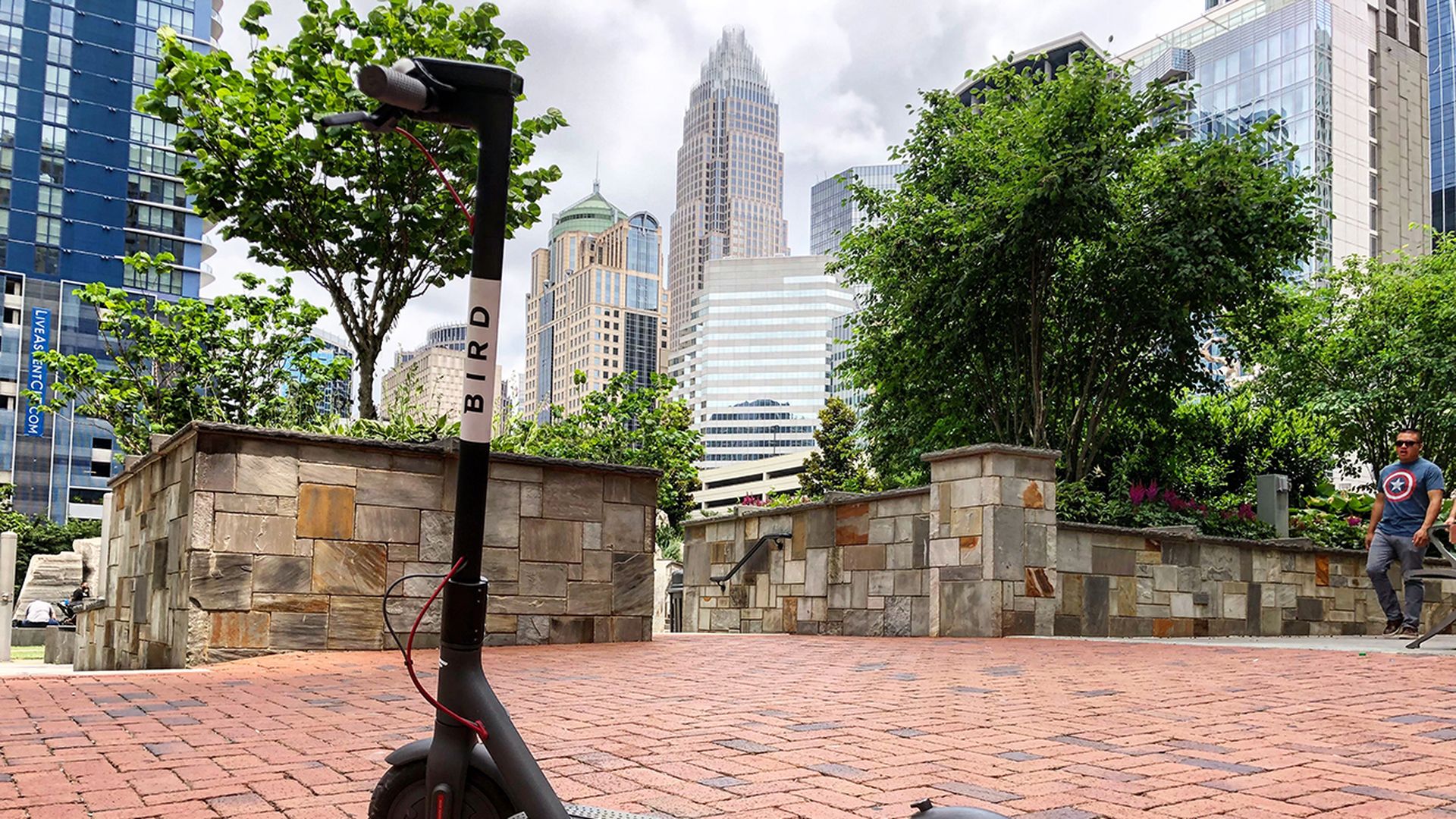
Last Friday night after stumbling out of Howl at the Moon, I started looking around for an electric scooter.
I wanted to get out of Uptown so I wouldn’t have to wait as long for a Lyft. I found two scooters, but something about how hard it was for me to scan the QR code and how many buzzed drivers were probably on the road made me reconsider. I’d never thought about it, but I guess scooting while intoxicated is probably illegal and definitely unwise.
I walked away, but it only took a few moments for a tipsy couple to grab them, scan them, and barely keep themselves upright as they scooted into the night.
That’s when it hit me.
Someone’s definitely going to get killed on one of these scooters eventually. And when it happens, we shouldn’t blame the scooter.
/2024/01/05/1704482937593.jpg)
I don’t want to sound insensitive. I mean, it’s going to be super sad when it finally happens, but it won’t be the fault of Lime and Bird, the two electric scooter companies active in Charlotte.
Still, whenever the argument is inevitably made that the scooters themselves are unsafe, we’re going to be in for a goofy city-wide discussion on whether to seriously curtail the scooter craze.
You can already see the beginnings of this debate on social media. People complain about how fast the scooters are, how no one wears a helmet, how the riders weave on and off sidewalks and bike lanes, how kids way too young to make split-second traffic decisions are now sharing road space with SUVs. The complaints aren’t even wrong. We all have the anecdotal evidence to back it up.
When you add alcohol to the mix, we have to admit someone’s eventually going to get hurt, and bad. Cities who’ve had scooters longer already have plenty of horror stories. Charlotte isn’t far off from getting a bunch of our own.
At some point, a reckless scooter, a careless driver, or some combination of the two will lead to a tragic morning news story.
And the opportunistic party poopers will be celebrating. “See? I told you!” they’ll say. “Scooters aren’t safe! We need to get rid of them!”
We could go the way of cities like Milwaukee and Charleston, both of which recently removed electric scooters from their streets.
This kind of knee-jerk reaction is akin to Tide making their bags nearly impossible to open just because some Gen Z kiddos thought it’d be funny to eat them. Electric scooters are dangerous in the same way Tide Pods are dangerous. Yeah, both could accidentally kill you, but personal responsibility and poor decision making is always going to be the X factor.
Look, just because something bad can happen to you on a scooter, doesn’t mean the scooter is to blame. A scooter is a tool. It’s just like a car or a bike. Do we debate banning bikes and cars every time a fatality occurs?
/2024/01/05/1704482937827.png)
Bird and Lime, the companies who brought electric scooters to Charlotte, have done plenty to make the scooters safe.
Both apps include instructions reminding riders to stay in bike lanes, yield to pedestrians, park the scooters on curbsides, and always ride with a helmet. Lime will even send you a helmet for $10 and Bird will send you one for free.
Both companies require you to be 18 to ride, and since scooters are likely considered mopeds under North Carolina law, operating them under the influence of alcohol is a punishable misdemeanor.
If you follow those simple rules, scooters are perfectly safe, but no one can force you to make responsible decisions.
We all see scooters in streets and on sidewalks all the time. We see them speed past pedestrians with no regard. I’ve never spotted one person wearing a helmet on a scooter, and kids and teens ride them just as much as adults. And with the amount of scooters parked outside of breweries, I’m sure not everyone using them is stone cold sober.
What else could Bird, Lime, and Charlotte possibly do?
The scooter companies and the city have given us every opportunity to not make boneheaded decisions. What happens after we choose to get on one is up to each one of us.