This non-profit has delivered 5,000 boxes of pads and tampons to homeless women in Charlotte

Add Axios as your preferred source to
see more of our stories on Google.
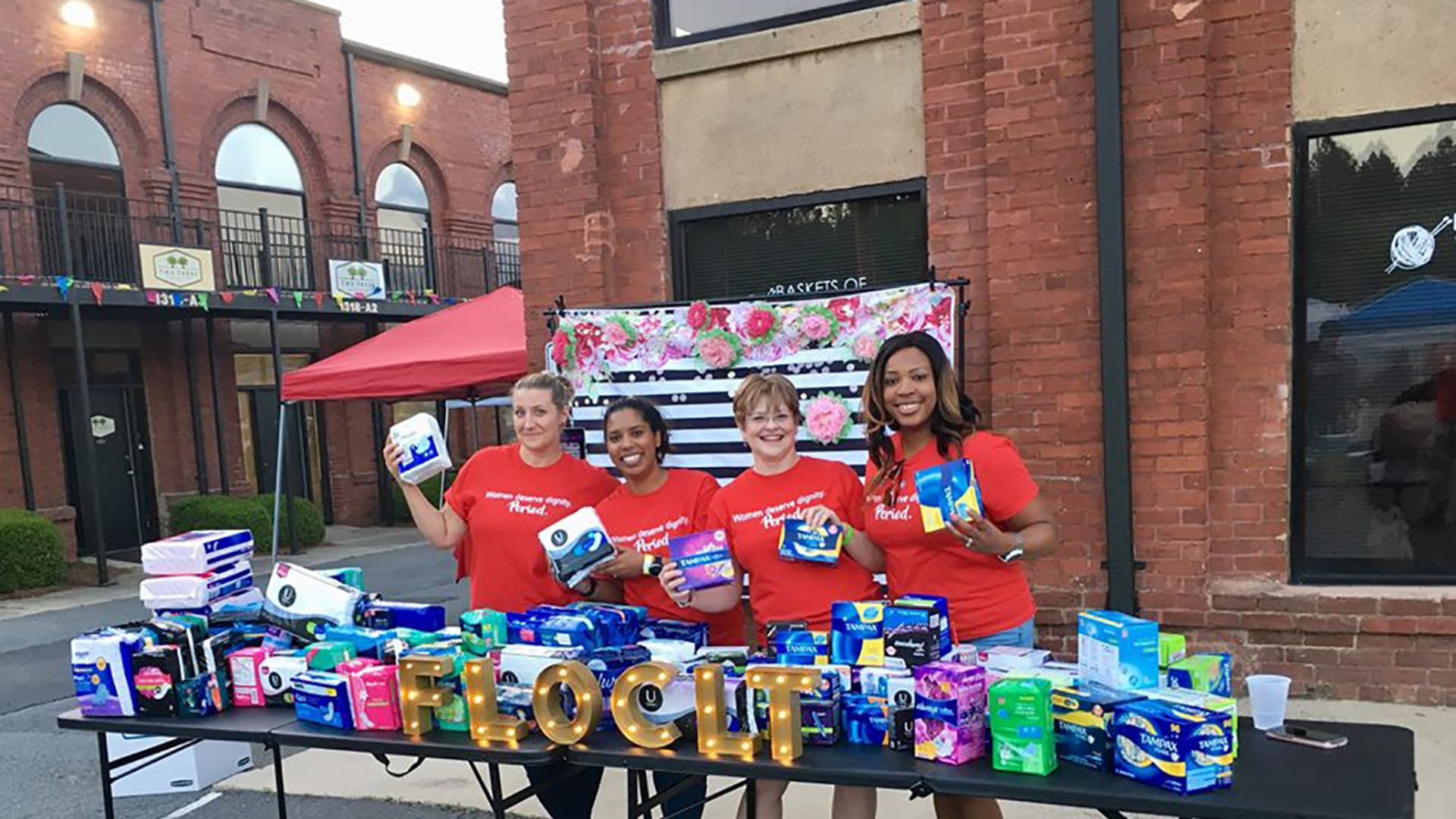
In just over a year, Flo Charlotte has distributed an estimated 5,000 boxes of pads and tampons to women and teens throughout Charlotte — and it all started when founder Audrey Brewer watched a YouTube video about how homeless women handle their periods without access to basic necessities.
The 7-minute video by Bustle follows women in their twenties, living on the streets and doing things like washing their faces and bodies in public restroom sinks, demonstrating the best way to clean themselves over a toilet and describing how hard it is to spend $10 on a box of tampons instead of food. “I’d rather be clean, than, you know, be full,” one woman says.
Others describe the materials they’ve used to create makeshift feminine hygiene products — toilet paper, plastic bags, cotton balls, makeup pads. The list goes on.
“I think the hardest thing about being on the streets is probably being a female,” Kailah, a 27-year-old, says in the first few seconds.
You can see the video here.
“I’d never thought of this before, and it upset me that I’d never thought of this before,” Brewer told the Agenda. “As a woman who grew up in Charlotte, I see the other women of Charlotte not so much as sisters, but I feel for them, especially if they have this need, because it means they have so many other needs, too.”
Unsure of how else to help, she decided to take pads to a local shelter and shared her idea on Facebook inviting friends to send a box with her.
To her surprise, there were 100 boxes of pads, tampons and wipes on her front porch in two days.
/2024/01/05/1704484492578.jpg)
Weeks after that first donation, Ricketa Mangum watched the same video, discovered Brewer’s movement and immediately asked what the next move was.
Together, they launched Flo Charlotte, a 501(c)(3) aimed at providing feminine hygiene products to women in the community who otherwise would not have access to them. This includes women in homeless shelters, domestic violence shelters, schools and LGBTQ+ safe havens.
/2024/01/05/1704484493262.jpg)
As of 2017, the most recent year for which data is available, over 40% of Charlotte’s homeless population was female, which drove Brewer and Mangum to focus on getting supplies into shelters.
“If you don’t have a home, then your money is limited,” Mangum said. “One of the things that we try to make easier on women is eliminating the need to have to decide [between] your hygiene or something to eat or your hygiene or clothing.”
It’s also about helping the shelters themselves.
“It’s just one thing we want to take off of the shelters,” Brewer said. “One stressor that we can be a resource for while they’re fighting the bigger problems that come with homelessness.”
Word of their efforts soon spread, not just to other shelters in the area but to a number of schools in CMS where teachers and nurses often make runs to the dollar store to purchase the necessary products for their students.
Brewer and Mangum noted that schools most in need of feminine hygiene products were also those seeing below-grade-level reading skills. With such a dire need for funding, feminine hygiene products are simply not at the front of the mind.
Today, they have a formal relationship with nurses and counselors in 15 schools who validate the need for help from Flo Charlotte and its community.
In launching a nonprofit, Brewer and Mangum expected to hit roadblocks — in the form of lack of donations, money and volunteers. But they’ve been met with overwhelming support.
/2024/01/05/1704484493570.jpg)
“That hasn’t been the case for us,” Brewer said. “We’ve had a ton of involvement.”
Still, menstruation can be a taboo topic and they say getting people to talk about it can be a challenge.
“But once you realize there’s a problem, it’s kind of hard to look away, and you end up talking about it,” Brewer said.
Today, Flo partners with young professional organizations, makes appearances at conferences and hosts packing parties during which 5 pads, 5 tampons and an insert listing refill shelters are packaged together and delivered to women throughout the city.
In the near future, Brewer and Mangum plan to continue focusing on expanding the number of volunteers involved and figuring out how to grow to include education in their mission.
/2024/01/05/1704484494257.jpg)
Longterm, the two see Flo Charlotte growing to become the go-to resource for bridging the feminine hygiene gap.
“I think our heart for the city and our goals for Flo Charlotte are to alleviate some of the suffering of the people around us,” Brewer said. “Because we can’t alleviate the suffering itself, we can’t alleviate the homelessness, but what we can do is provide support.”
Connect with and learn how to get involved with Flo Charlotte on its website, and keep up with the efforts on Facebook, Twitter and Instagram. All photos via Facebook.