Charlotte is growing up. Here’s what 3 developers see happening right now

Add Axios as your preferred source to
see more of our stories on Google.
KL charlotte skyline header
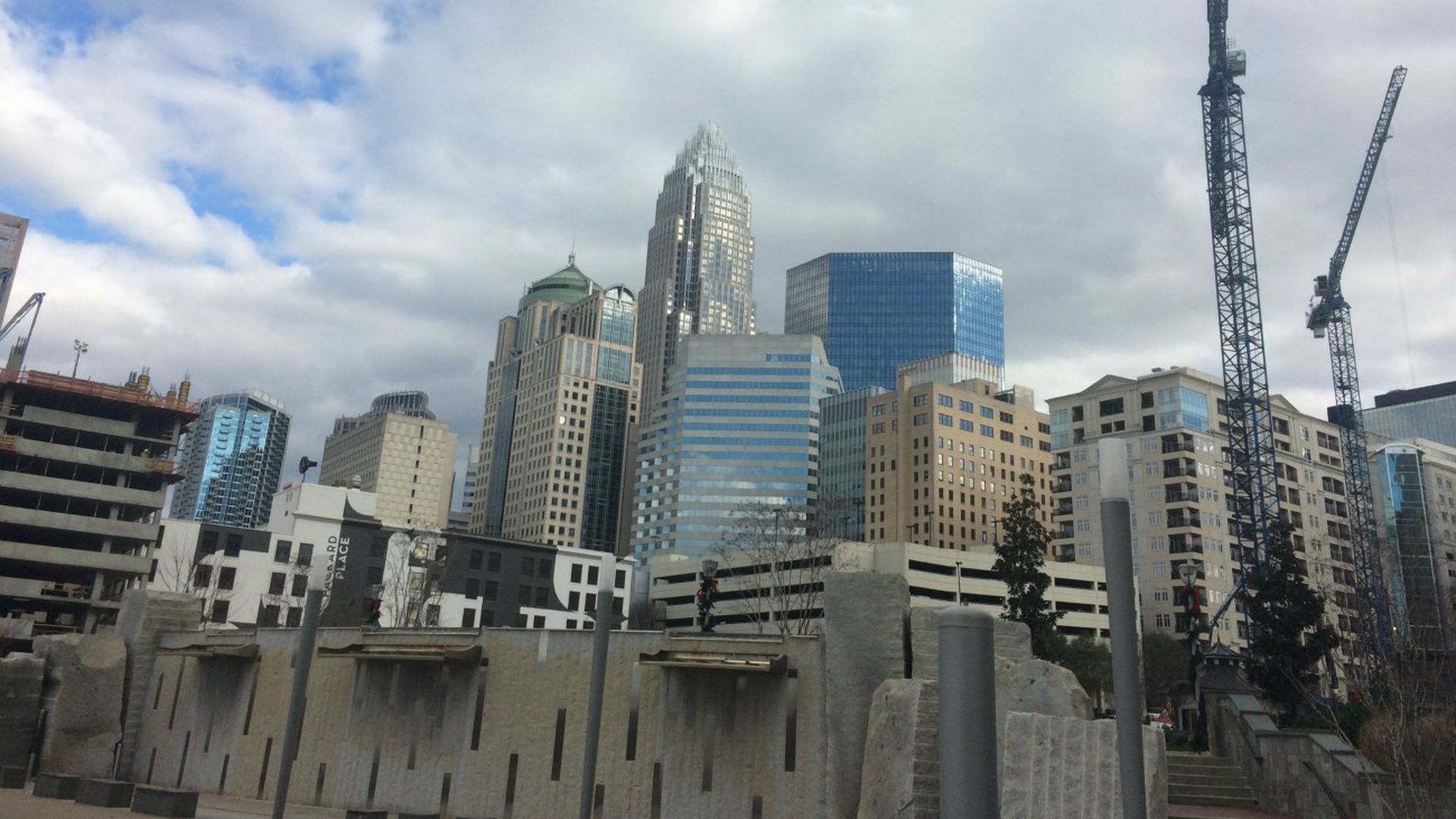
When I first moved to Charlotte in 2011, I encountered a city discovering who it was. BB&T Ballpark didn’t exist, Romare Bearden Park didn’t exist. Hell, Third Ward was basically a wasteland. Six years later and now it is the new center of Uptown.
/2024/01/05/1704477447919.jpg)
This is just one example of how we are seeing Charlotte grow up before our very eyes.
I had a conversation with some friends the other day about how Charlotte compares to other “it’ cities like Austin, Denver and Nashville. While we don’t quite have the culture, social scene and general urbanism those cities do, what excites me about Charlotte is how quickly we are getting there and being able to see it first-hand.
Those other cities, while also exploding in population and development, already had an existing identity and infrastructure. I liken Charlotte to a teenager growing up and discovering who she is.
A big part of that process is driven by developers. There are good developers, there are bad developers and there are those that just don’t care. But on the whole, we are getting much more positive development than negative — though there is much more this city can learn.
I spoke with a few local developers whom I greatly admire and appreciate the work they are doing to continue this city’s growth in the right direction. We spoke about Charlotte’s growing urban environment, the retail scene, and what comes next.
Moving beyond 9 to 5
Each developer I talked to pointed out how much growth has come in Charlotte’s urban environment. Not only as a city with an identity but as a functioning city beyond the 9-5 hours.
David Ravin, president and CEO of Northwood Ravin, moved here in 1989 and said at that point, Charlotte “was a ghost town after business hours and on the weekends.” Now that’s changing, partly because of projects like Northwood Ravin’s The Vue, Catalyst and the under-construction 550 Stonewall.
/2024/01/05/1704477448574.jpg)
“To me, the urban dweller or worker wants to walk to good places to eat and socialize,” Ravin said. “Urban living is all about convenience. Being just steps from everything and not wasting time sitting in traffic is why people move Uptown.”
No, there’s not much to do in the wee hours of the morning. But do we really want that?
Brian Leary, president of commercial and mixed-use development at Crescent Communities, was quick to stop me in thinking we need to be a 24-hour city. Crescent is responsible for projects like the upcoming Tryon Place, the under-construction Whole Foods development uptown and Crescent NoDa.
“First off, can we admit that we don’t want to be a 24-hour city and realize how much better being an 18-hour city could be?” Leary asked. “Didn’t mother always say, ‘Nothing good ever happens after midnight?’”
Shopping will come
Despite all this growth, the area around Uptown is, for all intents and purposes, pretty devoid of true blue shopping.
There are major improvements happening, but we have a long ways to go. Leary told me the most important thing needed to fix that problem is “People, people and more people. Create a place people want to call home and retail will follow.”
/2024/01/05/1704477448954.jpg)
While this seems obvious, it is more complex than you may think. We have all these apartments going up, and people are already saying, “Oh my God, another apartment complex? Seriously?” Well, the key to having retail and all the other lovely things that make a downtown a downtown is that critical mass. Manhattan has 7 H&M’s and 9 Whole Foods’ for a reason. Obviously, Charlotte is not on its way to being Manhattan, but the principle is the same. People bring the retail.
David Furman, a developer and architect who runs Centro CityWorks, pointed out that retail is already taking hold in close-in neighborhoods that are booming in population. “South End is in the middle of a total makeover that will end up with a strong retail presence which great neighborhoods demand,” he said.
Outside the loop
One major challenge toward center-city growth: the I-277 loop that surrounds the urban core with asphalt. Each of the three developers spoke of the need to improve connections into Uptown.
“The 277 loop is a plus and a minus,” Furman said. It’s a plus in how to defines the center city and keeps it walkable. But it’s a minus in that “it severs off the surrounding neighborhoods, preventing the blend from downtown outward, and creating an unpleasant connection by bike or walking.”
I travel over 277 every single day and I would love to see a cap or at least something to bridge the gap between Uptown and South End (and the other surrounding areas). “If we did have dedicated pedestrian bridges and tunnels, I believe they would be very successful,” Ravin said.
Charlotte is a city growing up. Moving out of her parents’ house, striking out on her own. Discovering who she is. It is fascinating to see and we have to learn from our mistakes, focus on the people that make Charlotte what it is and grow together.
“The two key components to any sustainable efforts to develop great projects are that we all must first care about our goals and their impact, and we must try to continuously improve on what we have seen and what we know,” Furman said.