Diverse neighborhoods do exist in Charlotte. Meet one of them.

Add Axios as your preferred source to
see more of our stories on Google.
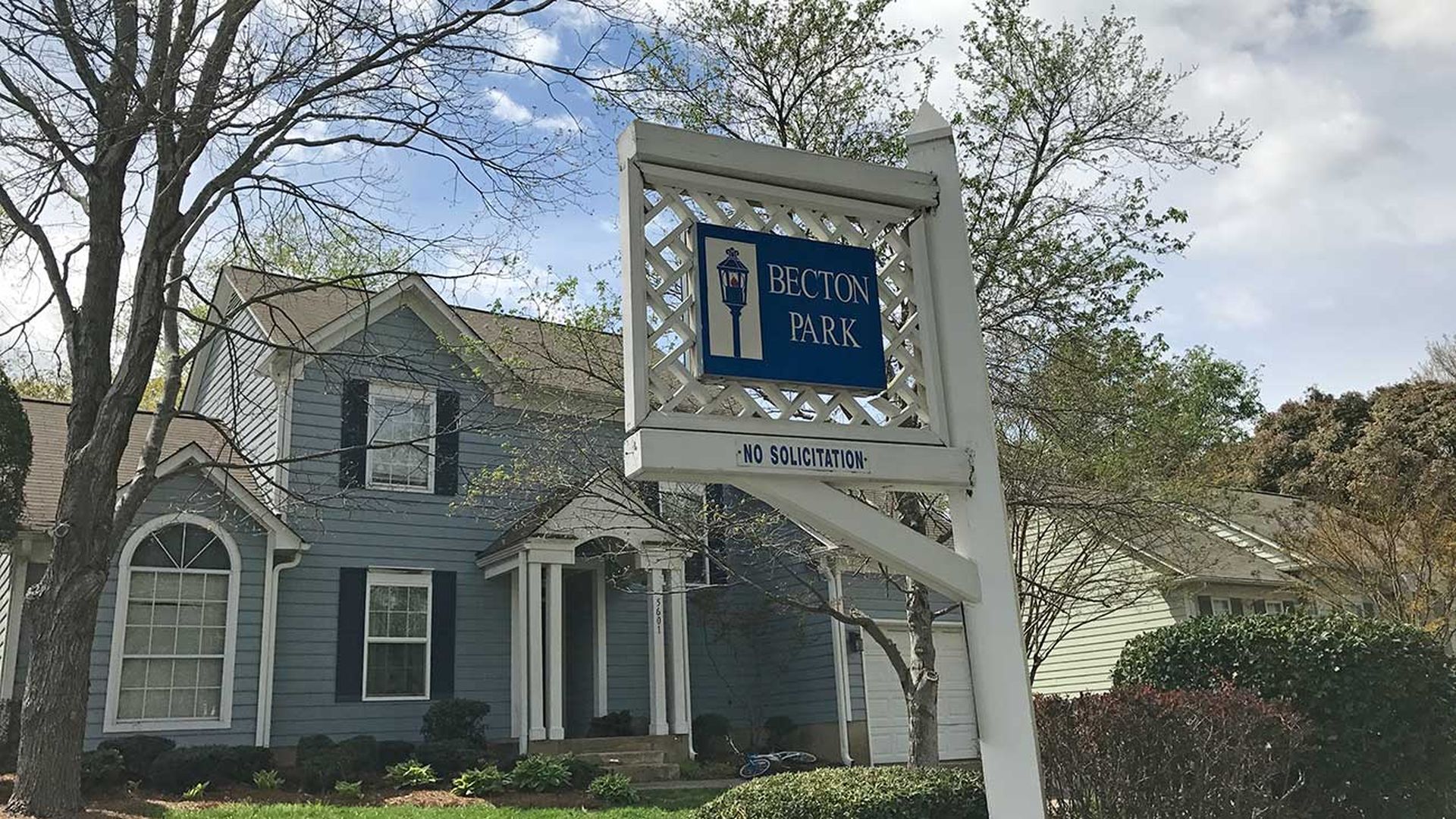
Just 15 minutes east of Uptown, you’ll find a neighborhood that’s a cross-section of Charlotte.
There are low-slung houses on sprawling lots a mile away from three-story apartments connected by breezeways.
You’ll see high school kids dash toward home across a busy intersection and a minute later see an old man on a tractor.
Such is life in the Becton Park area, a neighborhood that encapsulates so many descriptors of modern Charlotte. There are sizable populations of people across the ethnic spectrum. Homeowners and renters. Native Charlotteans and immigrants.
At a time when Charlotte is lamenting the lack of diversity in its neighborhoods, Becton Park is a compelling example to examine.
/2024/01/05/1704478434554.jpg)
By most any objective measure, Charlotte is a segregated city.
The wedge of south Charlotte between Park Road and Monroe Road is populated almost exclusively by affluent white families. Poor and minority families live in the remaining crescent.
This pattern is now under scrutiny from Charlotte’s political and business leaders after being heavily cited in a task force report examining how Mecklenburg County came to be the most difficult place for children born in poverty to make it to the middle class.
/2024/01/05/1704478434758.jpg)
[Agenda story: How Charlotte came to be a segregated city]
Those discrepancies play out in the city’s official data. Charlotte tracks 400 individual neighborhoods in its Quality of Life survey, updated with info on demographics, real estate, schooling and environment.
According to the city’s data, nearly a third are hyper-segregated by race. It shows that 112 of its neighborhoods are more than 80 percent white and 32 are more than 80 percent black. A larger percentage skew heavily but not quite so drastically to one race or another.
These trends are only increasing as new residents sort themselves into welcoming neighborhoods.
- The Montclaire neighborhood was about 50 percent Hispanic in the year 2000. By 2010, it was up to 75 percent Hispanic.
- The Commonwealth neighborhood in east Charlotte went from 60 percent white to 85 percent white.
- University City North went from 16 percent black to 42 percent black.
Despite all that, Becton Park has only grown more diverse.
The Agenda reviewed all 400+ neighborhoods and determined this one to be the most diverse.
Though your definition of the neighborhood’s boundaries will cause minor variations, Becton Park has become roughly 40 percent white, 35 percent black, 18 percent Hispanic and 3 percent Asian.
The white population has dropped significantly percentage-wise over the last decade as more black and Hispanic people have moved in.
The median household income in Becton Park is about $43,000, with an average home sales price of $103,932 — both below the county average as a whole. Interestingly, the neighborhood’s median rent of $959, which is a bit higher than you would expect.
/2024/01/05/1704478435044.jpg)
/2024/01/05/1704478435317.jpg)
But the true flavor of the neighborhood can’t be captured in numbers.
/2024/01/05/1704478435565.jpg)
The 1950s-era development of Marlwood Acres, with huge lots, contrasts with the skinny houses on cramped lots of Becton Park.
/2024/01/05/1704478435825.jpg)
/2024/01/05/1704478436127.jpg)
/2024/01/05/1704478436288.jpg)
Apartments don’t come with premium amenities but you can get them for a reasonable rate.
A sprawling Super Target, Lowe’s and brand-new Zaxby’s sits just down the road from the Latino market and the renowned Indian vegetarian cuisine.
The churches tend to be in two categories: Baptist or Spanish-speaking.
And then, on the far side of the neighborhood, you’ll feel like you’re back in the country. All of this land was part of a horse farm not that long ago, and piles of stacked firewood for sale and signs for a weekend rodeo will make you feel you’re back in that time period (or that part of the state).
Sure, Albemarle Road isn’t the most picturesque place in the world. But long-time residents say they love living here because of the diversity.
“I would never live in Ballantyne, I don’t care if I had millions and millions of dollars,” said Judy Jeffries, who lives in Marlwood Acres. “I want different. I want people who dress differently, look differently, have a different culture from me. I just want to learn from them. that’s what I like.”