Half of all the apartments in Charlotte are now premium

Add Axios as your preferred source to
see more of our stories on Google.
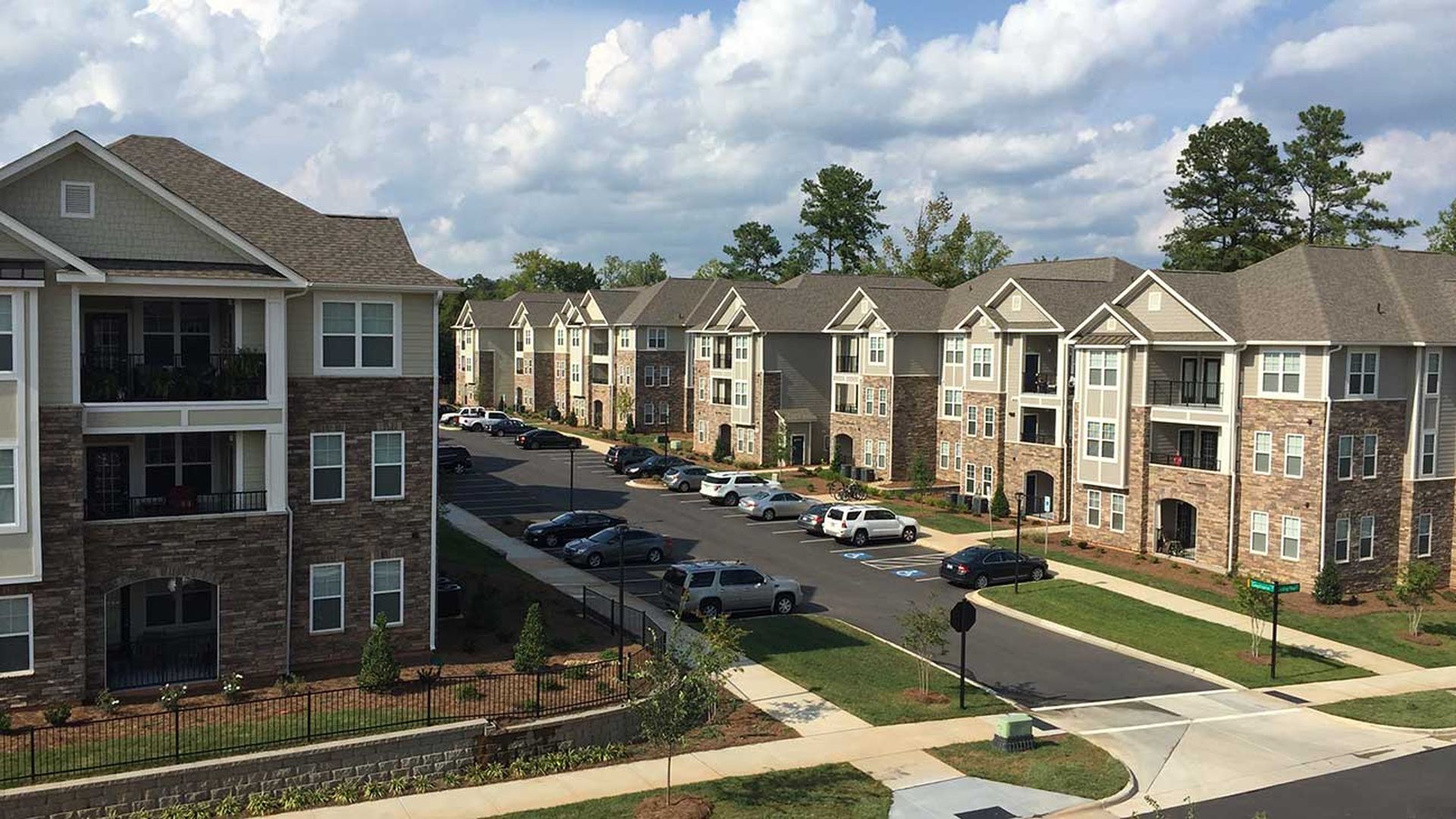
Three years into an apartment building boom, Charlotte’s mix of rental units has become extraordinarily out of whack with national averages.
Nearly half of all the apartments in Charlotte are now premium priced — either luxury or market-rate, according to figures from the industry group CoStar. Both of those categories are out of reach for families close to the city’s median income.
Less than a quarter of apartment units nationally fall into those categories.
The same discrepancy is seen at the low end. Only 14 percent of Charlotte’s apartments are “affordable,” compared with more than 36 percent nationally.
The “workforce” housing category in the chart below would also fall under Charlotte’s definition of affordable housing
[Agenda story: What does affordable housing mean in Charlotte?]
/2024/01/05/1704479308646.jpg)
The data was presented by Horizon Development Properties, a nonprofit developer wholly owned by the Charlotte Housing Authority and with an obvious bias toward affordable housing.
But the numbers objectively raise questions about how and where Charlotte will serve families that don’t make premium incomes.
/2024/01/05/1704479308987.jpg)
Even Clay Grubb, the CEO of Charlotte apartment developer Grubb Properties, said Wednesday that Charlotte was heading toward a “crisis” in housing affordability.
So what can be done about it?
/2024/01/05/1704479309794.jpg)
Speaking at a panel discussion on affordable housing Wednesday, Grubb did offer one potential way Charlotte could encourage more affordable units rather than the standard luxury ones.
The City Council has set a goal of building 5,000 affordable apartments in three years. City officials said Wednesday that they’re 32 percent of the way there.
Grubb recommended that the city and Mecklenburg County make the parameters clear for private developers interested in building affordable units — both what subsidies they can receive and what they must do to fulfill all their obligations.
Otherwise, the whole process is a “black box” that adds uncertainty to an already risky business.
“When you don’t tell me what the rules are, you really make my life tough,” he said.
Julie Porter, president of the Charlotte-Mecklenburg Housing Partnership, said the larger business community would also be interested in ponying up money for affordable housing if parameters were laid out.
“If we are able to provide that to them, I think you’d be surprised at who would come to the table,” she said.