Why aren’t we making friends at bars and breweries?

Add Axios as your preferred source to
see more of our stories on Google.
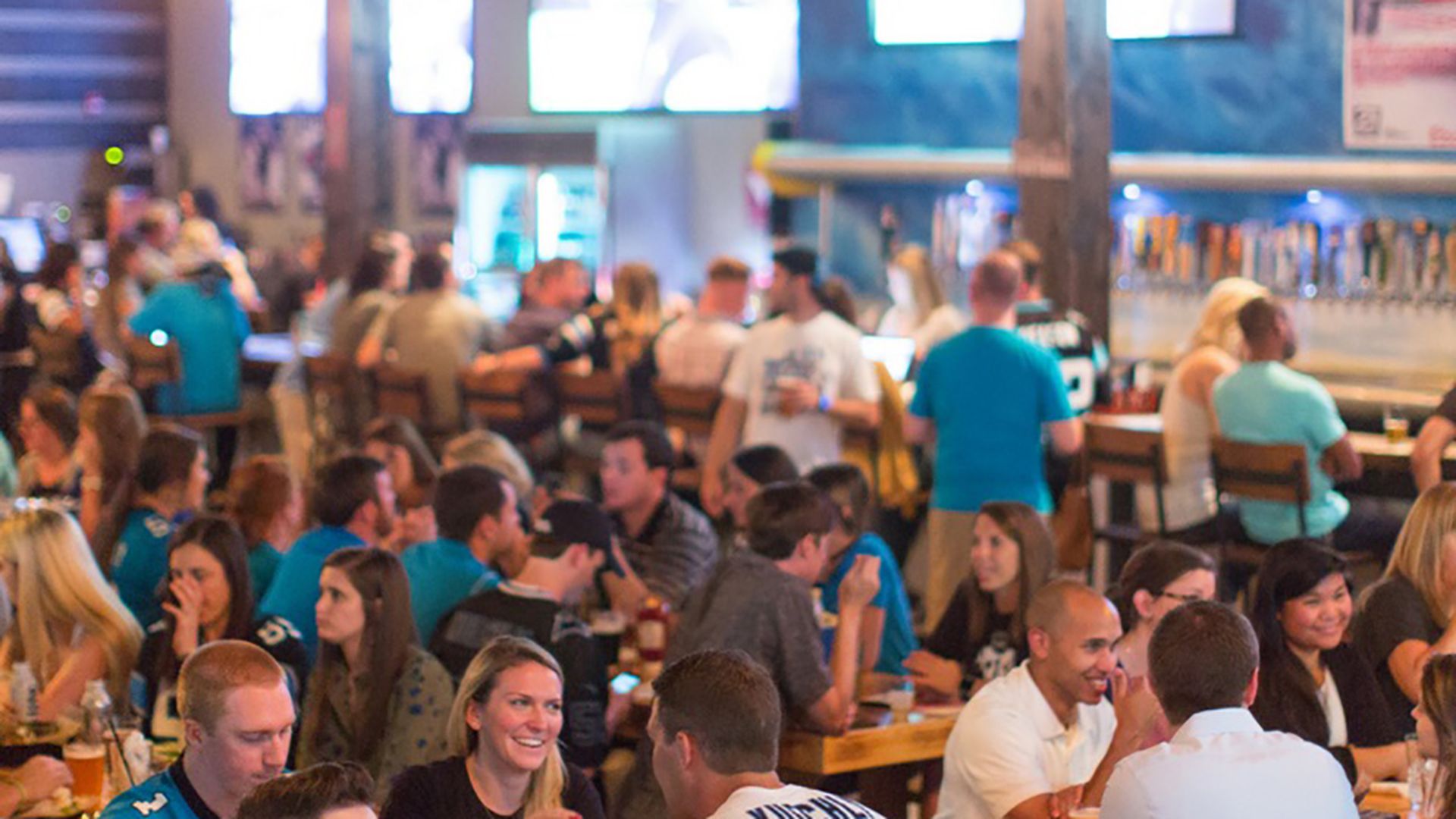
Despite the incredibly social environment that has been created in Charlotte due to the overwhelming amount of breweries and bars, they’re never going to be the place young Charlotteans will go to make friends.
It should be akin to shooting fish in a barrel: The median age in Charlotte is 33, the ratio of men to women is even, the rate of single, childless people was at 11.22% in 2015 and the average number of drinks consumed by a 25-year-old per week hovers at 3 for women and 13 for men.
/2024/01/05/1704480182088.jpg)
Think about the scene you found yourself in the middle of last weekend. In a place like Sycamore or Olde Mecklenburg Brewery, or even a more close-quartered space like Angry Ale’s, there may be hundreds of people milling about talking to each other.
But how many of those pockets of people actually interacting with another group?
How is it that, even when we’re sitting elbow to elbow and standing shoulder to shoulder, literally having to try to avoid pressing flush against someone to make it to the bar, we feel the need to keep to our own groups?
I’ve thought about this a lot, especially when I realized once that my group was sitting next to a group that included someone I knew – and we still chose to not interact.
/2024/01/05/1704480182358.jpg)
“If I’m out at a casual bar with a group, I’m probably not going to venture outside of that,” someone explained to me, adding that it’s not a personal thing, but rather a question of whether or not there’s enough ROI to justify taking that awkward leap of faith.
“People go to bars in groups not to meet a ton of new people, but to be introduced by their friends and be seen in a social light that exaggerates social aptitude,” a former bartender with years’ worth of people watching experience under his belt explained.
This seems to be a common theme, even in spaces like Heist, Flight and Olde Meck, that lend themselves to a community feel thanks to long tables and fire pits, where if two groups don’t have anything more in common than where they’re sitting, they don’t have a reason to interact. It doesn’t help that, without a general rule of thumb, nobody knows exactly what warrants an introduction.
“There needs to be a driving factor. Without one, I think it’s rare that the situation arises that a group will openly join another out of curiosity.”
I’ve found that this idea also rings true. Since moving to Charlotte and embracing the bar scene at 21, I can count on one hand the number of times a group has merged with mine, and sure enough, there was a driving factor that came in the form of the dogs versus babies in breweries debate. Even that interaction didn’t last more than a few minutes before we all went our separate ways.
/2024/01/05/1704480182640.jpg)
According to psychologists, the magic number when it comes to having the confidence to approach another group of people is three, and it all comes down to the idea of a social group.
Most groups you see in social settings are primary (small with enduring relationships) or secondary (a larger number of people with what might be temporary relationships). Both groups are founded on a sense of belonging, which make approaching and breaking into them understandably intimidating.
But none of this means that those at the tables aren’t open to the possibility of interactions.
“Does all of this mean that if a group approached mine, that we would be against combining our camps into a colony? Hell no,” I was told. “That’s awesome. I just don’t know anyone that has that as a priority, even though we’re in this situation whose potential for interaction is through the roof.”
So how do we fix it?
“You need something that almost forces interaction between people,” someone suggested. “Like an activity at the bar, but it can’t be dorky.”
On their end, bars and breweries do work on this idea with things like themed brunches, bar games, trivia nights and run clubs, but to a lot of people, it doesn’t seem to translate well, because even those activities are taken over by groups.
/2024/01/05/1704480182891.jpg)
So maybe we just don’t fix it. Maybe we just embrace and approach it with the “If it isn’t broken, don’t fix it” mindset and, even though we’ve got the potential at the tips of our fingertips, rely on the apps that we use with the actual tips of our fingertips. But where’s the fun in that? Maybe the bigger question is this: Do we actually care about fixing it?