Why aren’t young Charlotteans open to couples therapy?

Add Axios as your preferred source to
see more of our stories on Google.
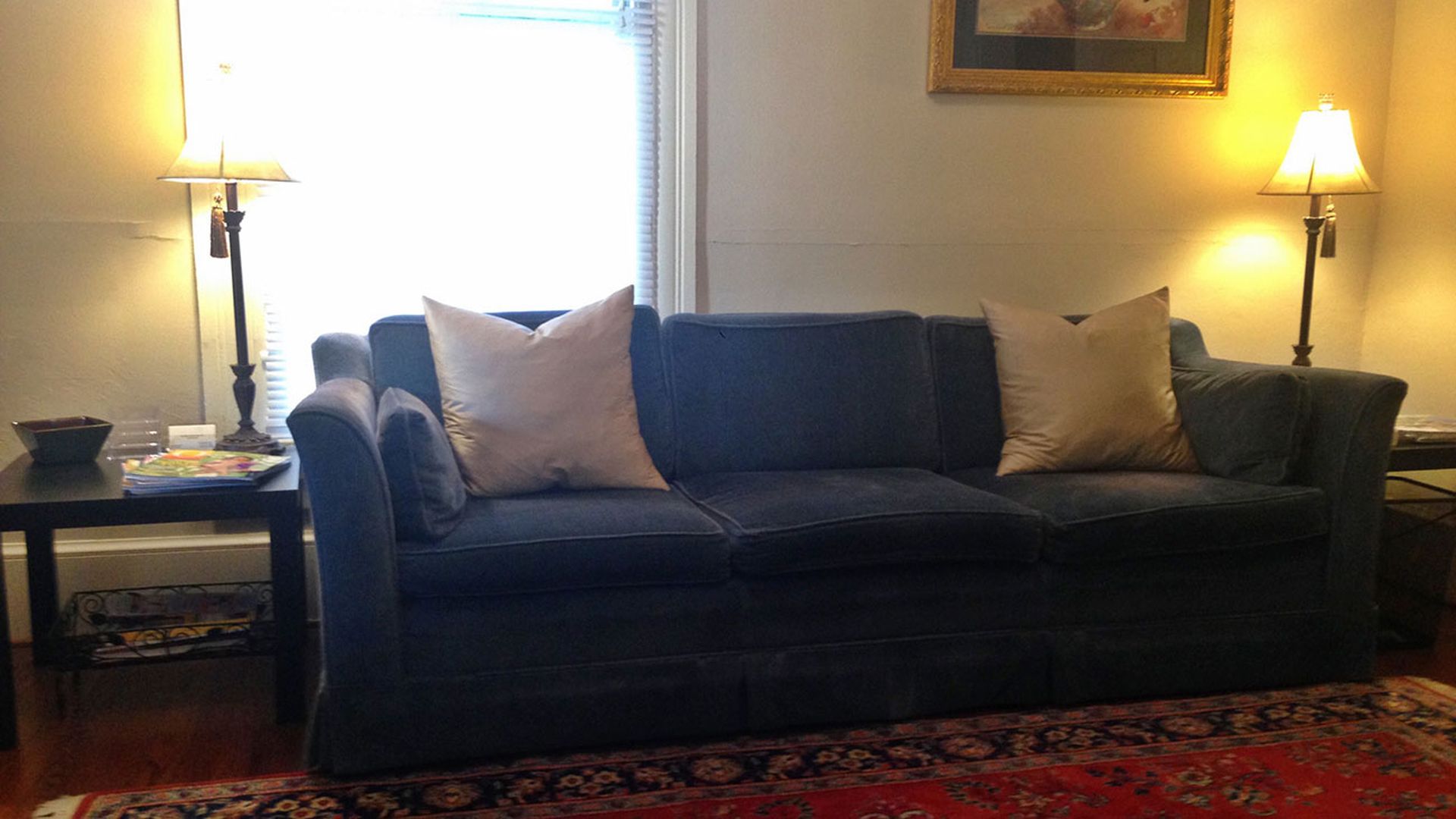
Mary Gross blue-therapy-sofa cover
Andrew Dunn has a very bad habit. He is constantly sending me on interviews that are secretly meant to help me. First, he sent me to talk to a personal stylist. Next, a life coach. And now, he went all-out and sent me to a therapist. Does Andrew think I need help with my wardrobe, life choices and mental state? Yes he does.
But to be honest, I’m not mad at Andrew. Lucky for him, I love therapists. I’ve been to therapy and find the whole mental health field fascinating. In fact, I once had a dream of being a therapist. But then I realized that I would be a lousy one since I wanted to be nosey and hear people’s issues, but not actually help fix them.
/2024/01/06/1704559852876.jpg)
Wesley Little is different. She’s a therapist and she does want to help people fix their issues. And the type of therapy she’s most passionate about? Couples therapy. But Wesley has noticed that young Charlotte couples are really hesitant when it comes to therapy. Why is this? And why is it important that this trend changes?
Wesley gave me the lowdown. Here’s our conversation:
Why do you think young people are hesitant about couples therapy?
Wesley: People are getting better at coming in for individual therapy, but couples therapy is still stigmatized. People may think, “How could we need couples therapy, we’ve only been married for two years!” But there’s a lot of pressure on young couples; you’re supposed to be in the happiest phase of your life. But really, you’re dealing with enormous stressors. Financially, talking about having kids, navigating each other’s families… it’s a really high-stress time.
Where does this stigmatization come from?
Wesley: In our culture, couples therapy is not seen as a healthy, normal response. I think that there’s nothing more private or intimate than a partnership and it can be intimidating to bring in a therapist. Couples therapy is seen as emergency surgery but I want it to be seen as preventative medicine.
/2024/01/06/1704559853183.jpg)
When do people start to feel comfortable to come to therapy?
Wesley: On average, after an adverse event (such as an affair), people wait six years to come into therapy. Usually couples turn to therapy when they are so desperate that they don’t know what else to do. It’s usually very fractured between a couple before they come in.
In that case, is it too late to help the couple?
Wesley: No, I don’t think so. And the model I use, Emotionally Focused Therapy (EFT), would certainly say no. But it makes me sad to think of people being that unhappy for six years.
What issues do you help young couples with?
Wesley: Sudden events like an affair or a rupture where your partner has truly not been there for you. Also when people get into what EFT calls “the dance” or the argument cycle. In most couples we see two types of people: a pursuer or a withdrawer. I’m a pursuer, so when I get activated about the idea that I can’t reach my partner, I ask questions. “What’s wrong?” and “Are you OK?” This is very overwhelming for the withdrawer. They retreat, they shut down, they leave the room, they don’t want to talk. We all have this dance in our relationships.
I’m definitely a pursuer too. Is it usually the woman who is the pursuer?
Wesley: That’s an understandable question but I want to be careful with how I answer it for two reasons: (1) I definitely see withdrawer females and (2) I see same-sex couples and this dynamic is present regardless of gender. But I do think that men are more socialized to feel like they are not supposed to have emotional needs which can be a withdrawer trait and women are more socialized that the relationship health is their responsibility, a Pursuer trait.
I know same-sex couples have typical arguments like “Why didn’t you take the garbage out?” But are there issues above and beyond that they face?
Wesley: I think any couple that suffers oppression (a same-sex couple or a mixed race couple) will have more stressors.
What does a typical couples therapy session look like?
Wesley: I like to have 80-90 minutes with a couple. It depends on what stage they’re at, but it starts with trying to understand the couple and their history. Then I start to notice who is the pursuer and the withdrawer. I’m there to guide the process and make sure that neither person gets so activated that they have to leave the room.
So people don’t just pay to fight in front of you?
Wesley: There are models of therapy where you do let the couple fight and you point out what’s happening. But with the EFT model, I don’t want the couple to have the same interaction that they have at home. These arguments only make them feel more separated from one another and more hopeless.
In the movies you always see the therapist take one person’s side. Does this happen in your sessions?
Wesley: I would feel like I failed as a therapist if that happened. EFT is not about weighing in. There is no bad guy.
Is there anything you would say to the young couples of Charlotte to make them feel more comfortable about coming in for couples therapy?
Wesley: I would say that we know how important you are to each other. It might be the single most important relationship that you have. So why wouldn’t you throw a couple hours at it? What’s the worse that’s going to happen? It can’t be worse than what’s already happening in your apartment.
Do you have to be married?
Wesley: No. Couples therapy is for any serious couple.
How should couples prepare for a session?
Wesley: They don’t need to. They can just come as they are.
How much does couples therapy cost?
Wesley: The average cost is $100 to $130.
Are there any couples that you won’t see?
Wesley: I don’t see couples in an abusive relationship or couples who have an unacknowledged substance addiction. The evidence says that couples therapy is not effective for these couples.
Have you and your husband done couples therapy?
Wesley: We have not, but the time when we would have benefitted from it the most was pre-grad school when I didn’t know much about couples therapy. But looking back I wish I would have understood the pursuer/ withdrawer dynamic.
As you can see, Wesley Little is serious about her mission to de-stigmatize therapy for young couples. She even offers a free 20-minute consultation so that you can try out couples therapy and see for yourself that it’s not so scary. Would you and your partner benefit from therapy? Maybe you don’t need it right now, but try to keep an open mind when things get rocky. Six years is way too long to wait.