QuikTrip’s big bet on the Charlotte market is paying off

Add Axios as your preferred source to
see more of our stories on Google.
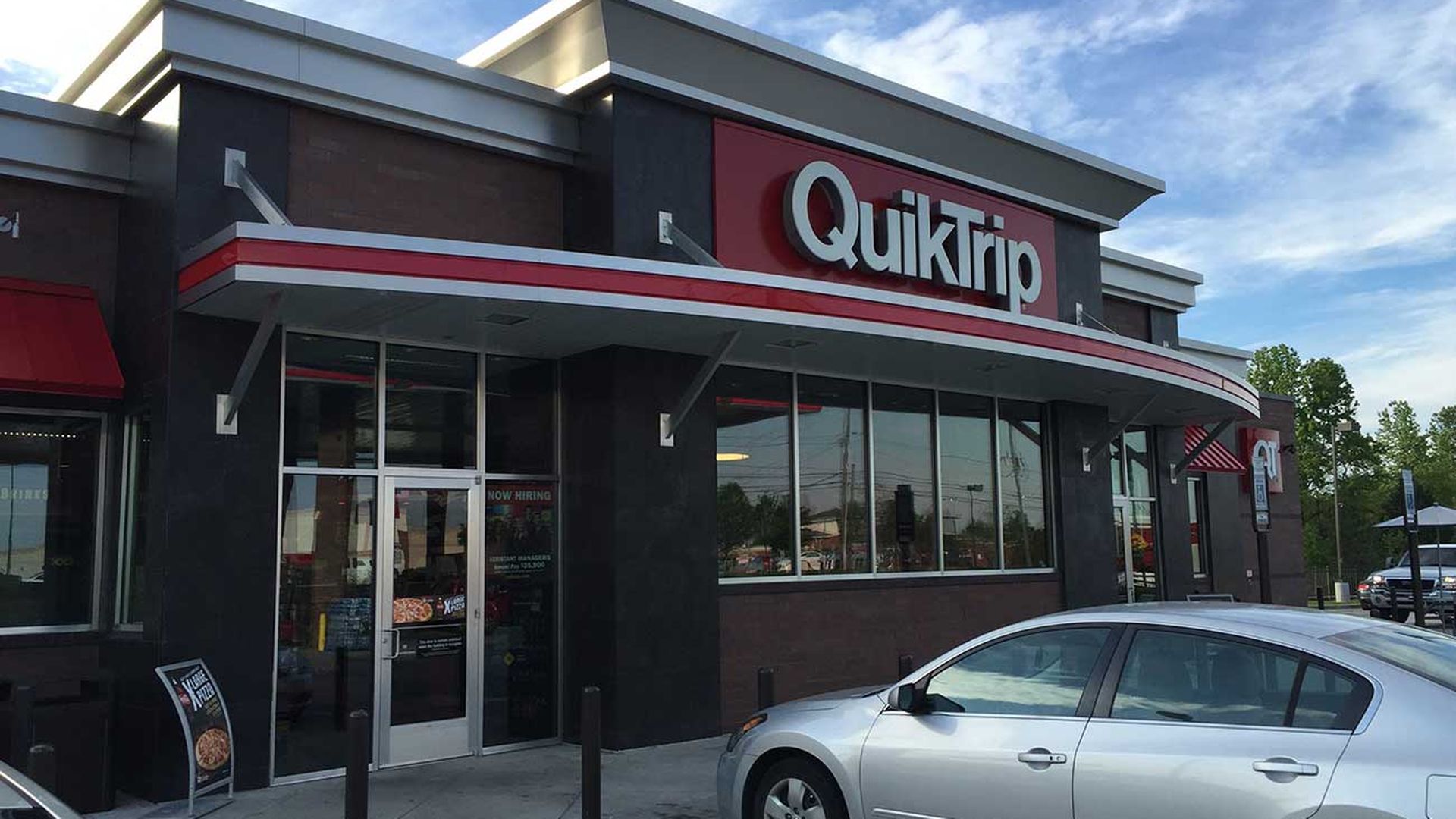
QuikTrip made a bet that it could become Charlotte’s go-to premium convenience store brand.
The mid-Atlantic is known for WaWa. The Raleigh area is blanketed by Sheetz. But Charlotte was pretty much unclaimed.
In the last five years, QuikTrip has built nine locations in Charlotte in pretty prominent areas. Anther five are in permitting or rezoning as we speak — two on North Tryon, one on W.T. Harris, one in the new Waverly development in south Charlotte and the last on the Brookshire Freeway.
“We have been extremely well received in the Charlotte market,” spokesman Mike Thornbrugh said. “In a short period of time, we’ve gotten a lot of loyalty.”
/2024/01/06/1704561884154.jpg)
/2024/01/06/1704561884446.jpg)
The company has another 25 locations in other towns in the Charlotte market, mostly in the Indian Land and Concord areas. Ultimately, if what QuikTrip executives predicted in 2011 comes true, the numbers could reach 60 stores in the Charlotte market.
That makes Charlotte one of QuikTrip’s biggest growth markets.
While still relatively small (No. 17 as of last summer, an order of magnitude smaller than 7-Eleven), Tulsa-based QuikTrip is one of the fastest growing convenience store chains in the country.
/2024/01/06/1704561884719.jpg)
And their model is fascinating. Base pay starts at $9+ per hour, and store managers make upwards of $70,000. The company regularly appears on Fortune’s Best Places to Work For list and has been ranked the most popular convenience store. Their model was also the basis for a high-profile Harvard Business School case study.
They also believe heavily in blanketing a market. In that HBS study, they said it takes five years and 50 locations to “stand out in consumers’ minds.”
Why Charlotte? Thornbrugh said it has to do with quality of life for employees.
“It’s really an attractive area,” he said.
/2024/01/06/1704561884994.jpg)
But it’s also about the lack of saturation of the market. Thornbrugh pointed out that QuikTrip doesn’t set about to compete directly with some of the other premium convenience store brands.
That investment in Charlotte has been huge.
/2024/01/06/1704561885304.jpg)
QuikTrip told Harvard that their average start-up cost for a store is about $4.2 million. That brings the total investment in Charlotte to nearly $60 million when the city’s stores build out. In the market, it’s approaching $150 million.
The competition isn’t sitting still.
There’s a reason QuikTrip is betting big, and it’s the same type of industry trends that its competitors are moving toward as well. Gas is being de-emphasized in favor of fresh and packaged foods.
7-Eleven re-entered the Charlotte market with its purchase of 55 Sam’s Mart stores in 2012. They’re also pushing heavily on fresh food.
Circle K is also active in Charlotte, remodeling some locations and building a new, large store in the University City area across from IKEA.