Business advice from 4 of Charlotte’s top African-American corporate leaders

Add Axios as your preferred source to
see more of our stories on Google.
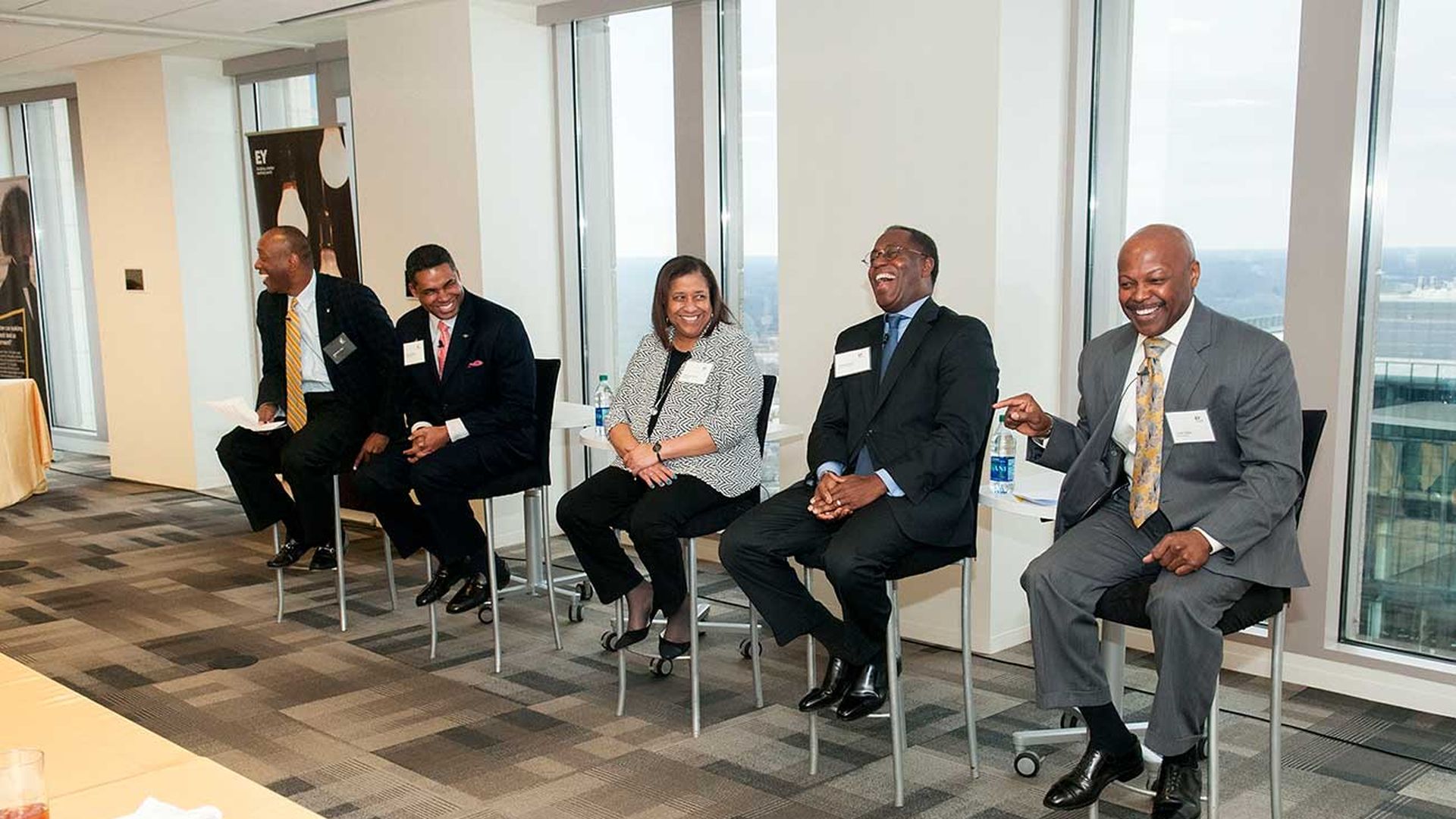
Photo by Jon Strayhorn
As part of Black History Month, EY — you might know them as Ernst & Young — convened a panel of four of Charlotte’s top African-American corporate leaders to discuss how they rose up the ranks and to give advice to up-and-coming businesspeople. Here’s a few lessons.
Deal with being underestimated by proving them wrong
Theresa Wilson, executive vice president and chief information officer of consumer lending at Wells Fargo, said early in her career, her peers would constantly tell her she wasn’t up to the job when she’d be tasked with projects of $25 million size or more. She decided she wasn’t going to let it bother her, and used it as fuel to prove people wrong. “I still today get that,” Wilson said. “I just get through it faster.”
/2024/01/06/1704563339021.jpg)
Photo by Jon Strayhorn via EY
Frank Emory, a partner at Hunton & Williams LLP, had a similar sentiment: “I enjoy being underestimated because winning is sweeter.”
Be adaptable
/2024/01/06/1704563339375.jpg)
Lloyd Yates, an executive vice president at Duke Energy, started his career in nuclear power where leadership tends to be militaristic. The man in charge — and they were pretty much all men in this division — would give the orders and they were executed.
But Yates was soon transferred to a division with a much different culture. During a snow storm, Yates stood up and barked out orders and said “If you don’t like it, you can go home.” Three people actually did. His leadership style changed pretty rapidly after that.
/2024/01/06/1704563339945.jpg)
Photo by Jon Strayhorn via EY
Choosing family is OK
Kieth Cockrell quickly climbed the ranks at Bank of America and was widely viewed as an up-and-comer. He spent weeks and weeks on the road and worked crazy hours. The financial crisis, though, changed everything for a lot of people, and Cockrell ended up being picked for a few projects that required less time. He felt like he had more to give.
“I was forced with a choice, to stay or leave,” he said. He could have gone and ran the retail bank for another institution, but chose to stay in his role and rededicate himself to his family.
Photo by Jon Strayhorn via EY
Be prepared to seize opportunities
How did Lloyd Yates end up on the board of a Fortune 500 company? Preparation meeting opportunity. Yates built up the skills in his career by talking with Wall Street analysts and understanding how money gets made. Later, he attended a conference on how to get more African-Americans on corporate boards and struck up a good conversation with a fellow attendee.
Turns out that person was one of the most powerful people in the insurance industry, and Yates was brought on to the board of Marsh & McLennan Companies Inc.
Cover image by Jon Strayhorn via EY