Charlotte is moving forward on out-of-school-time programs and it is critical

Add Axios as your preferred source to
see more of our stories on Google.
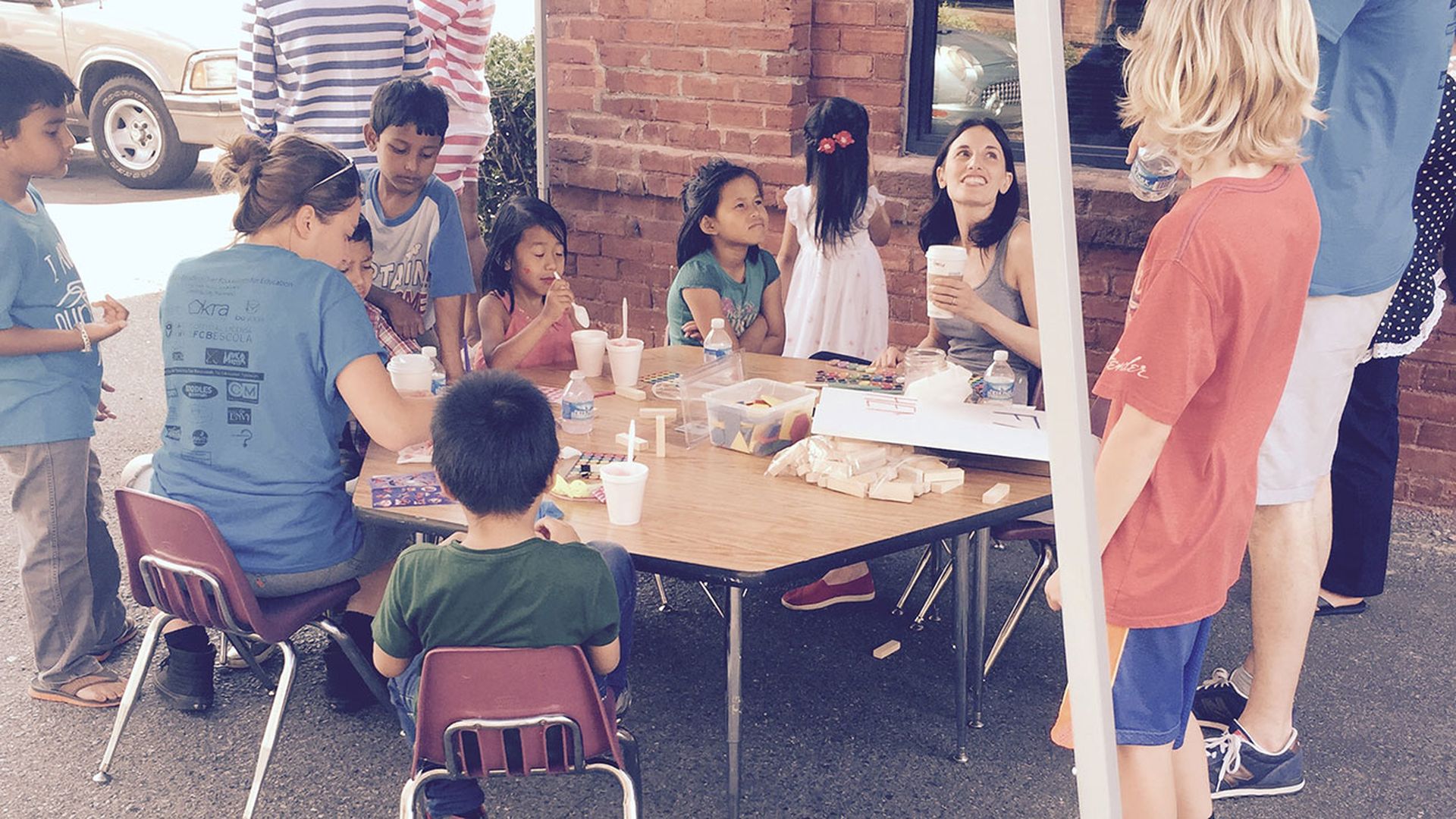
Greg Schermbeck our-bridge-program cover
Charlotte has a number of great after-school and summer programs that offer everything from the arts to coding, music, sports and reading.
The question is: Who supports these organizations and how do people find out about them?
Our recently elected mayor, Jennifer Roberts, knows the importance of out-of-school-time programs and wants to answer that question. Since being elected, she announced her plans in supporting this work.
“For after-school time, currently, there is no group or organization in Charlotte in charge of monitoring, assessing the gaps and ensuring that our kids have constructive, positive programs,” she said shortly after taking office. “I will convene a summit on after-school time to focus our community on how to ensure that all children have access to quality after-school programs.”
/2024/01/06/1704564336596.jpg)
Essentially, Roberts is talking about creating an out-of-school-time intermediary in Charlotte and I love it.
Creating any type of intermediary is incredibly challenging. Announcing a plan to convene a summit and create an organization that supports out-of-school programs within your first 24 hours as mayor is borderline crazy, and I still love it.
Disclaimer: I work in education and have also worked to support out-of-school-time programs. Further, I would have found copious amounts of trouble as a child if it weren’t for out-of-school–time programs. I’m all-around bias.
The functions of intermediaries can shift based upon the sector, city, and structure. Roberts appears to be describing an organization or group that would be a hub for all out-of-school–time related information. These sort of intermediaries in other cities often act as clearinghouses for raising funds in the community and helping resource existing out-of-school–time programs with one main goal: Get more students in out-of-school–time programs.
Need to be convinced that out-of-school–time programs are critical? Here are a few facts to get you bullish on the importance of out-of-school–time programs:
- Students spend 75% of time OUTSIDE of school (evenings, weekends, holidays, summers).
- 15% of Charlotte youth are unsupervised for 3+ hours after school.
- Conservative studies show that communities save $3 for every $1 invested in out-of-school–time programs. Some studies push that ratio to $7/$1. My banker friends tell me this is good.
- Studies also show that out-of-school–time programs have shown to increase high school graduation rates while decreasing teen pregnancy and juvenile crime.
/2024/01/06/1704564336883.jpg)
Further, other cities have begun to use out-of-school–time programs to ensure additional academic and socio-emotional support for their most vulnerable children. Some have even used out-of-school–time programs to break down segregation in neighborhoods and schools.
Charlotte already has a fair number of out-of-school–time programs. We have approximately 512 unique out-of-school–time programs operated by 76 providers, and serving 60,000 students. To get a better idea of the scope in Charlotte, check out the OST Program Locator created by Council for Children’s Rights, in conjunction with UNC Charlotte-Center City and out-of-school–time programs throughout the area.
From my viewpoint, Roberts isn’t pushing to create more out-of-school–time programs (though it may be an option). Rather, her efforts appear to be focused on raising funds and awareness and creating efficiencies to better support the currently existing programs and serve more Charlotte students.
Charlotte already has shown the willingness to create programs and organizations to solve our most pressing challenges. We have a number of innovative education and civic initiatives that I’m crazy about: Read Charlotte, Project L.I.F.T, Renaissance West Community Initiative, and Opportunity Task-Force.
/2024/01/06/1704564337264.jpg)
/2024/01/06/1704564337613.jpg)
Not many people will argue that out-of-school–time programs or building an intermediary are a poor use of money. The trick is raising money and figuring out how to do it. We have an elected official who is set to make it happen and is laying the groundwork. Let’s use our energy to be part of the solution.
Action Steps (because reading is cool, but action is better):
- Follow @WTFwevote and stay civically engaged.
- Follow @JenRobertsNC for specific updates regarding how you can get involved.
Greg is the Founder & Principal at Schermbeck Consulting. He believes a strong & innovative education system for all students is our country’s most pressing issue. Boyz II Men was his first concert. Twitter: @gschermbeck.