Saving another family’s Thanksgiving saved my own

Add Axios as your preferred source to
see more of our stories on Google.
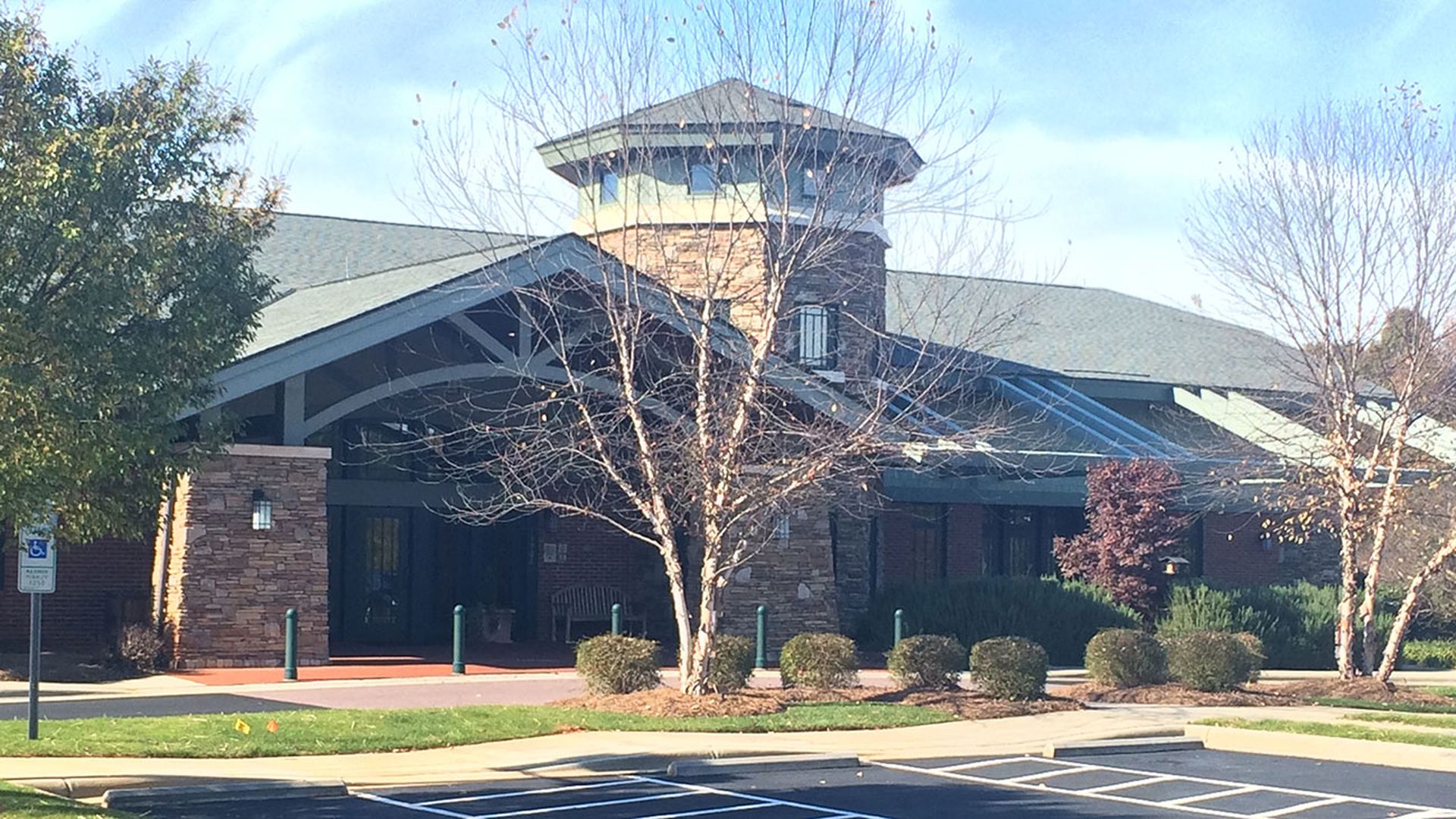
hospice-huntersville
It was November 2013. The first November since my divorce. And my boys were going to be with their dad for Thanksgiving. Which was fine. Really. Part of the deal and all that. I’d get them later in the year for Christmas, so all was fair. But Thanksgiving was going to… well, suck.
Thanksgiving is that one holiday where we’re supposed to sit around a big table surrounded with family and the noise and food and aroma that comes with being a part of a group of people who have to love you no matter what. Because you’re related. For the past 20 years as I’d moved my own family around the East Coast, we’d gathered each November in make-shift-families made up of friends who were also miles from home. The traditions may have varied depending on whom we shared our holiday with but it always felt warm. Inviting. Belonging.
Yes, this year was going to suck.
In my wildest dreams I’d never considered the idea of spending this family-oriented holiday without my kids. This was the most unnatural of developments. And I needed to figure out how to get good with my new situation.
I brought up my predicament with Wendy, my long time hair-stylist, as I sat in the swiveling chair at her booth in Davidson. Over the years she’d become part-friend/part-therapist as we’d shared events in our lives over haircuts and coloring appointments.
As was her indomitable way, she had an idea to help. “You could do what my family’s been doing for the past couple of years,” she said. “You could adopt the family of a hospice patient who needs help with their Thanksgiving meal preparation.” Wendy went on to tell me about how rewarding this experience had been as they’d befriended a family whose father was receiving care from Hospice & Palliative Care of the Charlotte Region while in his final stages of lung cancer. I knew right away that this was the perfect antidote to my dilemma.
At the time, I was teaching an End of Life Communication class at UNC Charlotte. I’d had speakers from Hospice & Palliative Care of the Charlotte Region come in and talk to my students about what hospice is. Most of my class was surprised to learn that hospice wasn’t a death sentence. That hospice is in fact a support system to families and patients who have a prognosis of 6 months or less. I knew from friends and family that hospice workers often have a hugely positive impact in facing end-of-life situations. I didn’t need to be convinced. I got the contact information from Wendy, and sent an email to have my name added to the Holiday Meals program.
/2024/01/06/1704518214120.jpg)
A few days later I got a response. Mr. and Mrs. Brown (names changed) had filled out a form requesting a fully-cooked Thanksgiving meal for eight. Suddenly I had a job to do. And I was excited. I called the Browns up to double-check the details.
“This will help us so much,” Mrs. Brown told me over the phone. “It’s so hard to keep up on his medications and therapies, let alone plan a big meal.”
“No, no, trust me,” I said. “I’m excited to do this.”
/2024/01/06/1704518214459.jpg)
As Thanksgiving neared, I went to the grocery store and bought all the ingredients for the meal. Instead of feeling sad when my boys left for their dad’s house the day before Thanksgiving, I put on my Nat King Cole CD (old-school, but incredibly therapeutic) and started baking rolls and a chocolate cake. The next morning I got up early and put the turkey in the oven. The Macy’s Thanksgiving Day Parade blared from the TV as my house filled with the warm, traditional aromas. While the turkey browned I made stuffing, mashed potatoes and green bean casserole. By 1 p.m. I’d filled a stack of disposable aluminum pans and was piling them into my minivan for the drive to Belmont where the Browns lived.
And here’s the thing: I was so busy planning and shopping and cooking that I didn’t have a minute to feel sorry for myself. I may have been without my boys but making this meal somehow filled the void. I didn’t feel like a saint. The truth is this “service” was incredibly selfish on my part. I was doing it to survive. To get through what would otherwise be an incredibly painful day. I didn’t feel like a do-gooder. But I did feel good. Which was eons better than I’d expected to feel on this unusual day.
Now, this is not surprising given what we know about grief. Grief is a reaction of loss and is often associated with the death of a loved one. But grief also occurs when someone goes through a divorce, receives an unexpected diagnosis or is dealing with the effects of a disease. Stanford University published a study that found incorporating “adaptive coping strategies,” such as being involved in sports or hobbies, rather than focusing on one’s sadness helped individuals avoid ongoing depression associated with grief.
Lewis Aiken (2001) discusses how “recovery from a severe loss can be facilitated by … becoming actively involved in children, work, and other activities” in his book Dying, Death, and Bereavement. And Melissa d’Arabian, whose mother committed suicide, describes how she used adaptive coping mechanisms such as “making brownies for a neighbor or writing an overdue note to a relative” to soothe her “sense of imbalance” on the anniversary of her mother’s death.
Apparently engaging in the world in active, positive ways has the potential to help individuals cope with grief. And thus far, this was my experience as well. Not that I didn’t still miss my boys or feel their absence. Grief is more complicated than that. But I was filling the emptiness with worthwhile, engaging action. And this action was helping me cope. Helping me heal.
As my GPS declared that I had “arrived,” I pulled into the driveway of a ranch-style, brick home. Suddenly I felt a bit nervous. I didn’t know these people and wasn’t exactly sure what kind of situation I was entering. I walked up to the front door carrying a load of pans and rang the doorbell with my elbow. After a minute, I heard some shuffling. The doorknob shifted and an older woman who looked to be in her 80s opened the door.
“Mrs. Brown?”
“Yes,” she said.
“Hi, I’m Sherri. I have your Thanksgiving meal.”
“Oh, yes, dear. Yes.” She opened the screen door and I slid through the opening, balancing my trays. As we passed through a brown paneled front room, she introduced me to her husband, who was sitting in a wheelchair with an oxygen mask covering his face. “This is Mr. Brown,” she said.
“Hello,” I said cheerily. “It’s nice to meet you.” He mumbled something inaudible. I continued following Mrs. Brown to the kitchen where I deposited the pile of pans on the kitchen counter.
“It’s harder and harder to understand him as the days go on,” Mrs. Brown confided.
“I’ve got more in the car,” I said as I left her to go back for the turkey and dessert. After taking a couple of trips to bring in the final dishes, I stood and chatted with Mrs. Brown for a few minutes in the kitchen.
“Taking care of him,” she said, nodding toward the family room, “has become a 24-hour job. I just can’t seem to get everything done that I used to. My children are all coming tomorrow and they try to help with doctors appointments and cleaning around the house, but there’s always so much to get done.”
“I’m sure,” I said. “It’s a big job to care for someone full-time.”
“I used to cook the entire Thanksgiving meal, but I just can’t anymore,” she said.
“Of course not. It’s too much.”
She reached out and took my hand. “You have no idea how much this means to me,” she said, emotion rising in her voice.
I wanted to explain. Explain how the past few years had been full of pain and anguish as my family dissolved around me. Of how this holiday was poised to be the worst one in my life. Of how I’d been so afraid of being a pathetic sad-sack sitting alone and feeling sorry for myself. And yet making this meal had made the day full and warm and meaningful.
Instead I simply put my hand on top of hers. “No,” I replied, barely keeping back tears. “You have no idea how much this means to me.”
This Thanksgiving marks the third year I’ll be making a holiday meal for a Hospice and Palliative Care of the Charlotte Region family. And this year, my boys will all be home to help me with the new tradition of delivering a meal to a family. A family we might need just as much as they need us.
For more information on Hospice & Palliative Care Charlotte Region, visit www.hpccr.org.