On Paris

Add Axios as your preferred source to
see more of our stories on Google.
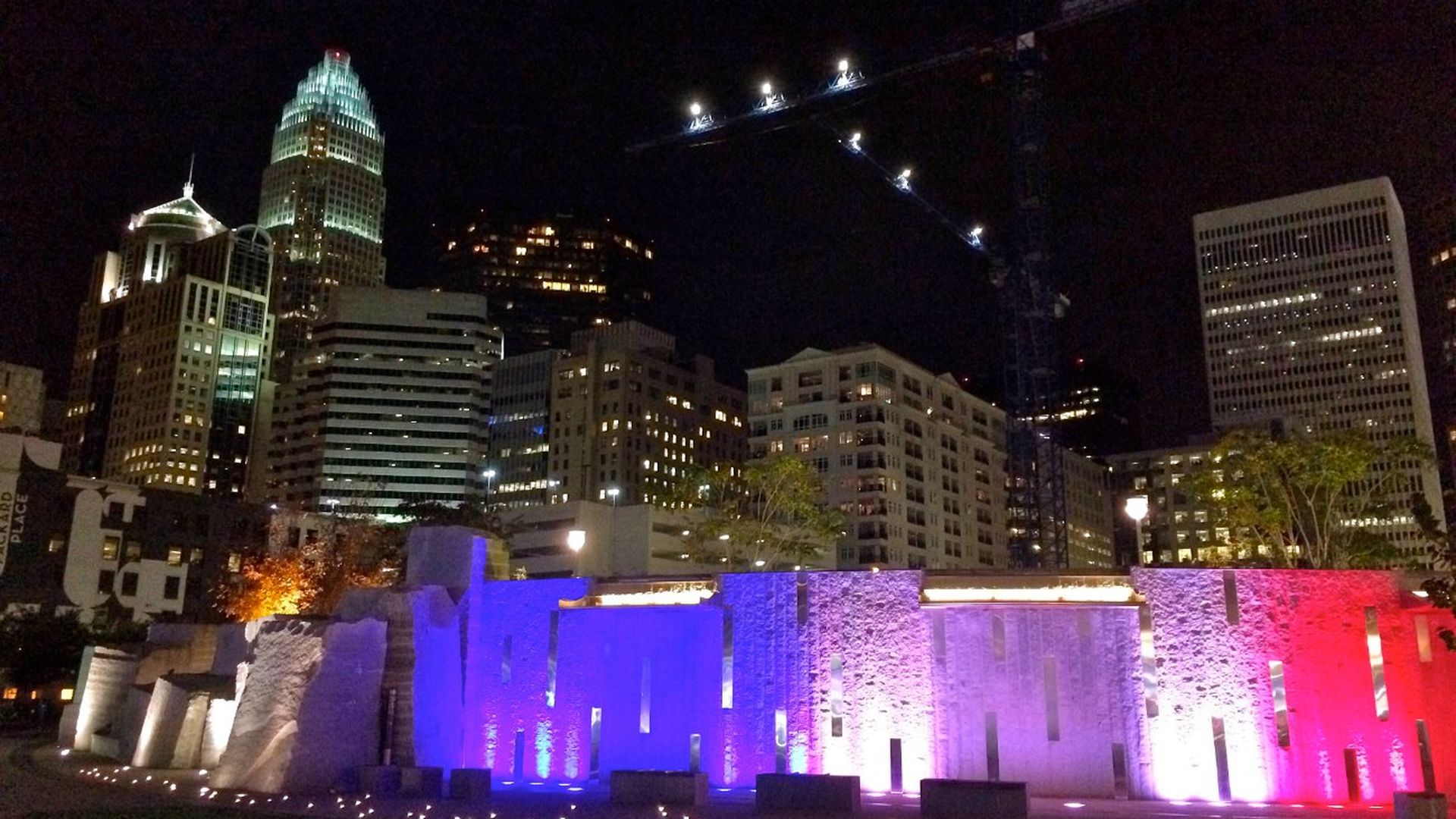
Charlotte Paris lights
When we were younger my little sister asked an adult what happens when you die and she received a surprisingly straightforward response: Nothing. Nothing happens when you die.
It was only recently that she told me she lost sleep over that as a kid, lying awake at night trying to wrap her young mind around the idea of nothingness. What would it look like? What would it feel like? Would it hurt when nothing came for you?
Saturday night I watched eyewitness cellphone video footage of the massacre at the Bataclan concert hall in Paris. I usually steer clear of the kind of voyeuristic raw video that shows fellow humans at their most vulnerable and desperate. So if you think it was wrong for it to be recorded and worse to watch it, you’re right. But alone in the dark after my boyfriend was already asleep, an older, less innocent form of the insomniac-inducing morbid curiosity that led my sister to question death consumed me. What would it look like? What would it feel like? Would it hurt when terror came for you?
/2024/01/06/1704518372489.jpg)
photo via Jamar Davis, Mecklenburg Country Park and Recreation
The grainy video, shot from what appears to be upstairs and across the street from the back of the venue, is horrifying. As gunshots ring out from inside, people pour out of the doors into the alley. Bodies drop. People cower. Some stop to check on the bodies on the ground. Others drag the bodies of their friends (or perhaps strangers) away leaving a trail of blood behind. One man hops away on one foot. Above the door, a person dangles from a second-story window in an attempt to escape the line of fire inside.
And down there on the ground in all the commotion is at least one person who, at the time of filming, is still alive. The body writhes, reaches out for help and, in the most chilling and heart wrenching image I’ve ever seen, lifts up a glowing cell phone screen.
/2024/01/06/1704518372803.jpg)
Who are you? Did you do what you were put on this earth to do? Did you say what you needed to say? Who did you try to call? Did you survive? Cloaked in the darkest shadow of evil, did you remember what it looked like, what it felt like, how it eased all pain to love and be loved?
There are, of course, no answers. As of writing this, 132 people died and another 352 were wounded in a senseless act of hate that night in Paris. A day earlier, 43 people were killed in a suicide bombing in Beirut. Back in April, 147 people died in an attack on a Kenyan college. Everywhere we turn, there’s tragedy, but if we’re honest with ourselves, not all of it receives the same global reaction of support and solidarity. What happens following these tragedies and their resultant deaths — every single one —cannot and will not be nothing.
I have mixed emotions about the Paris video and my conscious choice to watch it. I can’t say I regret it but I do very much fear my dependence on it to make the attacks feel real. Am I so numb to tragic headlines and rising body counts that I have to see this kind of destruction to believe it? Am I alone? Probably not. And it all has to stop.
What will it take to remind us we’re all citizens of one world first and of individual nations second? What will it take to count every innocent death — not just the ones in places that look like home — as a personal loss? What would it look like, what would it feel like to live in a world where these kinds of attacks didn’t feel so, how do I say this, normal?
I don’t know. But halfway around the world in Charlotte I watched that video and then turned off my phone and laid on my boyfriend with my head on his chest and my hand on his heart and just let the tears roll. And I realized right there that the stakes are too high not to find the answers.