What we learned in The Dog Wizard’s Puppy Preschool

Add Axios as your preferred source to
see more of our stories on Google.
Dog Wizard puppy preschool
Although I grew up with family dogs during my formative years, I’ve spent my adult life collecting stray cats. I like cats because they do whatever they want and don’t care what you think. Since training them is, in my opinion and experience, biologically impossible, you can’t fail at doing so. This means that even if your cat is a big jerk, it’s not a reflection of your training ability. It’s who they are. I am comfortable with this level of freedom from responsibility.
Dogs are completely different. Unlike cats, dogs are gullible and malleable and easily molded into model citizens, but you have to know what you’re doing and I do not*. So when it came time to adopt a puppy, I went straight to the experts at The Dog Wizard.
/2024/01/06/1704519159276.jpg)
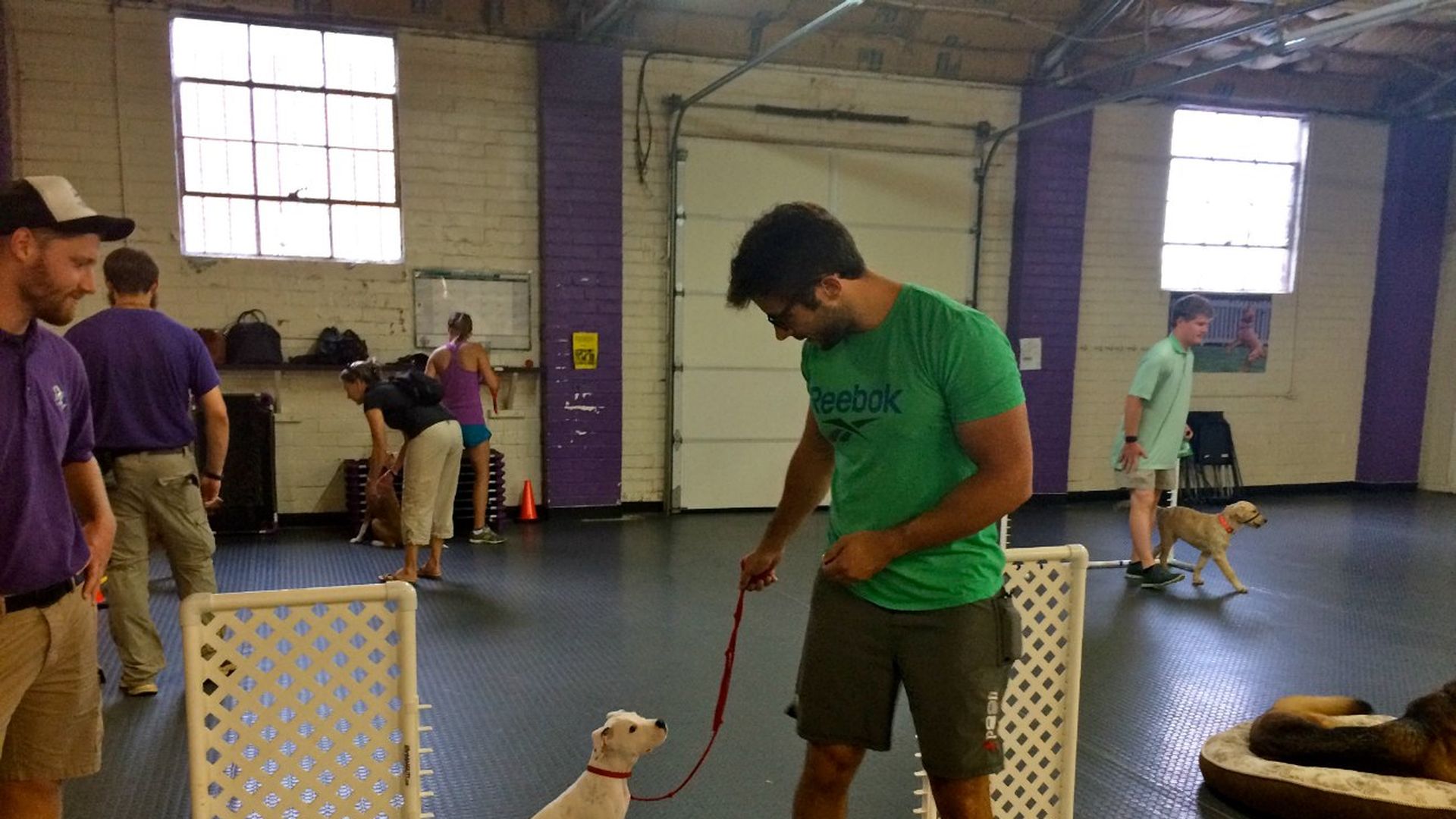
The Dog Wizard is a training school specializing in obedience, separation anxiety, aggression rehab, socialization and rescue rehab for dogs of all ages and breeds. Their Puppy Preschool program is a twice-weekly, one-hour class for puppies up to 6 months old. I met one of their trainers at Freedom Park just days after adopting my rescue mutt Charlie and he tipped me off that they were running a Groupon. I bought in and did the unthinkable. I enrolled my puppy in preschool. I don’t even know me anymore.
Here’s what we learned…
(1) A slip lead will change your life.
/2024/01/06/1704519159558.jpg)
A noose-like slip lead constricts from all sides when pulled, redistributing the pressure all the way around the dog’s neck instead of just pressing directly against the trachea (which is what happens with a traditional collar and clip leash). Dog Wizard trainers explained that pulling straight back on a regular leash can trigger some dogs to pull in the opposite direction. Pulling a slip lead causes an uncomfortable constriction that makes the dog immediately stop and correct instead. When they maintain that correction, they walk comfortably with no pull at all. This, the trainers say, is how you train “loose leash walking.”
I was skeptical. I’ve never met a dog that walks properly, matching my pace and thus allowing slack on the leash. Not surprisingly, my dog was no different. We started Charlie on a regular collar and clip leash and he pulled like a sled dog. After hearing the slip lead tip in puppy preschool we went out and bought one and get this: Charlie stopped pulling immediately. IMMEDIATELY. I didn’t do anything but put the slip lead on and he was a completely different dog. He still gets overly excited and runs when he meets people but when it’s just the two of us walking, he’s perfect. Talk about wizardry.
Short story: Buy a slip lead. Dogs are less likely to pull when walking.
/2024/01/06/1704519159917.jpg)
(2) If the slip lead doesn’t help, try a Lickety Stik.
Lickety Stiks are disgusting little roller ball applicators filled with gravy that can be used to draw your dog back to your side during the “heel” command if he insists on pulling ahead when you’re walking.
We checked three stores before finding this magic wand at Urban Pet on Park Road. They’re gross but they work. Take it with you on a walk and when your dog pulls ahead just call out the command and give him a lick when he obeys. He’ll catch on.
/2024/01/06/1704519160206.jpg)
/2024/01/06/1704519160443.jpg)
Short story: Lickety Stiks are gross but effective training tools.
(3) Socialization is crucial
The first 15 minutes of each puppy preschool class is dedicated to free play, which just involves 20+ puppies running around like lunatics. It’s a wonderland. Owners are instructed to stay back and walk the perimeter of the room to create constant background commotion like that on a sidewalk or a park. Since Charlie spends most of his time mimicking his lazy cat sisters, this was an excellent way for him to meet all kinds of other dogs and run off some energy. And since each dog in class comes with at least one owner, he got the chance to meet a lot of people too, which is crucial to developing a chill dog.
/2024/01/06/1704519160980.jpg)
A favorite activity in class was “pass the puppy,” which just involves literally passing each puppy all the way around the circle so it gets to be handled by people who smell and look different than you. We even got sent home with homework to meet 100 strangers, which included specific instructions to find people wearing hats, people on skateboards, people of different races, tall people, short people, people carrying umbrellas, adults, children and so on.
Short story: Make sure your dog meets lots of different dogs, people and other animals in multiple different settings.
/2024/01/06/1704519161293.jpg)
(4) Air canisters can help correct unwanted behaviors
Dog Wizard trainers walked around with Pet Correctors, which are just pressurized air canisters that deliver a quick burst of air and a loud hissing sound. Dogs hate it. The trainers mostly used it on dogs that got into scuffles to separate them but you could also use it to discourage your dog from getting on the couch, sniffing around in the trash or chewing on something he’s not supposed to chew on.
Short story: Dogs hate getting sprayed in the face with air. You can buy these training Pet Correctors on Amazon here.
/2024/01/06/1704519161700.jpg)
(5) Positive reinforcement isn’t just for tricks and commands
Dog Wizard trainers reminded us that dogs aren’t only good when they’re doing tricks or obeying commands. They’re also being good when they’re just sitting around minding their own business and not breaking any rules.
That’s what you want them to do, right? So reward them for unimpressive but appropriate behavior when they’re not expecting it. It will help reinforce all positive behavior, not just the party tricks that make you popular at the brewery.
/2024/01/06/1704519162031.jpg)
Short story: Buy tons of treats and use them frequently.
(6) Training is as much about the owner as it is the dog
For me, this has been the hardest and most important part of training a dog. Dogs are intelligent and quick to learn but inconsistency in training confuses them and frustrates you, the owner. Unfortunately, someone has to be the human and that someone is you. You’re in charge so act like it.
When I say Charlie can’t sleep in our bed anymore because he’s too big but then I let him in anyway because he’s cute, I’m confusing the whole situation. Keeping him on track is more about keeping me on track. In a lot of ways, puppy preschool was more about training me than it was about training my dog.
Short story: Be consistent.
We tired of puppy preschool prior to Charlie’s official 6 month cutoff. It’s hard to get puppies to learn when there are 20 other puppies around. But I think the socialization he experienced and the tips we picked up in the time we were there were valuable at the start of our puppy-raising journey.
While part of me wants the most well-behaved dog on the planet, a larger part of me just wants him to be a dog. I think he’s pretty a perfect little regal prince as is anyway.
* This is not to imply that all behaviorally challenged dogs are a reflection of owner failure. Some dogs have extenuating circumstances that just make them tough to train. But they’re still a billion times more trainable than a cat.