In defense of the Streetcar: Derailed in public eye thanks to planners, not plan

Add Axios as your preferred source to
see more of our stories on Google.
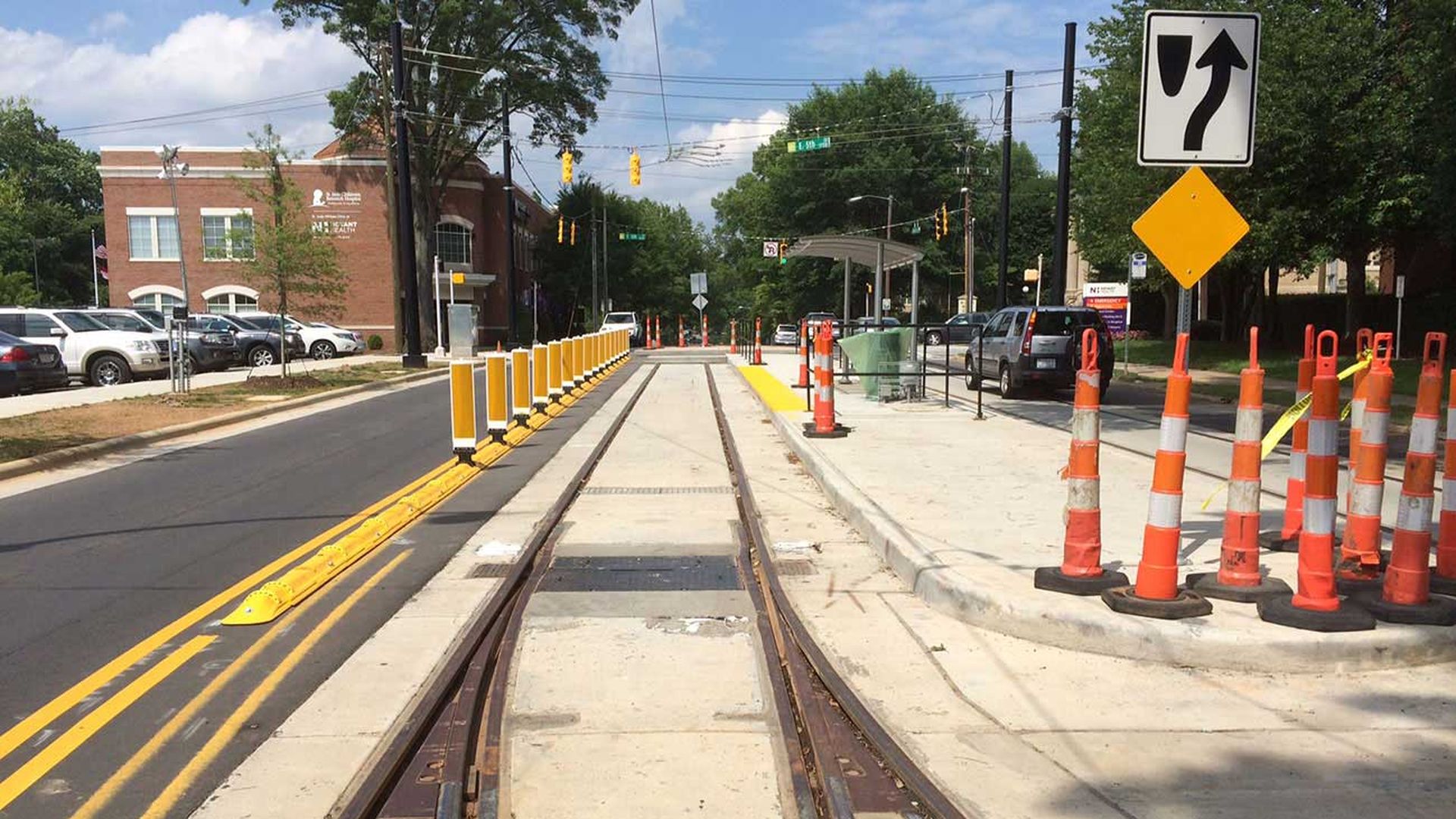
planning charlotte streetcar
This Op-Ed is in response to a previous story – Does the Charlotte Streetcar sound like a smart investment?
With the announcement that the CityLYNX Gold Line will commence on July 14th, the usual anti-mass transit sentiment has popped up around traditional media, social media, and new media outlets like the Axios Charlotte. The criticism primarily focuses on the financials of a new rail line and just this one stretch of track.
It’s difficult to dispute those financial facts, but that criticism is not focusing on the right things. The analysis of the situation should be of the comprehensive mass transit plan and how it fits in with the infrastructure of the region. The criticism should be focused on the planning and implementation failures of the comprehensive plan, which has led to what has been called a train to nowhere.
The comprehensive plan is a good and logical one that involves a mix of street car lines, a light rail, a bus rapid transit, and a commuter rail. The plan is crucial to the infrastructure of a region that has grown as fast as Charlotte has in the last 25 years and is projected to continue to grow.
Unfortunately, only a portion of one of the pieces of the comprehensive plan is currently operating, with another portion of a different piece scheduled to begin in July. Those two portions combined are 11 miles long and cover minute geographical areas of the region. That’s not acceptable for a county that just blew by the 1 million population mark in 2014 and is projected to grow a lot in the next 10 years, 2% annually in the most conservative estimates.
As a mass transit advocate and daily CATS commuter, the lack of planning and implementation frustrates me. It holds the region back and it opens up the flood gates for the criticism from the anti-mass transit crowd.
The crowd that will not say boo about other infrastructure improvements, regardless of cost, but will go through mass transit financials with a fine-toothed comb. The crowd that will demand mass transit users pay more to use a tax-funded system, but call a toll road unconstitutional (even though there is exactly ONE toll road in the entire state, an 18-mile stretch near Raleigh). The crowd that will put blinders on when presented facts on the infrastructure of regions that are Charlotte’s peers and regions that Charlotte wants to emulate in order to continue to prosper.
The Gold Line, when completed, will be a valuable intraurban street car line. The piecemeal implementation of it, as well as the rest of the comprehensive plan, decreases its value. The Blue Line is arguably the most valuable piece of the comprehensive plan. The second, and final, phase of Blue Line is not scheduled to be completed until 10 years after the first phase was completed. Its value has also been decreased thanks to rising costs and a recession that took place during the implementation phase that keeps getting stretched out further and further.
Public opinion goes a long way with the value of projects like these because the top goal for the political decision makers is to get re-elected or elected into a higher office. If the goal was to properly plan and use a rapidly expanding tax base to build the infrastructure to meet the needs of the Charlotte populous, then the Blue (light rail), Gold (street car), and Silver (bus rapid transit) lines would be built with the Red Line (commuter rail) in its final stages, and it would not have taken 27 years to complete I-485, the beltway that changed Charlotte forever.
The planners and politicians point to finances for the poor planning and implementation, but other regions that didn’t have Charlotte’s growth and accompanying tax funds have done it and continue to do it. If Charlotte wants to continue with piecemeal mass transit implementation with a focus on getting as many cars on the roads as possible, then a mass transit system with potential will fall into an unreliable mess and road commutes will grow beyond unreasonable levels. Then Charlotte will once again be viewed as Atlanta Lite.