Why wildfire causes can take time to confirm

Add Axios as your preferred source to
see more of our stories on Google.
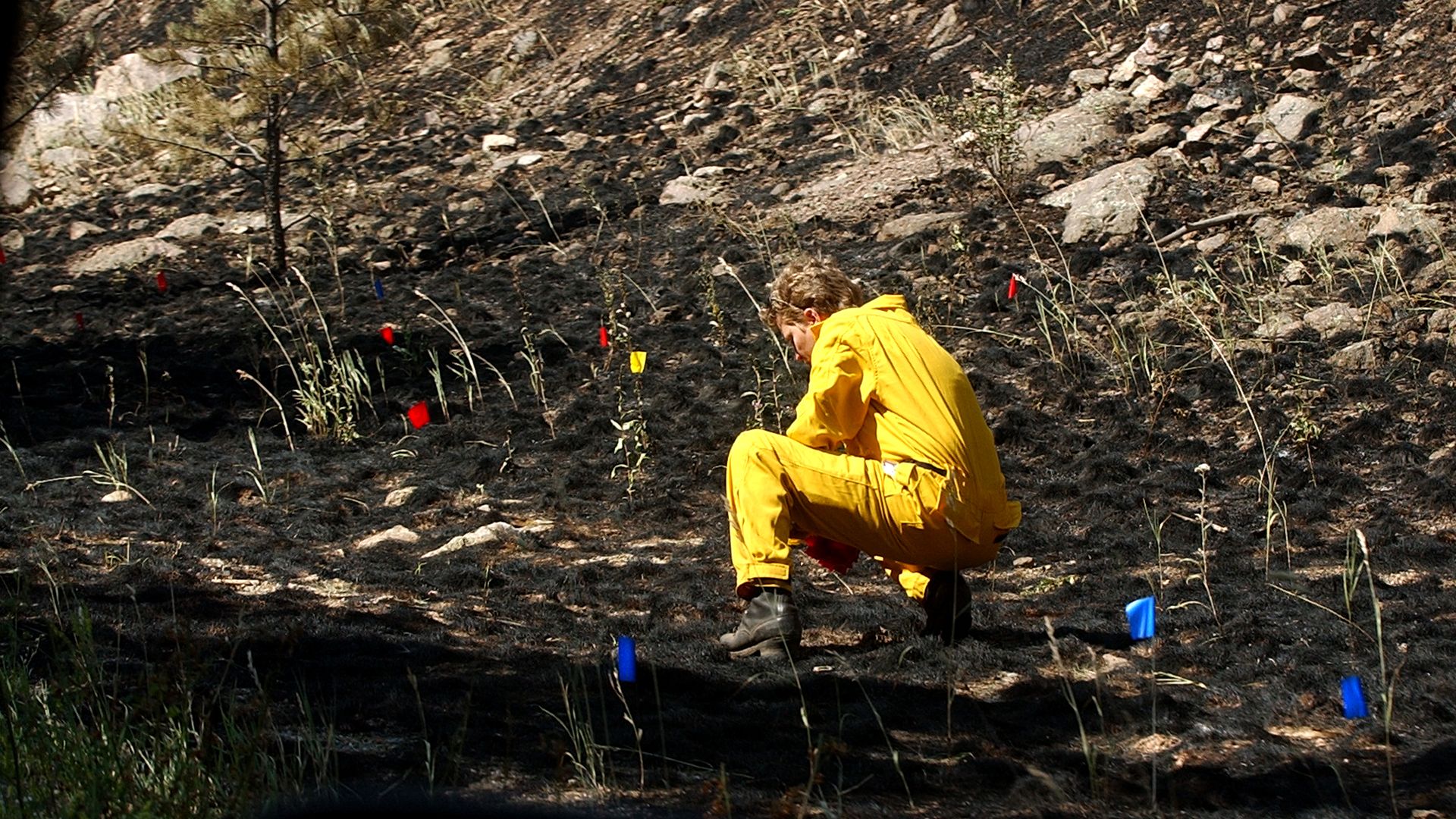
An investigator examines the location of the origin of the Big Elk Fire in 2002. Photo: Jon Hatch/Digital First Media/Boulder Daily Camera via Getty Images
As Boulder County braces for wildfire season, investigators say determining a fire's cause is complex, slow work often complicated by limited or damaged evidence.
Why it matters: Identifying a fire's cause shapes insurance claims, public safety measures and potential legal action, but clear answers can take time — if they come at all.
Driving the news: Boulder has already seen a series of fires west of the city, including the Bluebell Fire on Feb. 28, a vegetation fire near Enchanted Mesa on April 5 and the Goat Trail Fire on April 8.
- All three are suspected to be human-caused, per the Boulder Reporting Lab.
Reality check: Often speculation about a fire's cause spreads just as fast as the flames.
- But Michelle Kelly, deputy fire marshal with the Mountain View Fire Protection District, told us investigating fires is anything but a quick process.
- "Unfortunately, many of the television shows that wrap up a neat little investigation in a half-hour really [don't] truly give a true picture of how long it takes to process a scene, especially if it's a large wildland fire," she said.
Behind the scenes: Kelly said the key to finding the cause of a fire is identifying the source, where investigators can begin ruling out possible causes.
- "Was there lightning in the area in advance of the fire?" she said. "Was there wind that caused a power line to come down? Is there a source for a potential of spontaneous ignition? Is it near a road?"
- Initial calls into dispatch and witness accounts are also key: "We're gathering intel and information from the minute we're notified of the fire."
Between the lines: Several factors make investigating fires especially difficult, including collecting evidence that has been burned or damaged by firefighting efforts.
- Kelly said many human-caused fires are accidents and started by people driving or hiking through the area.
- "They're not intending to start a fire, so they might be 50 miles down the road and have no idea," she said.
Flashback: Even the investigation into the most expensive wildfire in state history, the Marshall Fire, identified two start locations and remains disputed by Xcel Energy.
- The 2016 Cold Springs Fire was one major wildfire that resulted in prosecution. In that case, the men involved hitched a ride from the crime scene with a newspaper reporter and confessed to investigators.
- Exact causes or suspects have not been determined for 2020's Calwood Fire, 2017's Sunshine Fire or 2022's NCAR Fire.
The bottom line: Residents want to know what caused a fire — and see consequences for those responsible.
- But with so much on the line, investigators must be certain of their findings.
- "It's frustrating for the public to not know," Kelly said. "And sometimes, unfortunately, during fire, there isn't an answer because we can't say definitively, 'This is the only thing that could have caused that fire.'"