Federal hate crime charge against Boulder Molotov suspect advances

Add Axios as your preferred source to
see more of our stories on Google.
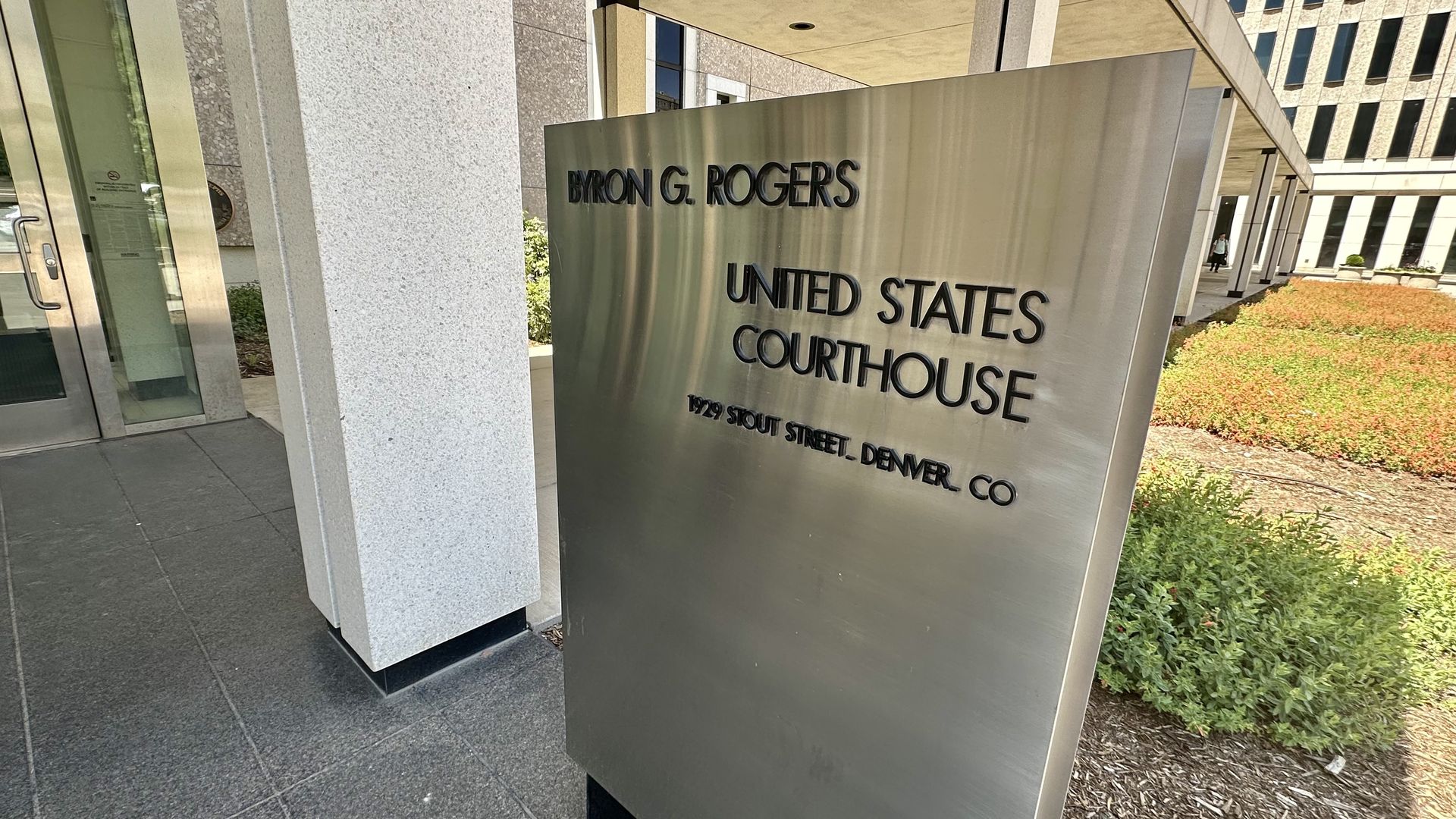
Outside the Byron G. Rogers Federal Building and U.S. Courthouse in downtown Denver, where the federal hate crime case against Mohamed Sabry Soliman is being heard. Photo: Alayna Alvarez/Axios
A federal judge in Denver ruled Wednesday that there's probable cause to proceed with a hate crime charge against the man accused earlier this month of hurling Molotov cocktails while shouting "Free Palestine" at people gathering in Boulder in support of Israeli hostages.
Why it matters: If the hate crime charge holds, Mohamed Sabry Soliman could face life in prison. The suspect is also charged with 118 counts in Colorado state court — including 28 counts of attempted first-degree murder — and remains jailed on a $10 million bond.
The big picture: After the June 1 attack, Soliman told investigators he wanted to "kill all Zionist people." Now, the case hinges on whether Zionism qualifies as a national origin under federal law — making the motive a hate crime — or is deemed a political ideology.
- An attack motivated by a person's political views does not qualify as a hate crime under federal law.
- The outcome could set a new legal precedent and reverberate far beyond Colorado.
Context: Zionism is often defined as a nationalist movement that supports the establishment and preservation of a Jewish state in the historical land of Israel.
What they're saying: "The big debate is whether Mr. Soliman was motivated by [protesters'] national origin," Magistrate Judge Kathryn A. Starnella said during the roughly 2.5-hour hearing.
- "Ultimately, it's for a jury to decide," she said, but "there's probable cause for this case to proceed."
State of play: At Wednesday's hearing, Assistant U.S. Attorney Melissa Hindman argued that Soliman's attack met the legal threshold for a hate crime because it was motivated by his perception of the victims' national origin — not just their politics.
- She said Soliman specifically targeted Zionists, whom he defined to federal investigators as people who support the existence of Israel and occupy what he considers Palestinian land.
- Hindman pointed to Soliman's own words to FBI agents: That he identified the Boulder group — Run for Their Lives — by the Israeli flags they carried and expressed no remorse, telling investigators it was "his dream to kill them all."
- One of the victims was a child in a wheelchair waving an Israeli flag and wearing a yarmulke, a federal investigator confirmed during Wednesday's proceedings. Other victims suffered burns on up to 60% of their bodies, and some remain hospitalized.
The other side: Defense attorney David Kraut argued the case hinges on political ideology. The national origin of the victims "did not matter" to Soliman, Kraut said, accusing prosecutors of trying to "inject ambiguity" into federal hate crime law.
- Kraut noted Soliman repeatedly distinguished between Jewish people and Zionists and did not express animus toward Jews as a religious group.
- "The evidence is so clear" Soliman was "motivated by political viewpoints," not national origin, his attorney argued.
Between the lines: In court, Soliman appeared alert and calm. The burns on his face — self-inflicted when he set himself on fire during the attack — appeared to have healed. He smiled when talking with his attorneys, but did not take the stand.
What's next: Another hearing in the federal case is scheduled for June 27.
Go deeper: Judge blocks deportation of Boulder attack suspect's family