Neighbors react to nuclear plan at Buckley Space Force base

Add Axios as your preferred source to
see more of our stories on Google.
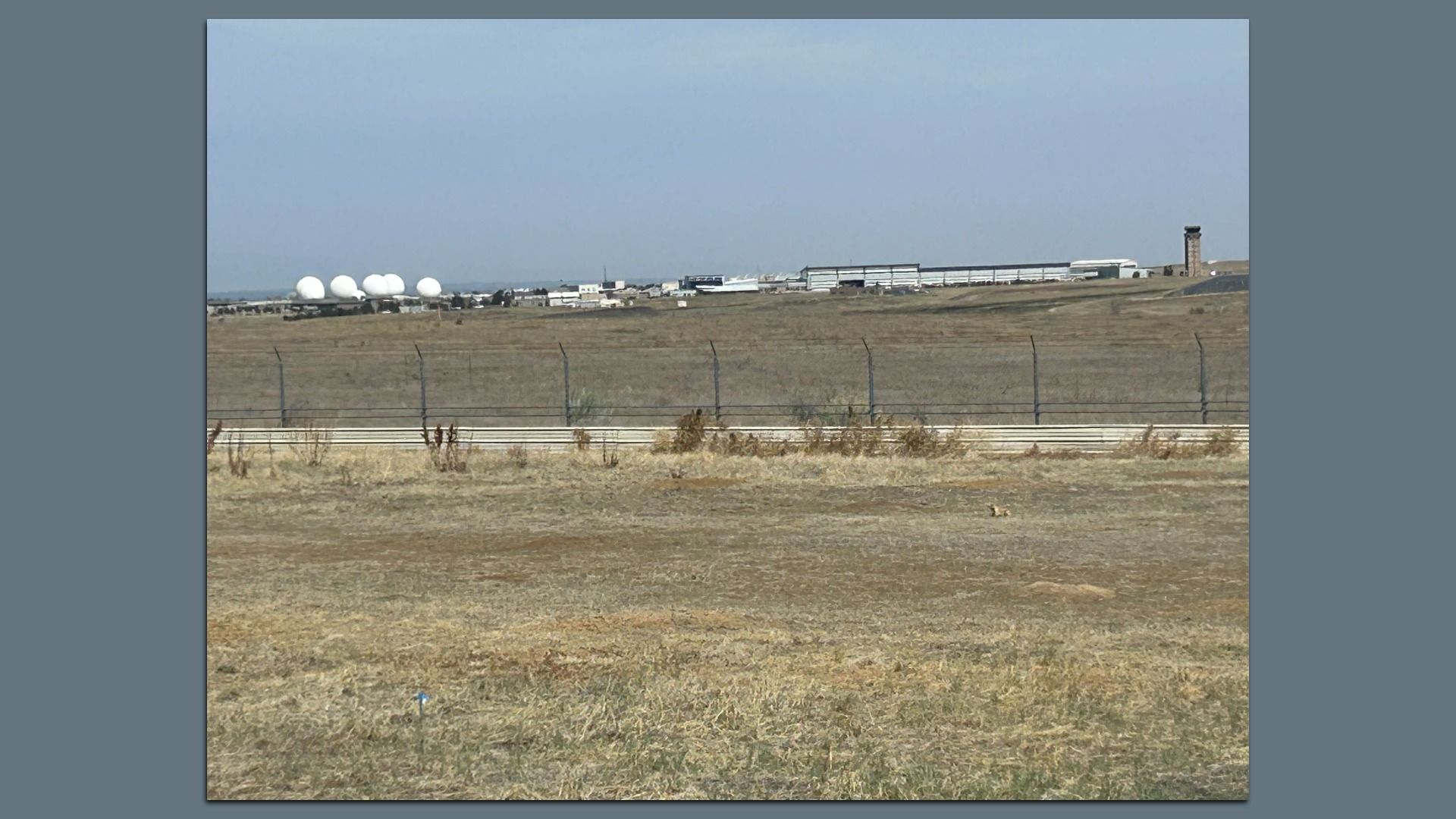
Buckley Space Force Base in Aurora, Colorado. Photo: Robert Sanchez/Axios
Aurora residents soon could be living near a nuclear microreactor.
The big picture: Neighbors in the shadows of Buckley Space Force Base say the April announcement naming the base a preferred site for a nuclear project came without warning.
What we're hearing: Among a dozen residents who spoke to Axios, none said they knew a microreactor was under consideration at Buckley.
- Still, most said they favor the project.
- "It's the cost of living next to a military base," said Ruth Wilcox, 69, a 23-year Murphy Creek resident who can see the base from her neighborhood.
- "We need a grocery store and infrastructure improvements more than a reactor in our backyard," said Kevin Gibson, 44, who also lives in Murphy Creek and disapproves of the microreactor. "We already have the [Denver Arapahoe Disposal Site] landfill, so why do we need something else that could negatively impact our homes?"
Yes, but: That support comes with caveats.
- "Any time you're talking about nuclear, there's going to be a serious conversation about what that means," said Terry Hunt, a 45-year resident of the Lexington East neighborhood near Buckley.
Zoom out: Nuclear energy is having a moment.
- Federal officials are pushing to deploy small, advanced reactors to power critical infrastructure as threats to the grid grow — from cyberattacks to extreme weather.
- And Buckley isn't alone. Montana's Malmstrom Air Force Base could also get a microreactor.
Zoom in: At Buckley, the reactor would power systems tied to space surveillance and ground-based radar.
- The base is home to Space Delta 4, which manages missile warnings for the U.S. and its allies.
The intrigue: Microreactors are compact nuclear plants that can produce up to 20 megawatts of energy and operate independently from the commercial power grid.
- Unlike traditional, large-scale nuclear facilities, they're designed with built-in safety features to prevent a meltdown. They can run for long stretches between refueling, helping operations stay online even if the surrounding grid fails.
What to watch: Final approval for the microreactors depends on licensing and environmental reviews. There are no community meetings scheduled with Buckley's neighbors — yet.
- A Buckley spokesperson told Axios the project is "early in the process," but a discussion with neighbors is likely.
- The Department of the Air Force estimates the microreactor could be completed by 2030.
What they're saying: "Nuclear is happening, it's the future, and there's not much you can do about it," said Audrey Myers, 67, who lives in Murphy Creek.
- Homeowners' associations near Buckley did not respond to Axios' requests for comment.