Germany will end Russian oil imports by end of year, foreign minister says

Add Axios as your preferred source to
see more of our stories on Google.
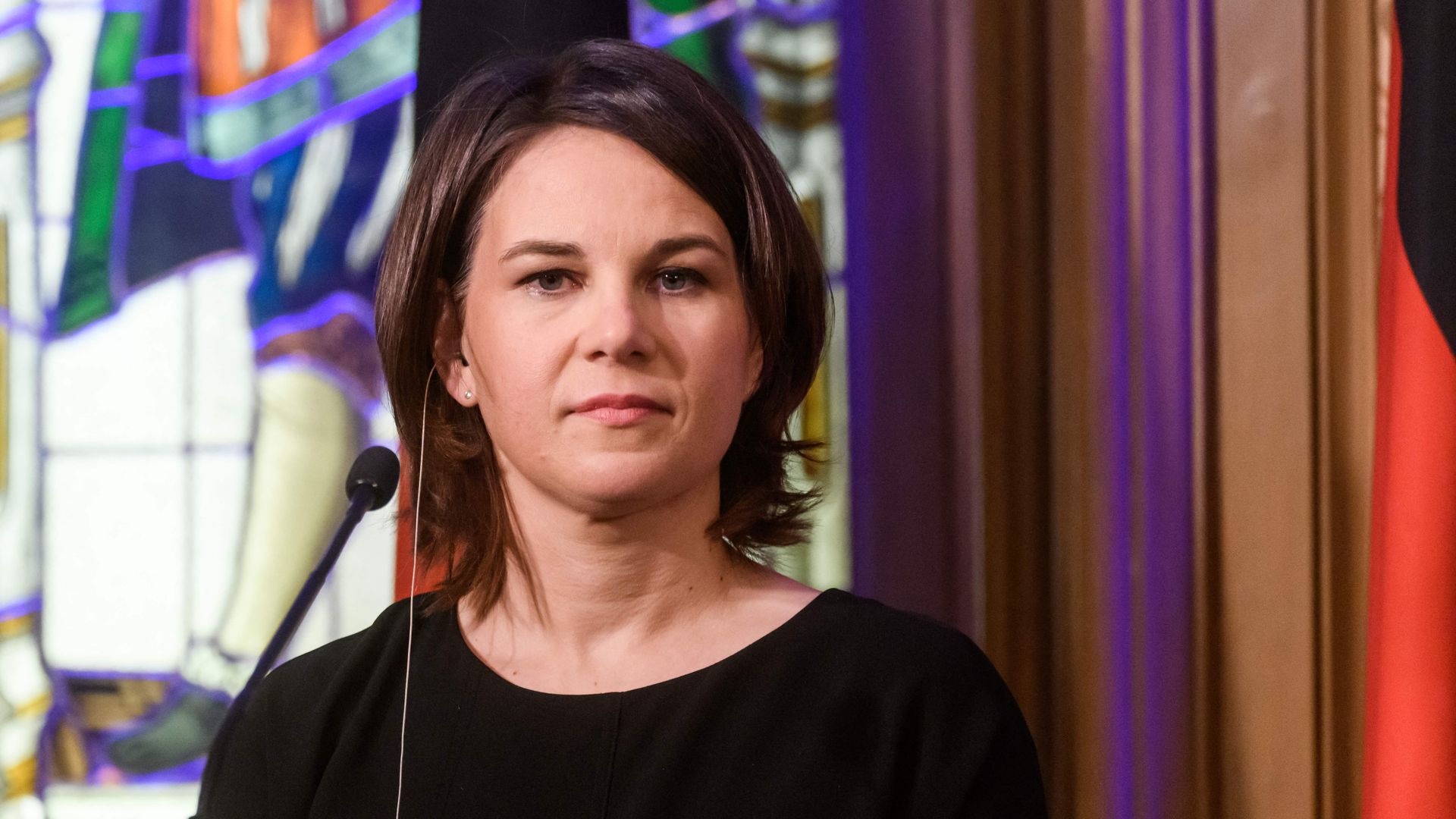
German Foreign Minister Annalena Baerbock. Photo: Gints Ivuskans/AFP via Getty Images
Germany will stop importing oil from Russia by the end of this year, German Foreign Minister Annalena Baerbock said after a meeting with her Baltic counterparts Wednesday, Reuters reported.
Why it matters: Germany, along with the rest of the European Union, has faced mounting pressure to reduce its dependence on Russian oil and gas amid Russia's war in Ukraine.
What they're saying: "I therefore say here clearly and unequivocally yes, Germany is also completely phasing out Russian energy imports," Baerbock said, per Reuters.
- "We will halve oil by the summer and will be at 0 by the end of the year, and then gas will follow, in a joint European roadmap, because our joint exit, the complete exit of the European Union, is our common strength," she added.
State of play: As long as Russia can sell Europe energy, it maintains a cash reserve to prop up its currency and fund a war.
- Experts say cutting off coal and oil is relatively doable, as these can be imported from elsewhere. Cutting off natural gas is the greater challenge since it requires infrastructure — pipeline, transport and storage — that can't easily be replicated.
- Germany relies on Russia for roughly two-thirds of its natural gas and a third of its oil.
- The EU announced earlier this month that it would ban imports of Russian coal.
The big picture: Baerbock's remarks come as EU leaders have been discussing plans for a phased ban of Russian oil, the New York Times reported.
- Russia is the bloc's largest oil supplier, so the phased embargo is intended to give European countries time to find other suppliers.
- However, a ban on Russian gas remains off the table due to how crucial it is for important members of the bloc, notably Germany.
Our thought bubble, from Axios' Ben Geman: The move is part of a ratcheting up of efforts to move away from Kremlin-backed energy suppliers, but also recognizes that a very rapid ban would cause unacceptable economic havoc.
- A big thing to watch is whether the EU can agree to a wider phaseout of Russian oil imports. But even the move by Germany, Europe's largest economy, is significant.
