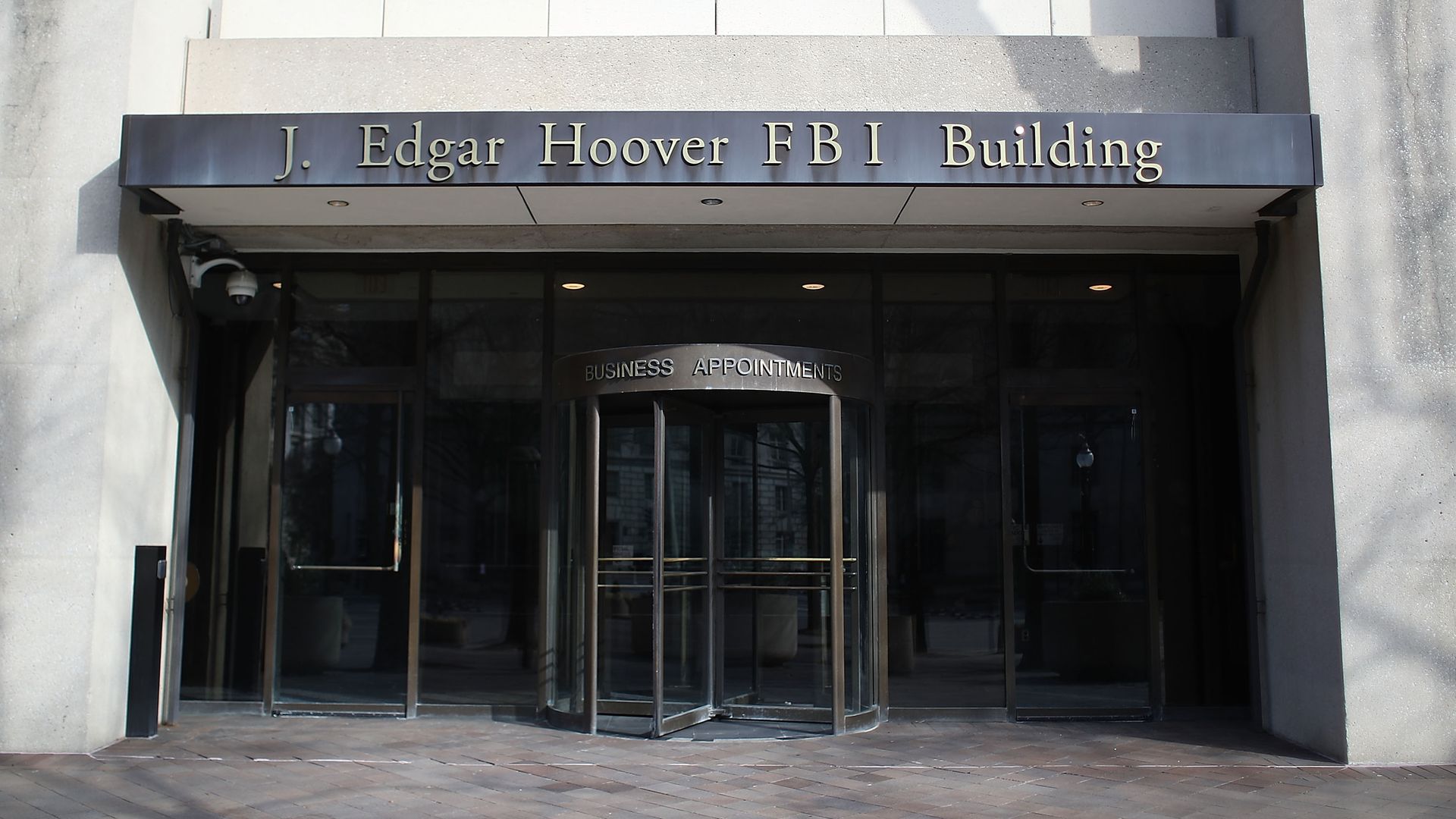
Photo: Mark Wilson / Getty Images

Josh Campbell, a special agent at the FBI, resigned on Friday and wrote an op-ed in the New York Times, citing dwindling public support and partisan attacks. "To be effective, the F.B.I. must be believed and must maintain the support of the public it serves. ... These political attacks on the bureau must stop," he wrote. "If those critics of the agency persuade the public that the F.B.I. cannot be trusted, they will also have succeeded in making our nation less safe."

Why it matters: From the anti-Trump texts between two agents to the hyped-up memo, the FBI is losing support from the conservative public. Campbell writes in the NYT that "scorched-earth attacks from politicians with partisan goals" threaten the FBI's ability to do its job, and staying silent risks letting the agency be "defined by those with partisan agendas."

Go deeper with our exclusive poll on how the GOP is turning on the FBI.

Go deeper

Trump tells House GOP leader he wants a "big deal" on COVID relief

Photo: Win McNamee/Getty Images

Within a day of tweeting that he was calling off bipartisan talks for a coronavirus stimulus deal, President Trump phoned House Minority Leader Kevin McCarthy and indicated he was worried by the stock market reaction and wanted a "big deal" with Speaker Nancy Pelosi, per two sources familiar with the call.

What we're hearing: Trump was spooked after seeing the instant drop in the stock market and intense backlash to his tweet, and has since directed Treasury Secretary Steven Mnuchin to push for a more comprehensive relief bill before the election.

Medical ethics in pandemic times

Illustration: Sarah Grillo/Axios

The COVID-19 pandemic is rife with scientific and medical uncertainty, including debates about the ethics of using experimental treatments.

The big picture: As the global pandemic continues, the tension between providing the best available care for patients and performing trials to determine whether that care is effective risks complicating the medical response.

White House again refuses to disclose Trump's last negative coronavirus test

Photo: Alex Brandon-Pool/Getty Images

White House communications director Alyssa Farah declined to tell reporters when President Trump last tested negative for COVID-19 on Thursday, saying that "the doctors would like to keep it private."

Why it matters: It marks at least the eighth time since Trump tested positive for the virus one week ago that White House officials have refused to disclose the information. The detail could help determine when he contracted the virus, who he exposed and the timeline of his illness.