SUVs reached a milestone last year, crossing 40% of worldwide new car sales for the first time, according to newly released International Energy Agency data.
Why it matters: The popularity of big, heavy cars and pickups is one challenge around decarbonizing transportation, even as fuel economy improves and electrics gain a beachhead.
Investment behemoth BlackRock is using its shares to push U.S. oil majors harder on climate, efforts that come months after BlackRock joined the advocacy group Climate Action 100+ and announced a new sustainability strategy.
Driving the news: BlackRock, citing concerns about Exxon's climate posture, yesterday voted against re-election of two members of Exxon's board and in favor of a resolution to create an independent board chair.
Activist investors' push to make the world's largest energy companies commit to ambitious climate targets is entering a new phase.
Why it matters: A key thing to watch now is whether and how energy giants start providing more granular information on how to transform the pledges into concrete steps.
A group of 23 states and the District of Columbia filed a lawsuit on Wednesday challenging the Trump administration’s rollback of Obama-era fuel efficiency standards.
The big picture: The administration's final rule on the Clean Car Standards was announced in late March, targeting future fuel economy standards and requiring automakers to make improvements of 1.5% annually through 2026, rather than the previously anticipated 5% increase in efficiency requirements.
The new IEA report shows why, absent tougher climate policies, coal will remain a huge player in global power markets despite its much publicized declines in the U.S. and Europe.
What they found: Project approvals for new coal-fired power plants have plummeted over the past half-decade, but additions of new capacity are still outpacing plant closures, and IEA sees that continuing in the 2020–2023 period, driven largely by China and India.
A pivotal but delayed UN climate conference slated for November is now likely to occur a full year late — and the long pause might have a silver lining for advocates.
Driving the news: The U.K., which is hosting the event that was put on ice weeks ago due to the pandemic, yesterday proposed holding the summit in November 2021.
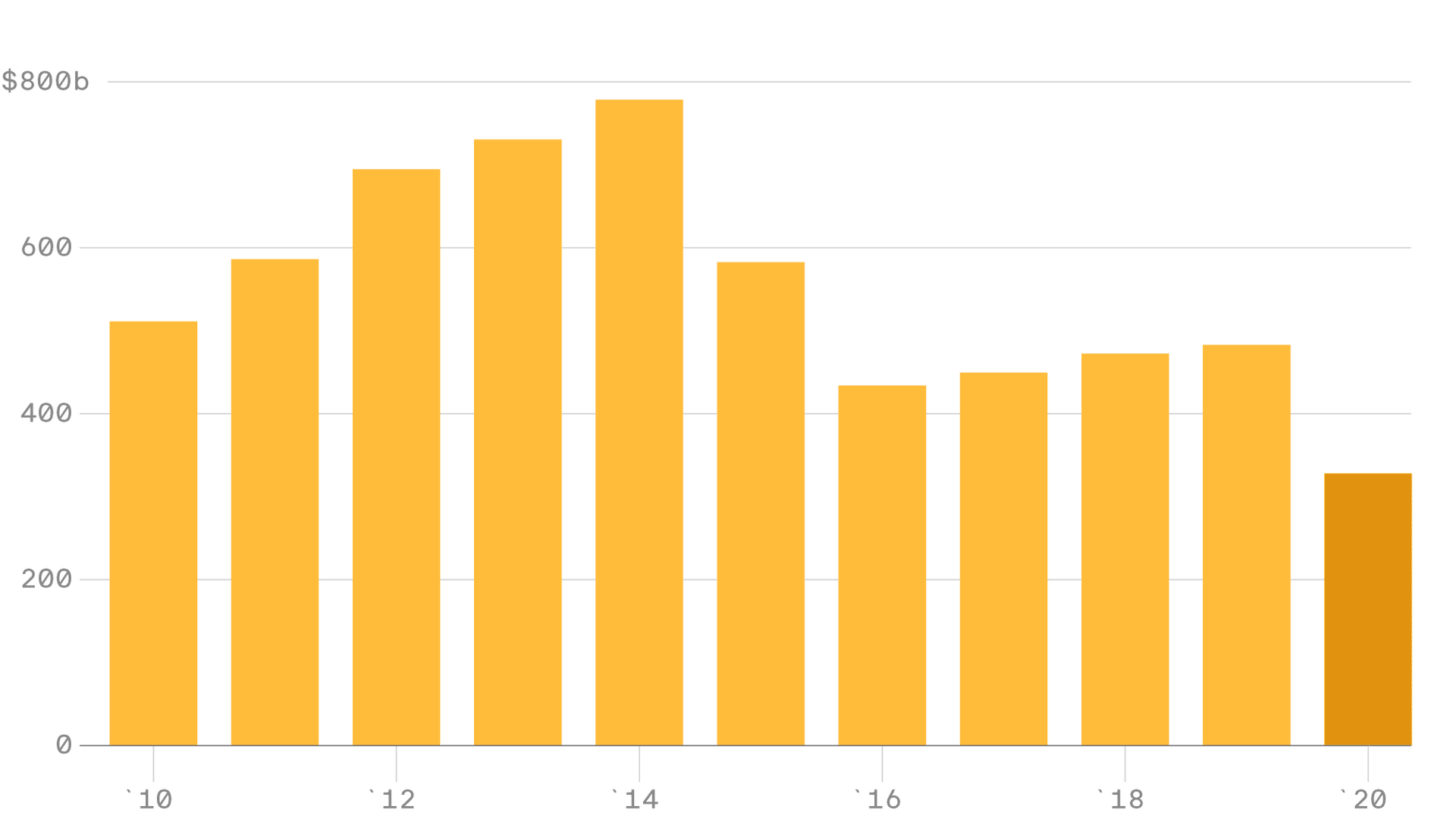
The coronavirus pandemic is causing the "largest decline in energy investment on record," with capital spending worldwide slated to fall by roughly $400 billion this year, the International Energy Agency said in a new report.
The state of play: The roughly 20% aggregate decline is affecting the oil industry, renewables and other power sectors, and energy efficiency-related investments, though IEA sees renewables proving more "resilient" than other fuels.
The European Commission this morning proposed a $825 billion package of economic responses to the coronavirus pandemic that includes financing for renewable energy, electric vehicle charging and other emissions-friendly projects.
Why it matters: The energy components of the "Next Generation EU" plan, part of a wider multi-year budget proposal, appear to be the most substantial attempt yet to stitch low-carbon investments into economic recovery plans.
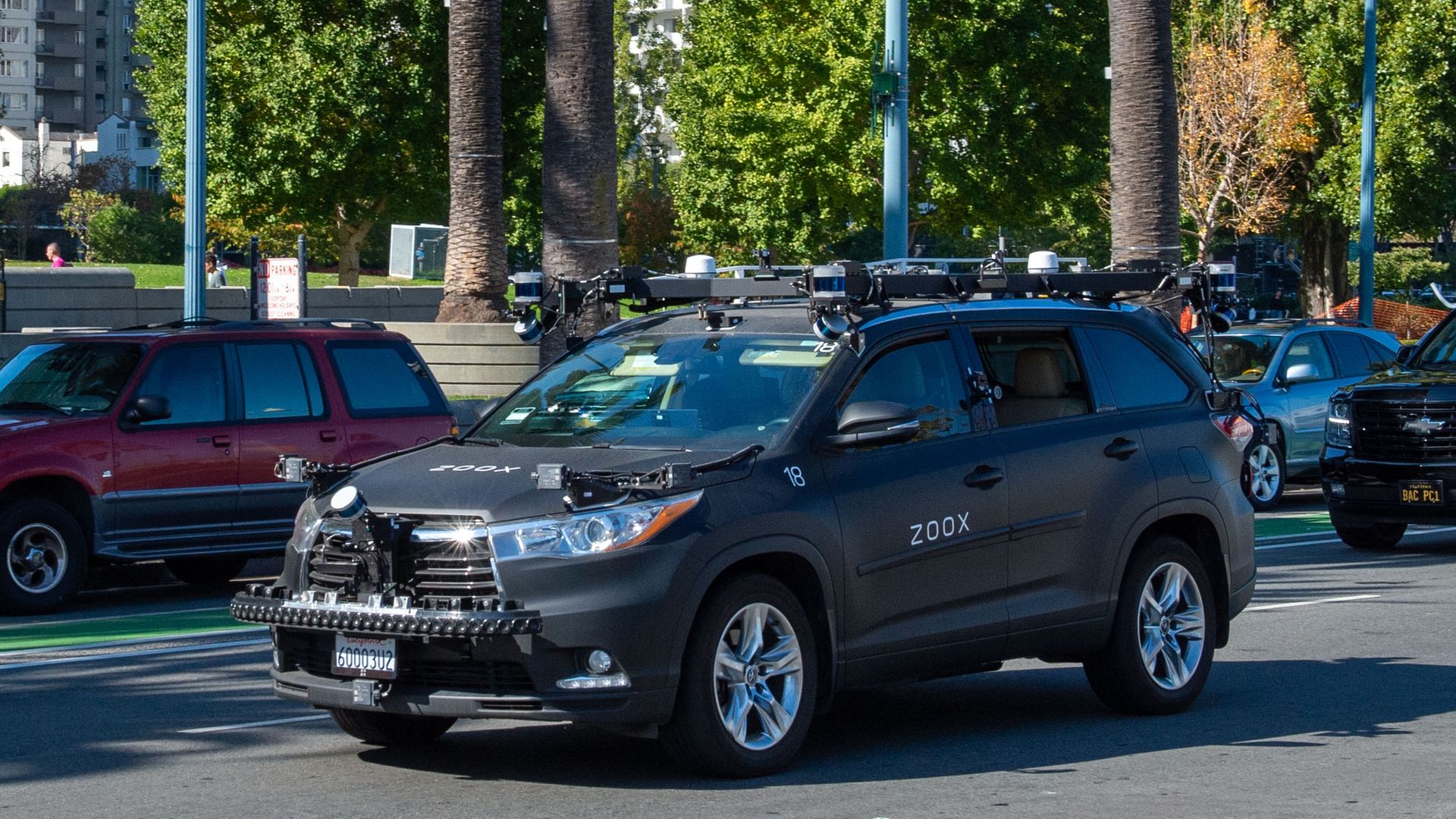
Amazon is in advanced talks to buy Zoox, a developer of autonomous vehicle technology, the Wall Street Journal reported Tuesday night.
Why it matters: It's the latest move by the e-commerce giant, which appears to be building an electric, autonomous logistics operation through its investments in EV truck maker Rivian, self-driving tech company Aurora Innovation and now, potentially, Zoox, which had been planning to introduce a robo-taxi service.