Elizabeth Warren's rise in the 2020 Democratic primary fight is forcing oil companies and analysts to grapple with the potential effects of the liberal Massachusetts senator winning the White House.
Why it matters: Warren, now challenging Joe Biden for frontrunner status, has pledged to halt hydraulic fracturing — the extraction technique that has enabled the U.S. oil and natural gas boom. She's also pledged to end new leasing on federal lands.
The world's top economic institutions are going deeper in the fight against climate change, and central banks are re-evaluating policies and pushing new principles to integrate climate-related risks into financial supervision, leaving the U.S. behind.
On one side: The effects of climate change are everywhere, European Central Bank chief economist Philip Lane said during the IMF's fall meetings last week.
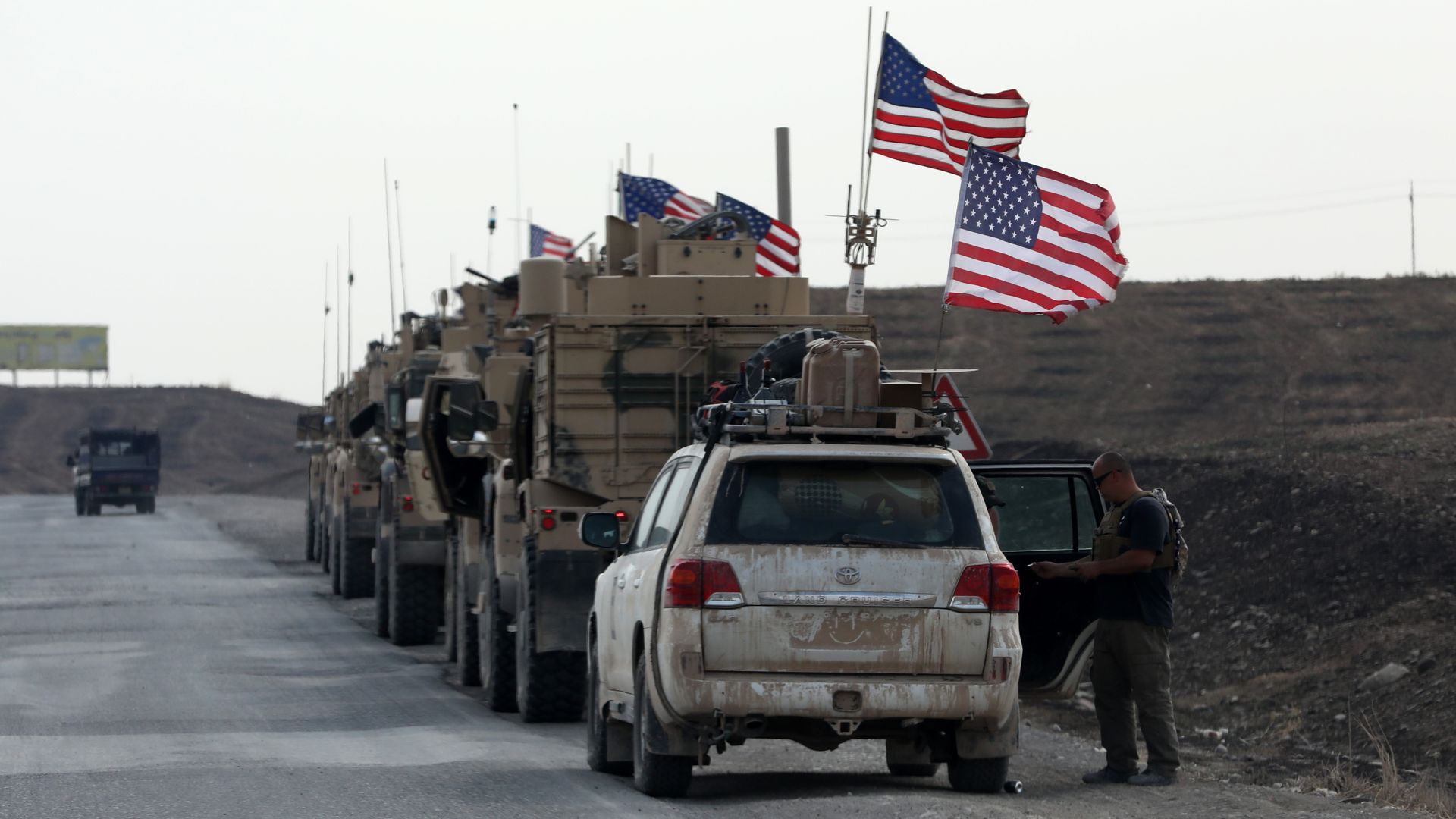
Defense Secretary Mark Esper said Monday during a trip to Afghanistan that the Pentagon is deliberating whether to station a “residual force” of U.S. soldiers in cities in eastern Syria to defend oil fields.
Why it matters: Stationing the residual force in a Syrian city would attach a major caveat to President Trump's pledge to stop U.S. involvement in “endless wars” in the Middle East.
The International Energy Agency's new five-year renewable energy forecast sees faster growth than last year's outlook, but warns that movement toward zero-carbon sources is too slow to confront global warming.
What they found: The agency forecasts that total global renewable power capacity, which was 2,502 gigawatts last year, will increase 50% by 2024, with solar accounting for over half the expansion.
IEA's new report sees rapid growth of solar power systems located at homes, businesses and industrial plants. They forecast this distributed capacity reaching 530 GW in five years.
The intrigue: Rooftop solar at homes isn't the main driver. "Contrary to conventional wisdom, distributed [photovoltaic] growth is dominated by commercial and industrial applications rather than residential," IEA notes.
Swing voters in three of America’s top battleground states say climate change is a concern, but not an urgent crisis.
The big picture: The results of focus groups in Ohio, Minnesota and Wisconsin suggest that some ofAmerica’s swing voters have views on climate change that are in between Democratic presidential candidates, who think it’s a crisis, and President Trump, who dismisses it altogether.