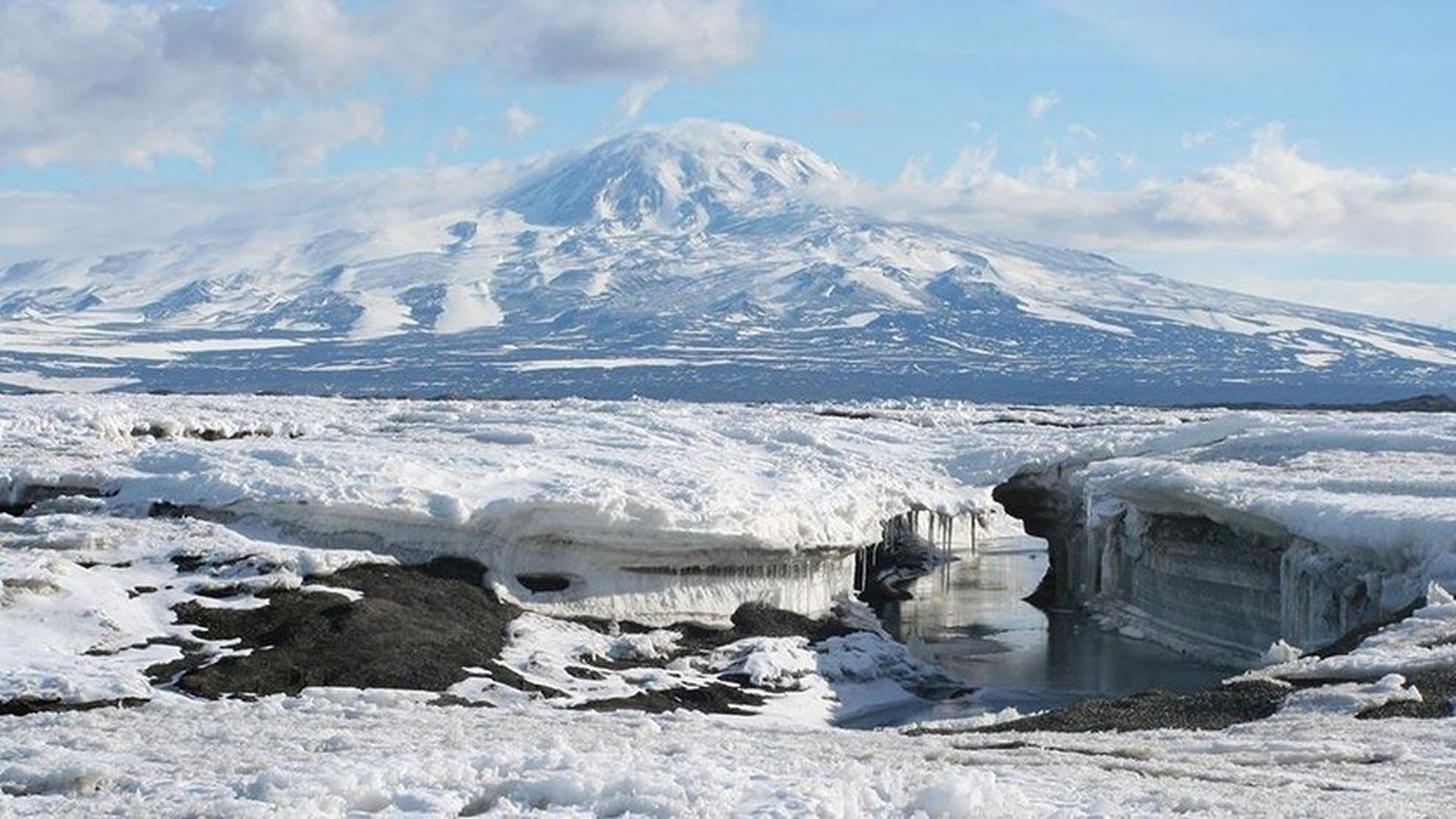
Scientists have used bacterial samples collected on a 1902 expedition to Antarctica to study how climate change is affecting one of Earth's most extreme environments. They found the bacteria hadn't changed significantly over the century, suggesting they may be better adapted for climate change than microbes from other ecosystems.
Why it matters: As the climate and Antarctica continue to change, says study author Anne Jungblut, the more we know about the continent's past, the better we'll understand it's future. "These cyanobacteria are at the bottom of the food chain. They're photosynthetic and they create vibrant ecosystems with microscopic organisms in them. They're a keystone species."