These electric vehicle companies have the best shot at surviving

Add Axios as your preferred source to
see more of our stories on Google.
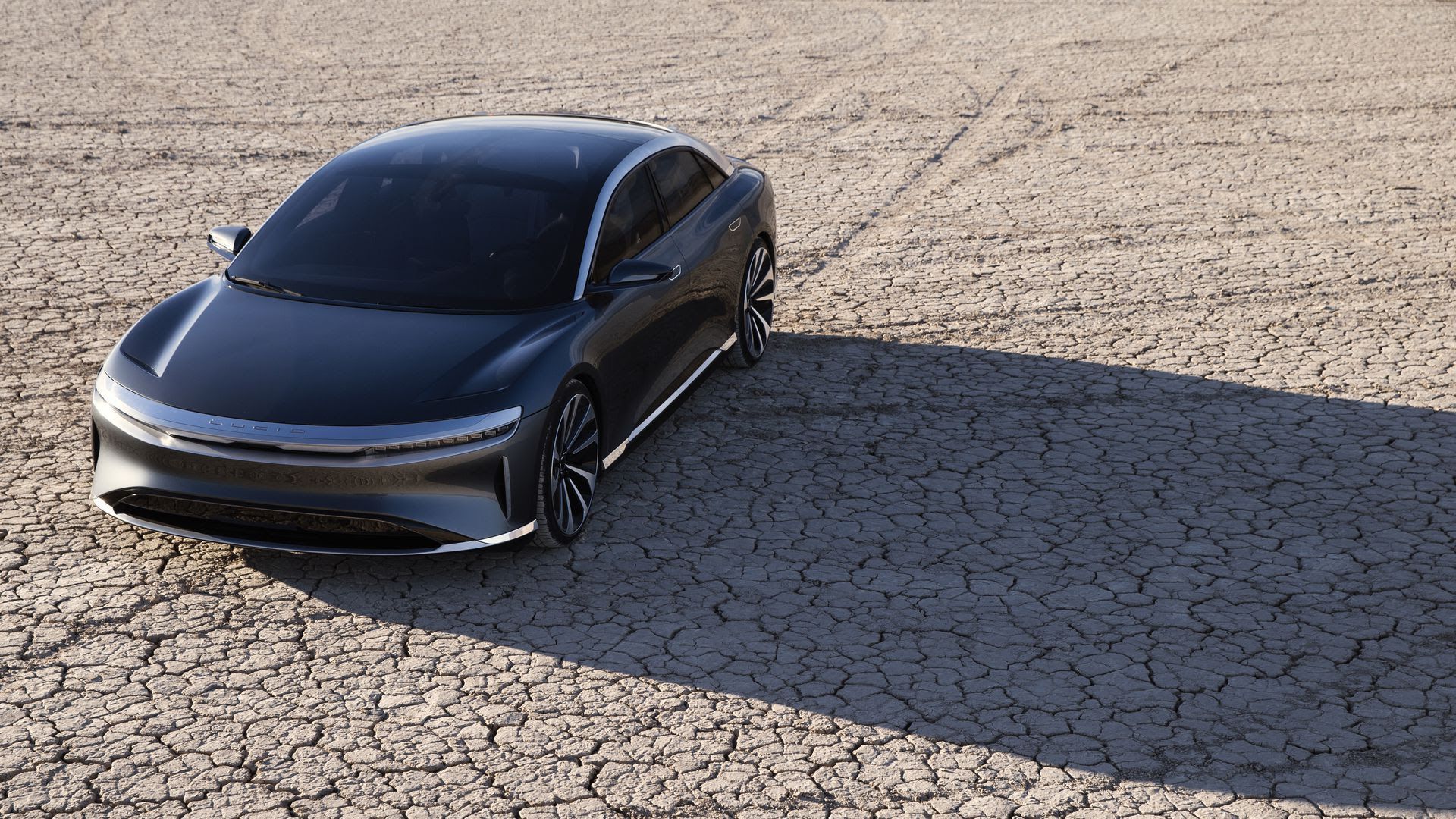
The Lucid Air is a $100,000 electric luxury sedan coming in early 2021. Photo: Lucid Motors
Two electric vehicle startups — Rivian and Lucid Motors — are best positioned to survive the fallout from the pandemic, industry experts tell Axios.
Why it matters: With solid funding and strong in-house technology, they've got a path to success — provided they can get back on track quickly as the economy recovers.
Rivian could have the best shot at survival for a number of reasons.
- It's developing a line of premium electric trucks and SUVs under the Rivian brand, but also marketing its core EV technology to other manufacturers, notably Amazon, which has placed an order for 100,000 electric delivery vans.
- Rivian's business-to-business play sets it apart from Tesla and all the other electric vehicle companies trying to get off the ground, notes Sam Abuelsamid, principal analyst at Guidehouse Insights.
- The Michigan-based company founded by CEO R.J. Scaringe is well-funded with more than $3 billion raised from Amazon, Ford, T. Rowe Price and others, including Dubai-based conglomerate Abdul Latif Jameel, a big Toyota and Lexus distributor.
- Production was supposed to start at the end of this year but was pushed into 2021 because the pandemic temporarily slowed construction at Rivian's Illinois factory.
Lucid is targeting the luxury market — as are many EV startups — but it's the most likely to emulate Tesla's success.
- Lucid CEO Peter Rawlinson, after all, was the chief engineer for Tesla's breakthrough product, the Model S sedan.
- "Suddenly, there's a whole phalanx of companies, predominantly in California, saying, 'If Tesla could do it...' without any idea of how the stars aligned for Tesla," Rawlinson tells Axios.
- Lucid's edge, he said, is its proprietary electric powertrain, which is smaller, yet far more efficient than rivals, freeing up more space for passengers.
Lucid also benefited from some good fortune. Its factory is going up in Arizona, where construction was allowed to continue during the government shutdown — with appropriate health safety protocols, Rawlinson said.
- Lucid raised $1 billion from Saudi Arabia's Public Investment Fund in September 2018 to launch its first vehicle, the $100,000-plus Lucid Air.
- Rawlinson said Lucid's next model, an electric SUV, will depend on additional fundraising.
Go deeper: Electric vehicle startups try to keep the spark alive during coronavirus uncertainty
