Cybercab fleets would need a place to sleep

Add Axios as your preferred source to
see more of our stories on Google.
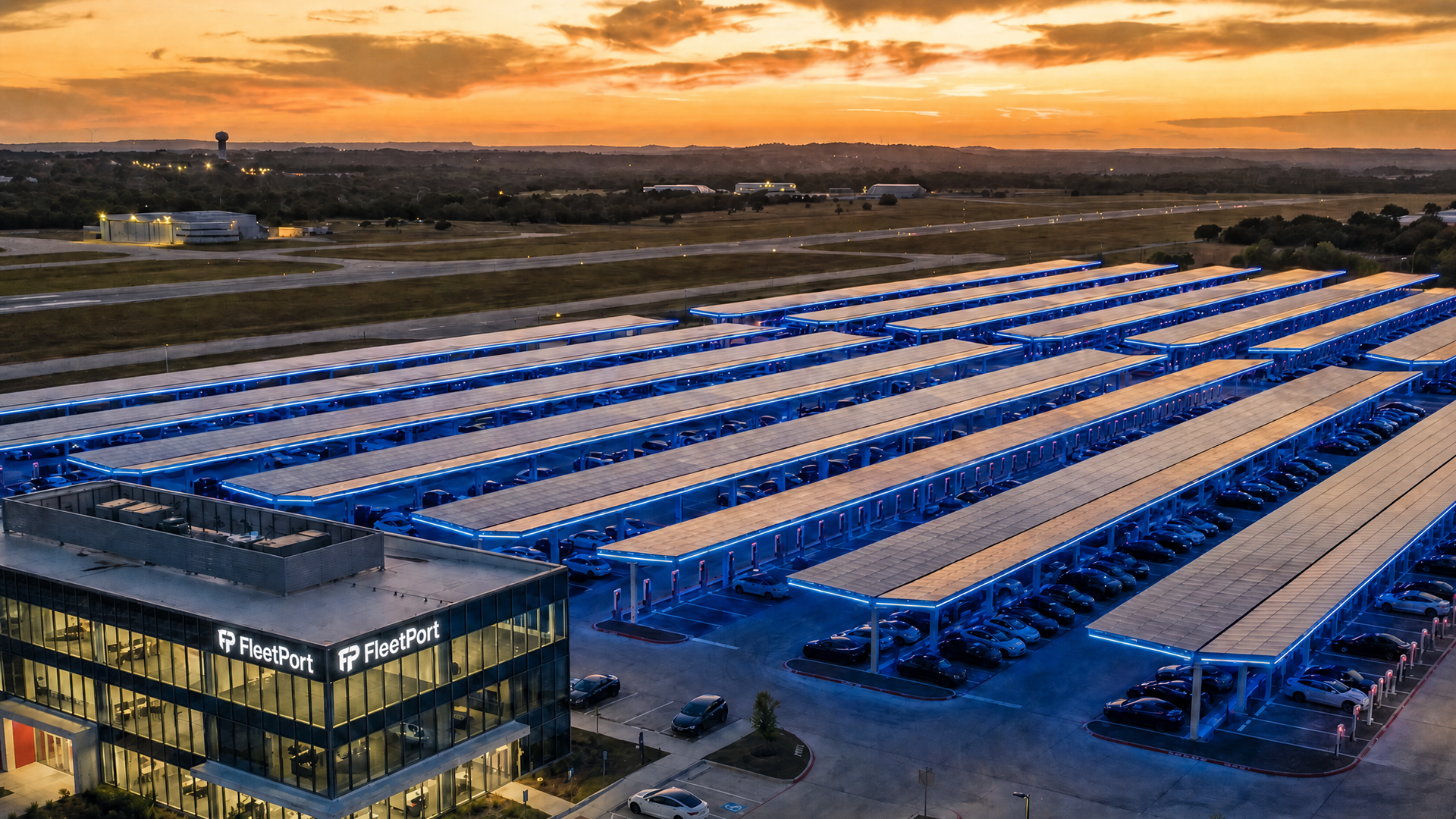
A computer rendering of what a Fleetport hub for robotaxis might look like. Image: Courtesy of Fleetport
A veteran real estate executive is trying to launch a network he envisions as the modern-day robotaxi equivalent of full-service gas stations.
Why it matters: Tesla's invitation for entrepreneurs to buy Cybercab fleets is already inspiring another potential business: building the infrastructure to park and service them.
Between the lines: "There's a lot of very successful entrepreneurs. They live in suburbia. They don't want eight robotaxis sitting ... on their street," Jason Maxwell tells Axios.
- Maxwell is trying to launch Fleetport, what he envisions as a network of hubs offering overnight storage of 100 to 250 robotaxis, along with fast charging, cleaning and basic maintenance.
- His target customer: the aspiring entrepreneur who buys seven, 10 or 20 Cybercabs but doesn't have anywhere to put them.
Catch up quick: Cybercab's official commercial launch in Austin on Sept. 4 marked the beginning of CEO Elon Musk's vision for an autonomous future.
- The night before, the company began soliciting interest from people who want to buy a fleet for commercial purposes — or to build mobility hubs or infrastructure to service them.
Yes, but: Fleetport is a bet on a future that hasn't arrived yet.
- For now, Cybercabs are not for sale to the public.
- Maxwell has no partnership with Tesla, hasn't raised institutional capital and hasn't begun construction — but he says he and a partner have identified potential sites, beginning with Texas.
- Fleetport's website says it plans six hubs near major airports — in Austin, Oakland, San Francisco, Los Angeles, Phoenix and Miami — opening in 2027.
Reality check: Finding suitable real estate in any densely populated city is difficult, but robotaxi depots need to be carefully located to maximize efficiency and avoid empty trips.
- The challenge is compounded by zoning and permitting delays, not to mention power requirements.
- It can take years to build the necessary infrastructure and it requires plenty of capital.
- And consumer demand for robotaxis is still uncertain.
What they're saying: Maxwell acknowledges the risk.
- "Maybe it's not as quick as I want. Maybe it's five years or longer," he says of a national Cybercab rollout.
- His bet is that robotaxi depots will eventually become their own real estate asset class — and that getting control of the right properties before the boom could be lucrative.
The bottom line: If Tesla really does unleash thousands of independently owned Cybercabs, some of the best business opportunities could turn out to be decidedly old-school: parking spaces, electricity and car washes.
