Sign up for our daily briefing
Make your busy days simpler with Axios AM/PM. Catch up on what's new and why it matters in just 5 minutes.
Stay on top of the latest market trends
Subscribe to Axios Markets for the latest market trends and economic insights. Sign up for free.
Sports news worthy of your time
Binge on the stats and stories that drive the sports world with Axios Sports. Sign up for free.
Tech news worthy of your time
Get our smart take on technology from the Valley and D.C. with Axios Login. Sign up for free.
Get the inside stories
Get an insider's guide to the new White House with Axios Sneak Peek. Sign up for free.
Catch up on coronavirus stories and special reports, curated by Mike Allen everyday
Want a daily digest of the top Denver news?
Get a daily digest of the most important stories affecting your hometown with Axios Denver
Want a daily digest of the top Des Moines news?
Get a daily digest of the most important stories affecting your hometown with Axios Des Moines
Want a daily digest of the top Twin Cities news?
Get a daily digest of the most important stories affecting your hometown with Axios Twin Cities
Want a daily digest of the top Tampa Bay news?
Get a daily digest of the most important stories affecting your hometown with Axios Tampa Bay
Want a daily digest of the top Charlotte news?
Get a daily digest of the most important stories affecting your hometown with Axios Charlotte
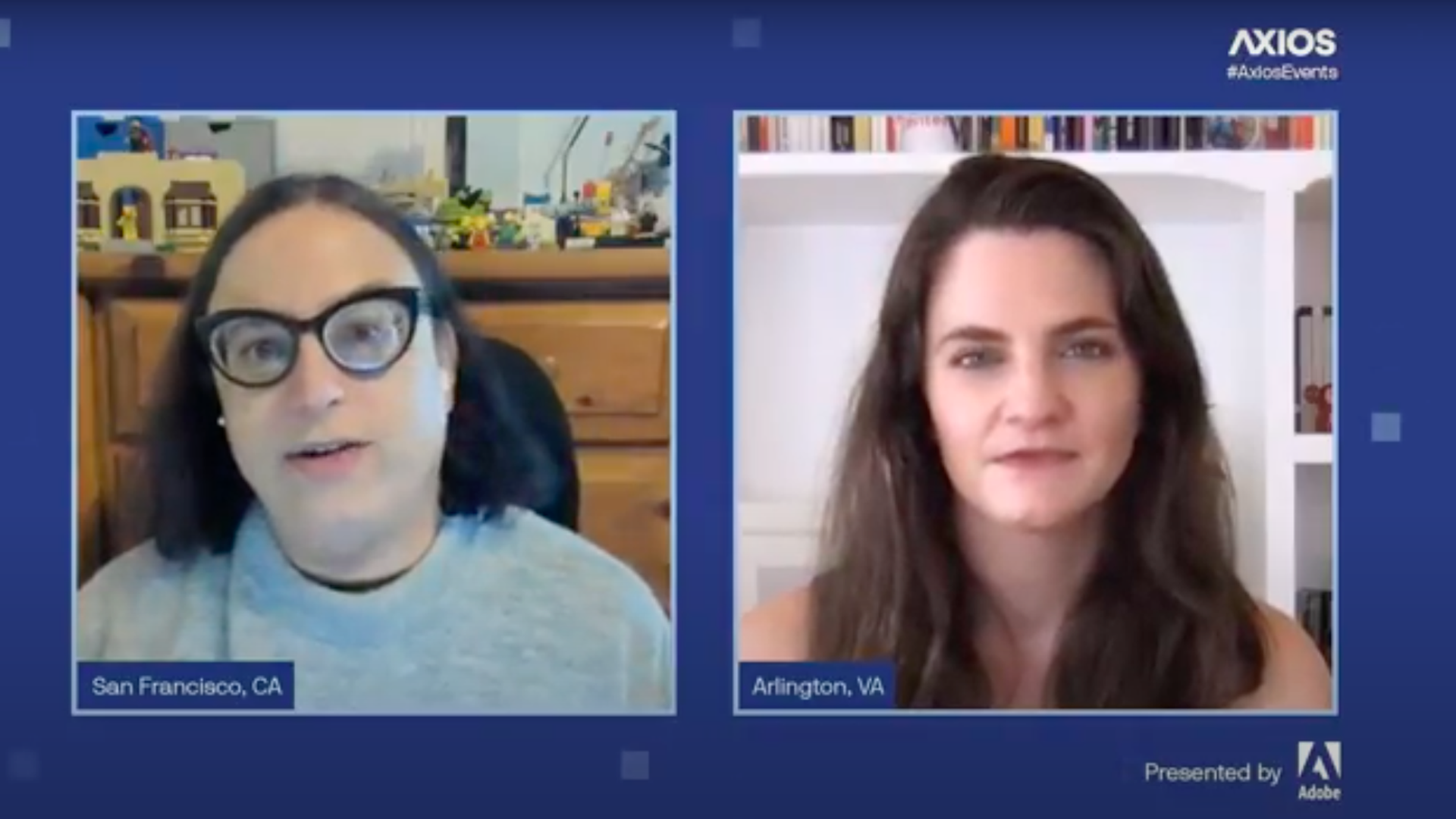
Axios technology correspodant Ina Fried (left) and Wilson Center disinformation fellow Nina Jankowicz. Photo: Axios
Experts are seeing malicious groups, both foreign and domestic, shift to more advanced campaigns of disinformation than they had in 2016, Nina Jankowicz, disinformation fellow at the Wilson Center, said Wednesday at an Axios virtual event.
Why it matters: The method, called "disinformation laundering," targets false ideas or conspiracy theories that could become legitimized through media or public figures and politicians.
- "In 2016, we saw a lot of inauthentic amplification through networks, trolls and bots, but in 2020 especially because there is greater awareness on behalf of the public, the government, the social media platforms about these tactics, what we’re seeing is disinformation laundering," she said.
The big picture: Disinformation, which stems from deliberately malicious campaigns of false information, has an effect on how U.S. democracy functions, Jankowicz said. The drivers of this chaos, like Russia's Kremlin and domestic groups, seek long-term repercussions.
- "In the case we’re seeing right now ahead of the U.S. election, it is instilling distrust in our democratic system and the fact that people’s votes — the idea that their votes might not be counted, that they can't trust in local and state officials or federal officials," Jankowicz said.
Watch the event, Axios' Trust and Transparency, online at Axios.com.