Black Friday is now a marathon, not a sprint

Add Axios as your preferred source to
see more of our stories on Google.
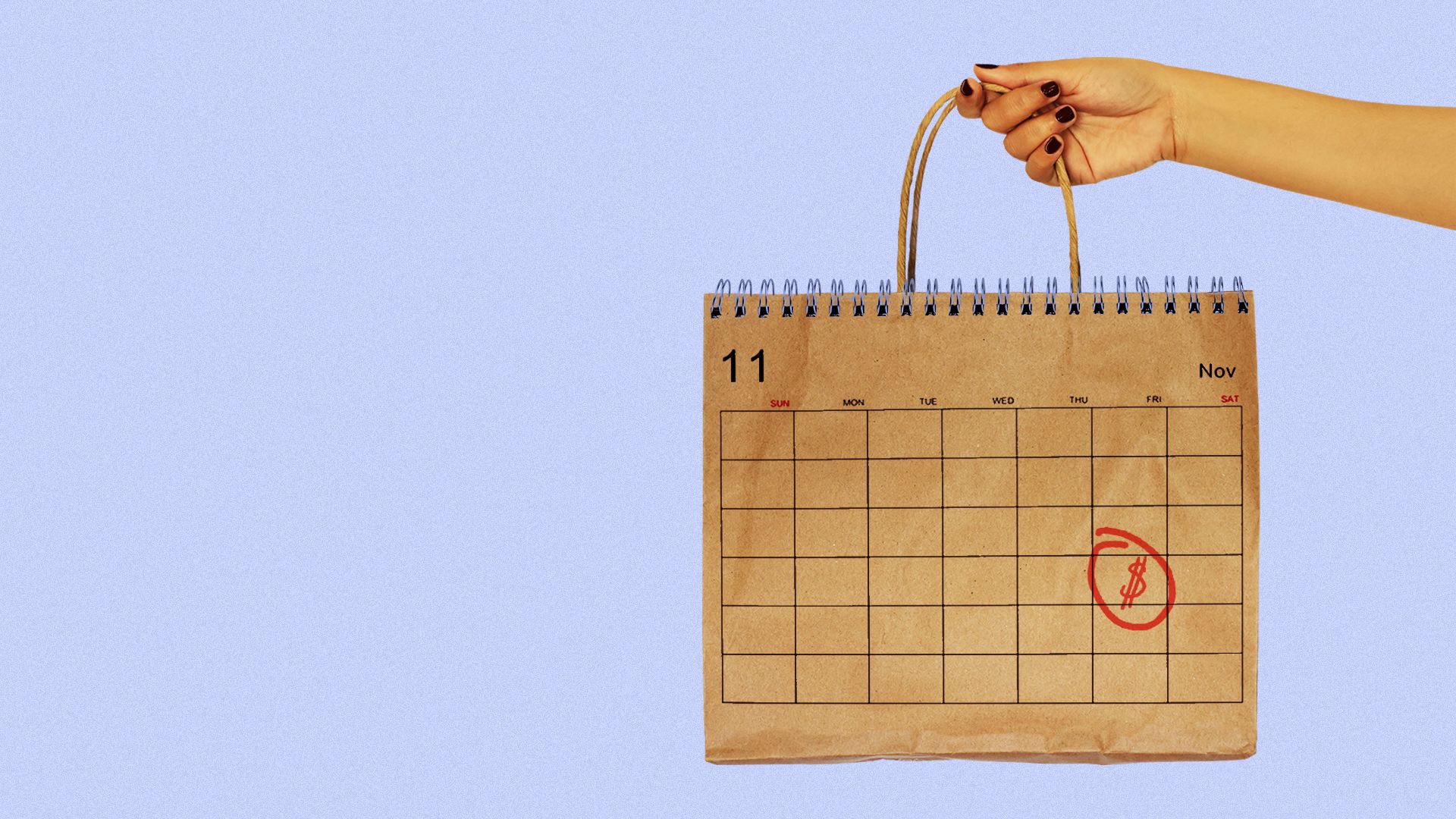
Illustration: Sarah Grillo/Axios
The days of shoppers lining up outside of stores on Thanksgiving night and fighting over the season's hottest toys are giving way to a much calmer Black Friday shopping experience.
The big picture: A strategy that gained momentum during the pandemic to entice shoppers to spread out their spending has become a holiday retail staple, with businesses extending sales across weeks rather than a single day.
State of play: An estimated 182.7 million consumers are expected to shop during Thanksgiving weekend, down more than 2% from last year, according to the National Retail Federation.
- The dip is largely attributed to Americans shopping sooner, with 60% starting their holiday shopping by early November, the federation said.
The share of shoppers planning to concentrate their purchases around Black Friday also fell from 25% to 17%, a Bank of America survey found.
- Still, the days between Thanksgiving and Cyber Monday are expected to drive over $47.5 billion in online sales, up more than 7% from 2025, according to an Adobe Analytics forecast.
The intrigue: Extended promotions have blurred the lines between Black Friday, Small Business Saturday and Cyber Monday, creating what Sheri Lambert, a marketing professor at Temple University, described as "Black November," a month-long savings event.
- Holiday discounts on some electronics began creeping into early November back in 2016, a move that accelerated during the COVID-19 pandemic as consumer habits changed and online shopping surged, according to the Bureau of Labor Statistics.
Worth noting: AI tools are easing the holiday shopping burden, with agents that can manage gift lists, track prices, and even purchase presents.
- Last year, major retailers, including Target, Walmart and Amazon, launched their own smart shopping assistants to help consumers find gifts faster and secure the best deals.
Yes, but: Retailers are dangling incentives to get Americans through their doors this Black Friday.
- Target is offering store gift cards — ranging from $25 to $100 — to the first 100 eligible guests at every store. One customer per store will receive a $1,000 card.
- At Bass Pro Shops and Cabela's stores, the first 250 customers ages 16 and up will receive a gift card valued between $10 and $500. JCPenney is offering a free Harry Potter Hogwarts Express mini snow globe and promoting several giveaways throughout the day with prizes that include diamond earrings and Samsonite luggage.
Between the lines: A longer window to score deals doesn't necessarily mean bigger savings for shoppers — or a better shopping experience.
- A 2026 analysis of more than 350 Amazon products advertised as deals during Black Friday and Cyber Monday found that nearly 1 in 3 offers provided no savings at all, according to Groundwork Collaborative, an economic policy think tank.
- Some retailers, like Aritzia and Phoebe Philo, have added another layer to traditional Black Friday sales, offering only select customers exclusive or early access to discounted merchandise.
The bottom line: With rising costs and inflation squeezing many Americans' budgets, shoppers have more time to hunt for bargains, and less reason to rush to stores on Black Friday.
