Black organizers plot the South's next power shift

Add Axios as your preferred source to
see more of our stories on Google.
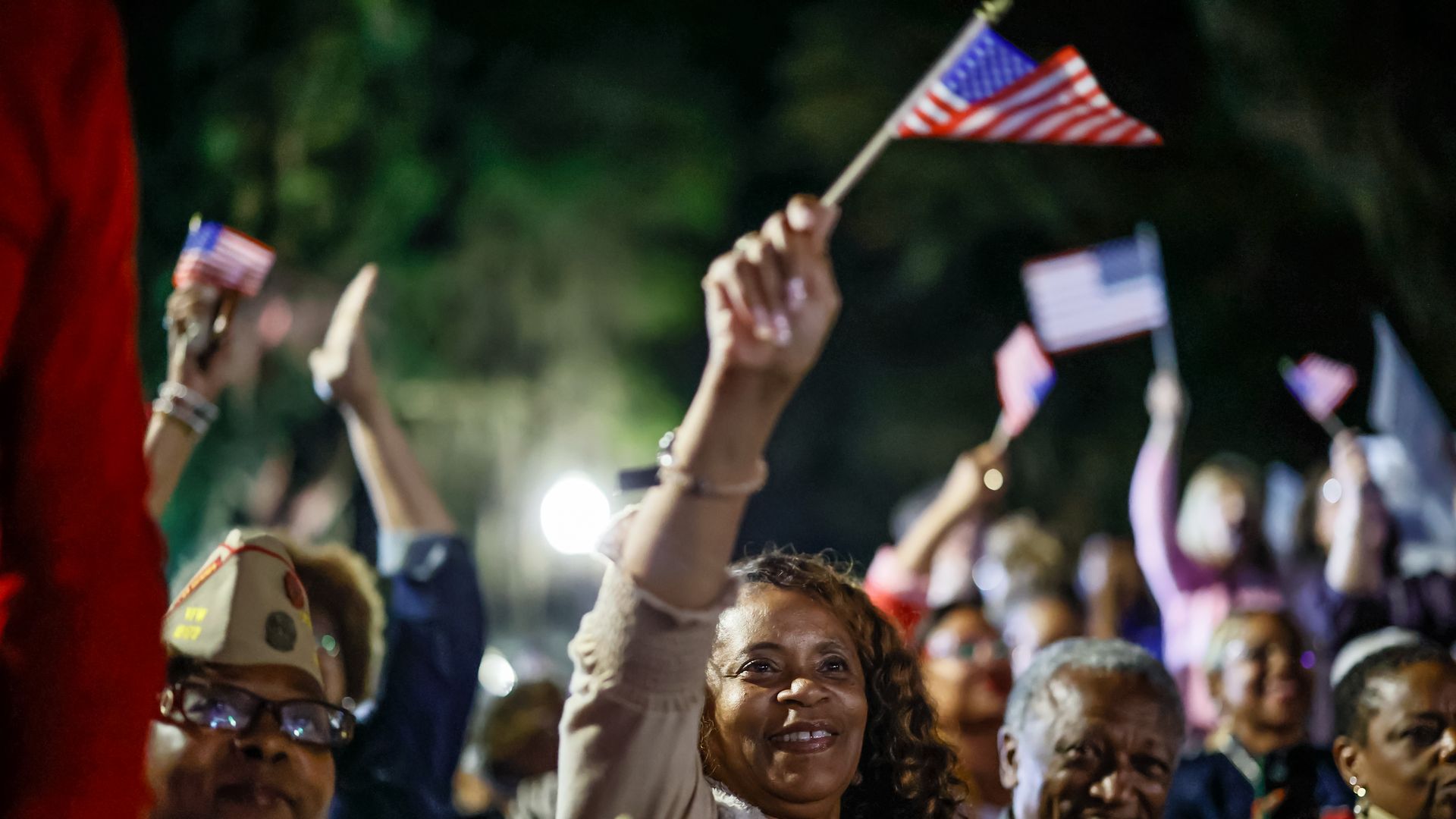
Supporters wave American flags during a victory celebration for Mississippi Sen.-elect Scott Colom, D-Miss., at Tougaloo College on November 11, 2026 in Tougaloo, Mississippi. Photo: Aron Smith/Jackson State University via Getty Images
After years of being overlooked by national Democrats, Black organizers are using stunning Southern election upsets in the pursuit of something more lasting: a new generation of candidates who can win and govern.
Why it matters: Activists say the 2026 midterms proved Southern races long dismissed as unwinnable could flip with grassroots organizing and investment.
- Now they're building a multiracial, working-class political bench — from school boards to statehouses.
- Organizers want to turn Black political gains into a durable Southern coalition united by economic interests, not just opposition to Republicans.
By the numbers: The midterm election results gave organizers fresh ammunition.
- Roughly nine in 10 Black voters backed Democratic House candidates nationally, according to the AP Voter Poll.
- Democrats flipped 10 South Carolina House seats, seven won by Black candidates, ending the GOP supermajority, the South Carolina Daily Gazette reports.
State of play: The Working Families Party plans candidate recruitment events in Georgia, Tennessee, South Carolina and Mississippi in early 2027, targeting community organizers, teachers, young activists and other political outsiders.
- It plans training, digital outreach and spending to support dozens of Southern candidates.
- Its Southern Made initiative aims to recruit and train 1,000 working-class candidates by 2030.
Zoom in: South Carolina illustrates the opportunity.
- WFP-backed Jumelle Brooks, a home health care provider, lost a 2024 House race by roughly 700 votes before winning this year by nearly 10 percentage points.
- Another WFP-backed Democrat, Sonja Ogletree Satani, won a Charleston-area rematch.
What they're saying: "We are building concentrated governing power," Britney Whaley, WFP's Southeast regional director, tells Axios.
- Whaley wants clusters of allies in elected bodies who can pass legislation, not isolated progressives powerless to advance an agenda.
- "Black people across the country voted for historic change, and now it's time for systemic policy change," Kristin Powell of Black to the Future Action Fund said in a statement to Axios.
Zoom out: The Southern breakthroughs extended well beyond statehouses.
- Mississippi: Scott Colom became the state's first Black senator elected since Reconstruction.
- South Carolina: Annie Andrews won a long-shot Senate race.
- Georgia: Keisha Lance Bottoms became the nation's first Black woman elected governor; Democrats flipped the state House.
- Texas: James Talarico became the first Democratic U.S. senator elected since 1988.
Yes, but: The South remains deeply Republican, and organizers say Democrats left winnable races on the table.
- WFP-backed Angie Nixon lost in Florida by roughly three points; Justin J. Pearson lost Tennessee's 9th District by 2,539 votes.
- The WFP spent about $200,000 on each race and argues more national investment could have tipped them. That's unproven.
The intrigue: Pre-election findings from the 2026 Black Census, a nationwide voluntary survey by the advocacy group Black Futures Lab, found 95% of respondents planned to vote — yet just 3% trusted Washington and 22% trusted Black elected officials.
- Economic anxiety runs deep, with 44% hoping to escape debt, 35% to earn more and 25% to find affordable housing.
- Southern organizers now face a test of turning votes into economic relief, though the survey isn't representative of all Black voters.
