Lidar and AI are making traffic lights smarter

Add Axios as your preferred source to
see more of our stories on Google.
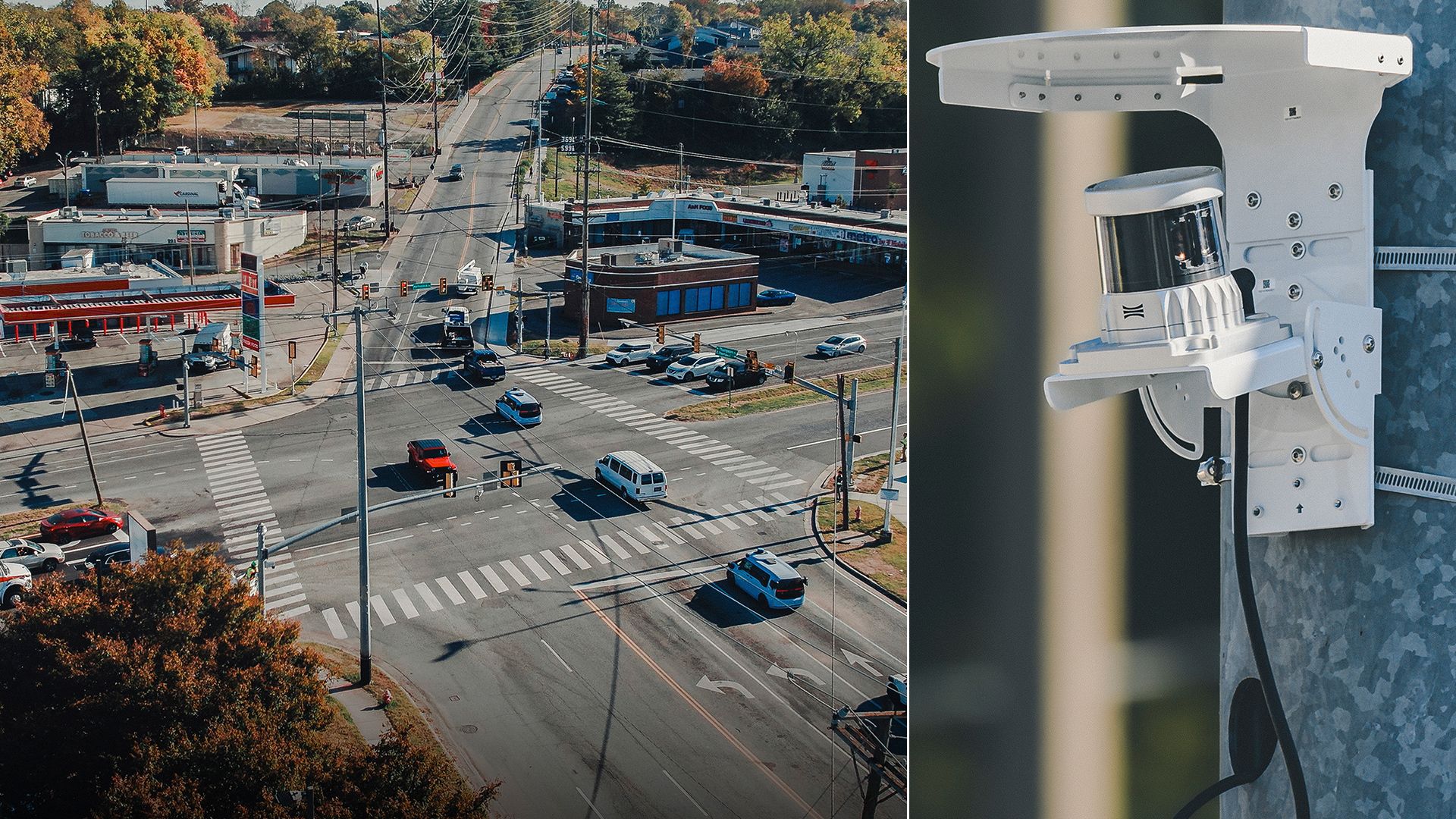
Nashville has more than 200 lidar sensors monitoring traffic, without the privacy concerns of license plate-reading cameras. Image courtesy of Ouster
The same laser-sensing technology used in autonomous vehicles is being paired with artificial intelligence to make traffic lights smarter — and streets potentially safer.
Why it matters: Smart traffic lights can give slower pedestrians more time to cross — or keep cars moving when no one is waiting.
Driving the news: Nashville is expanding its deployment of lidar-based traffic technology from San Francisco-based Ouster, adding 100 intersections to an existing network.
- The new multimillion-dollar contract brings Ouster's total contracted installations in Nashville to more than 200 roads and intersections.
- The expansion is supported by federal transportation funding.
The big picture: Cities are beginning to replace conventional traffic cameras and sensors with lidar systems that can detect vehicles, pedestrians and cyclists more reliably, even in poor weather or darkness.
How it works: Ouster's BlueCity system uses stationary lidar sensors to create detailed 3D images of traffic movements, which AI software analyzes in real time.
- The sensors can detect movement up to 500 feet away and, for the first time, capture color information, allowing the system to distinguish traffic signal colors.
- That allows traffic lights to adjust their timing based on what's actually happening at an intersection, rather than relying on preset schedules.
Between the lines: Lidar, commonly used in autonomous vehicles, was once prohibitively expensive, but falling costs are opening new markets across industrial, robotics and smart infrastructure.
- Ouster Vice President Asad Lasani told Axios its technology can now compete on price with conventional traffic detection systems, which can cost $30,000–$40,000 per intersection.
- Ouster also has major deployments in Chattanooga, Tenn., and across Utah, where it expects to reach more than 300 locations.
Another selling point is privacy.
- Amid the uproar over Flock Safety's license-plate-reading cameras, Ouster says its system automatically blurs people and lacks the resolution to read license plates.
- Lasani says some cities are moving away from cameras because of privacy concerns, even when they're not used for surveillance.
The bottom line: Lidar is moving beyond autonomous vehicles — and could make everyday intersections safer, smarter and more efficient.
