Fed's Warsh sees risk of stock bust if AI boom disappoints

Add Axios as your preferred source to
see more of our stories on Google.
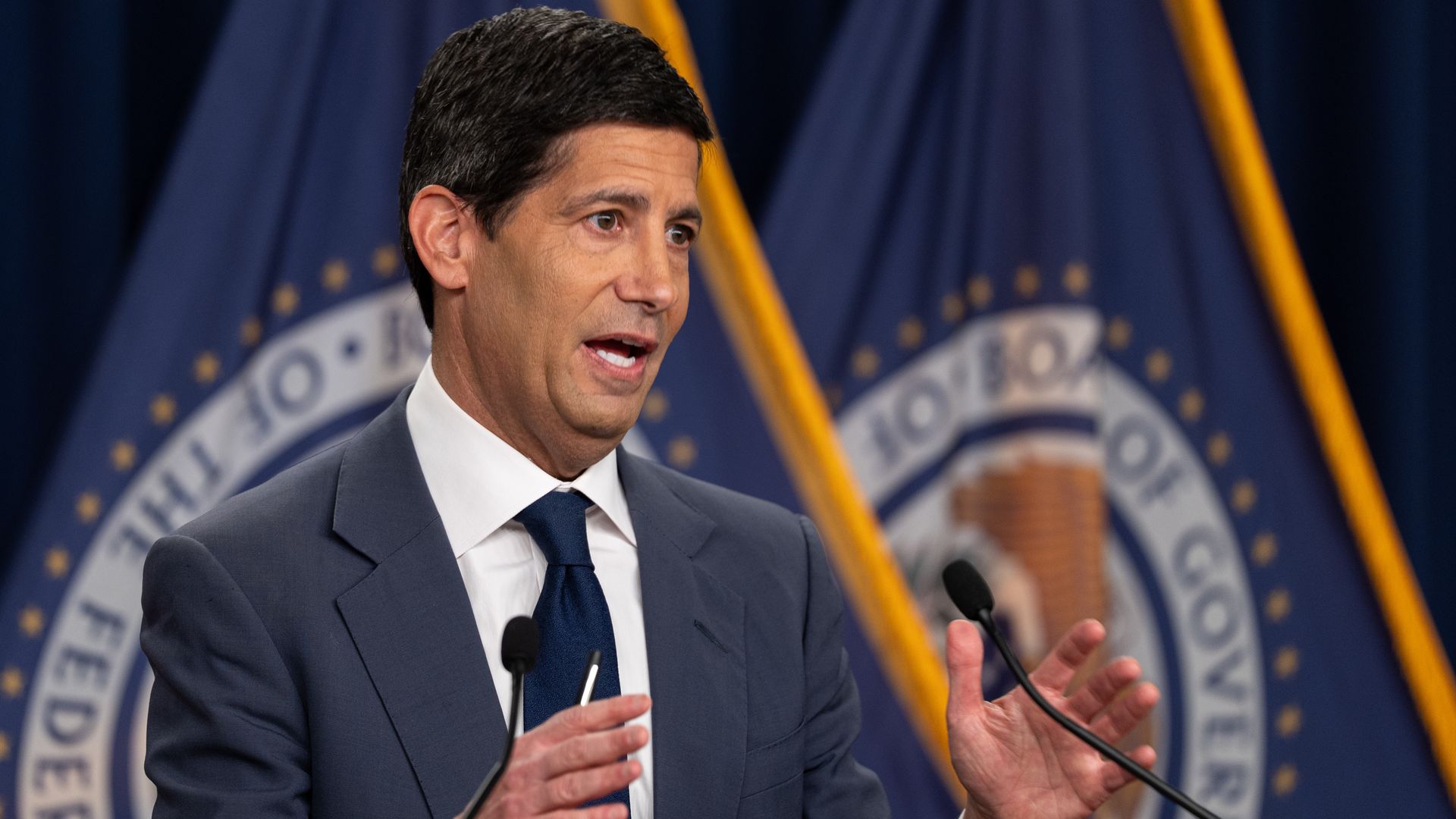
Federal Reserve chairman Kevin Warsh. Photo: Mehmet Eser/Anadolu via Getty Images
Federal Reserve chairman Kevin Warsh on Monday described a range of scenarios for how the AI boom may ripple through the economy in the coming years — including one in which financial loss causes stocks to drop and unemployment to rise.
Why it matters: The massive, multitrillion-dollar investment in AI technology and the data centers that power it has contributed to U.S. economic growth, but also created vulnerabilities that have come into greater focus in recent weeks.
Driving the news: Warsh, in opening remarks at a Fed conference focused on the productivity and labor market implications of the technology (which he calls SI, or super intelligence) noted those risks explicitly.
- In the event the technology disappoints, he will say, after "significant capital investment and stock market gains, expected returns could turn down and equity valuations could fall, leading to an economic slowdown and a more notable rise in unemployment."
- "In time, the economy would recover, but without the productivity gains," Warsh will say, according to a prepared text released by the Fed.
- He also raised the possibility that the technology "could bring substantial labor market disruption as some jobs are displaced, rather than complemented by technology" and that automation "could push the jobless rate above levels consistent with full employment."
Yes, but: Those were downsides he noted in a speech that was broadly optimistic about the technological potential. He emphasized that they are "illustrative scenarios, not forecasts."
- "Even a few years ago, the idea that we could have, in our pockets, instant access to genius-level intelligence on almost any subject would have seemed far-fetched," Warsh will say. "Today, with the advances of SI, it's happening."
- But, he added, "humans should not be underestimated. There is no replacing the minds and the hands of men and women."
- "Machines that can amass or even exceed human knowledge are still machines," he will say. "They do not take the place of human judgment, morality, or responsibility. Humans are the designers and the builders, and humans must be the deciders."
What they're saying: In one scenario, "SI leads to an increase in productivity and economic gains that are shared broadly across labor and the owners of capital," Warsh will say.
- "In that event, real GDP growth rises persistently above its long-run average, and the U.S. stays close to full employment."
What's next: Leading economists and technologists are scheduled to appear in a series of panel discussions at the conference — with three of four discussions moderated by Warsh himself.
- The agenda and webcast are here.
