The human side of China's espionage operations

Add Axios as your preferred source to
see more of our stories on Google.
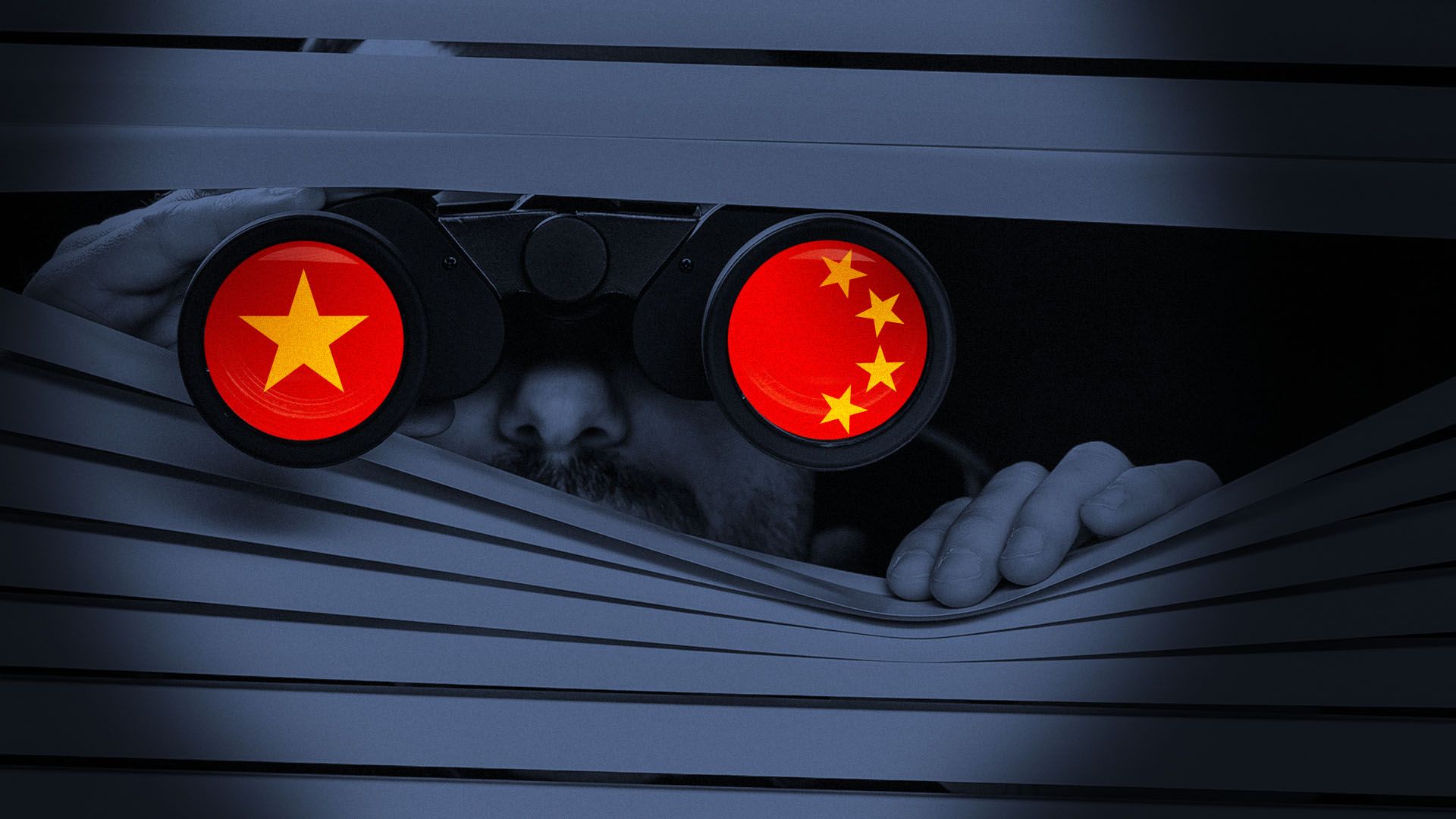
Illustration: Sarah Grillo/Axios
Nvidia CEO Jensen Huang's affair with a suspected Chinese spy has brought attention to a longstanding element of Beijing's espionage playbook: cultivating personal relationships with powerful Americans.
Why it matters: The country's most powerful executives and politicians have access to highly sensitive information and influence over world events, making them valuable targets for foreign intelligence agencies.
- "Congressmen, business executives, C-suite, former military, they're all targets," James Lewis, a former U.S. diplomat, told Axios.
Catch up quick: Nvidia's board opened an investigation Sunday after Huang admitted to being unfaithful to his wife in an email to employees.
- The New York Times reported Friday that U.S. officials believed Huang developed a relationship with a woman who was recruited to seek information and push for Nvidia chips to be made available to China.
- President Trump defended Huang on Sunday, while investors and tech leaders have also rallied around the CEO.
Reality check: Huang has acknowledged the affair, but the U.S. government has not publicly confirmed reports that the woman was acting on behalf of Chinese intelligence.
- Nvidia spokesperson John Rizzo has said that the news will "not slow Nvidia" and that "Jensen is committed to continuing to lead Nvidia as CEO without interruption." The company's board is investigating but said it has no reason to believe national security or company secrets were compromised.
- A spokesperson for the Chinese embassy in the U.S. said, "The 'Chinese spy' allegation is purely unsubstantiated and directed at smearing China."
The big picture: While Chinese hackers have made headlines for breaking into American telecommunications networks, Beijing has also spent decades cultivating relationships to steal secrets and influence decisions.
- "China has proven over and over again that its espionage targets go vastly beyond pure defense or defense industry," Emily Harding, a former CIA analyst and an intelligence expert at the Center for Strategic and International Studies, told Axios. "Economic intelligence is highly valuable to them and always has been."
Flashback: Between 2011 and 2015, a suspected Chinese intelligence operative developed extensive ties with local and national politicians, including then-U.S. Rep. Eric Swalwell (D-Calif.), as Axios detailed in 2020.
- A Chinese intelligence officer was sentenced to 20 years in prison in 2022 for attempting to steal aviation trade secrets by cultivating relationships with employees at U.S. companies, including General Electric.
- Another Chinese national was sentenced to eight years in prison in 2023 for helping Chinese intelligence identify American engineers and scientists, including defense contractor employees, who could be targeted for recruitment.
Threat level: China and Russia have long used so-called honeypot operations, in which spies cultivate romantic or sexual relationships to gain access to sensitive information or influence their targets.
- Military personnel and defense contractors routinely receive training about these threats, but Lewis said awareness can be less consistent outside those sectors.
- "In the defense community and defense industry, everybody knows about it," he said. "In other communities, they may suffer the delusion that they're Brad Pitt."
Between the lines: While hackers can steal sensitive information from corporate networks, influencing the decisions of powerful executives often requires a more personal approach.
- "If what they wanted was to adapt behavior or perhaps influence behavior, you're really only going to do that through an in-person connection," Harding said.
The intrigue: Lewis questioned whether the alleged operation involving Huang yielded valuable intelligence or influenced his decisions, given the Nvidia CEO's longstanding public support for selling chips to China.
- "It's a trophy recruitment," Lewis said. "When [China's Ministry of State Security] goes for its budget submission next year, this will be front and center."
