How Israel's elections work as Netanyahu fights to stay in power

Add Axios as your preferred source to
see more of our stories on Google.
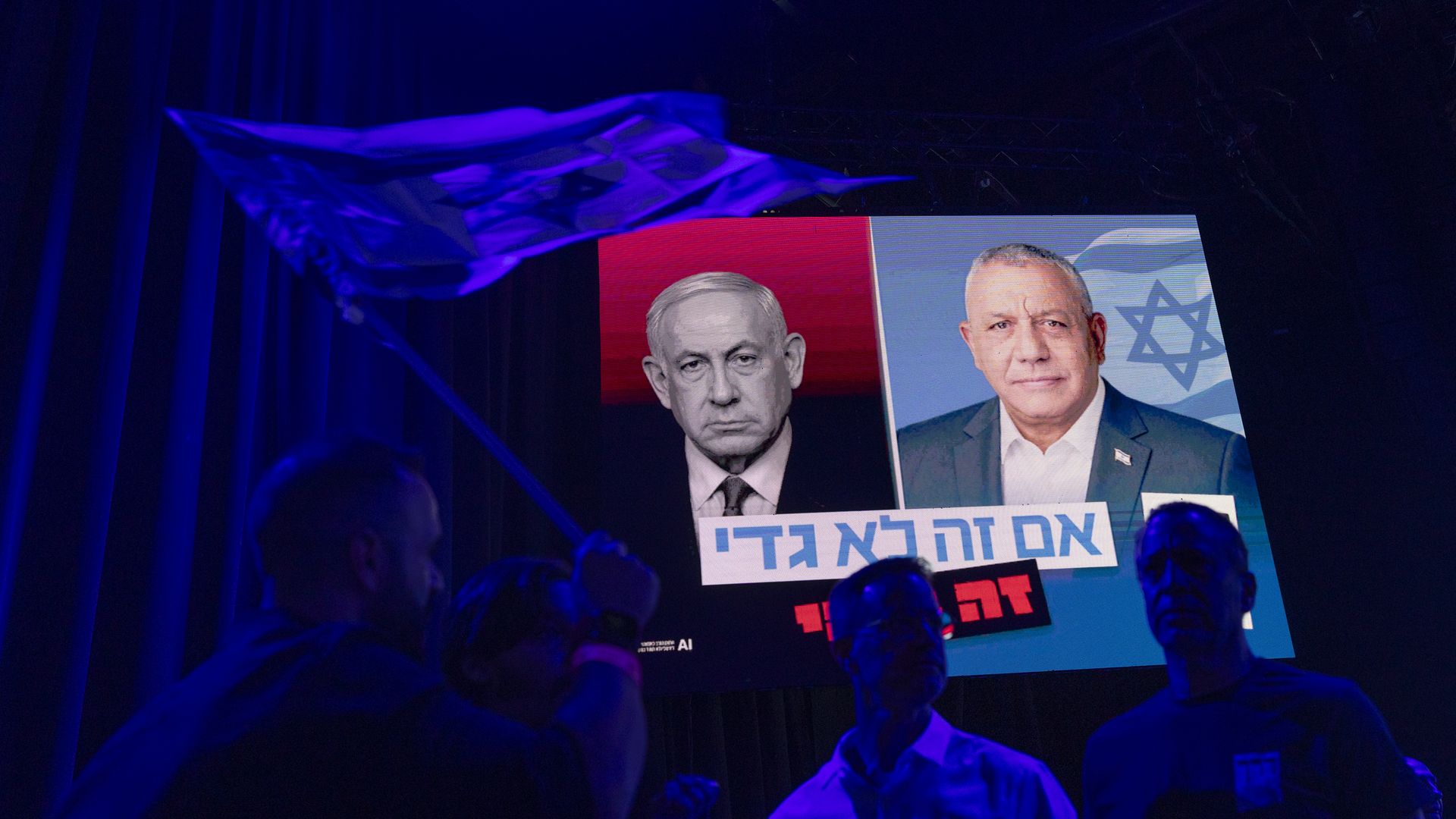
Images of Israeli Prime Minister Benjamin Netanyahu and opposition leader Gadi Eisenkot are displayed at a campaign rally in Tel Aviv on Oct. 25, ahead of Israel's Oct. 27 election. Photo: Kobi Wolf/Bloomberg via Getty Images
Prime Minister Benjamin Netanyahu is looking to keep his grip on power in Israel's elections on Tuesday, but keeping challengers at bay won't be easy.
The big picture: Unlike in the U.S., where voters choose their president in a separate election, Israelis vote for political parties, which then negotiate over who will lead the country.
State of play: Israeli voters will head to the polls today to decide.
- The main contenders for prime minister include incumbent Benjamin Netanyahu of the Likud party and Gadi Eisenkot, the former head of the Israel Defense Forces and leader of the Yashar opposition party.
- New polling shows the Yashar party trending ahead of Likud.
A new government could form quickly if a single party wins an outright majority.
- But no party has ever won the 61 seats needed for a majority, making coalition negotiations necessary. Those talks can take weeks or even months to complete.
Here's how the elections work.
How Israel's election system works
Zoom out: Israel's parliament, called the Knesset, uses a proportional representation voting system, meaning the number of seats parties earn in the government matches the number of votes they receive.
- The Knesset elections happen every four years, though early elections can happen at any time.
- The Knesset can also call to prolong its term. That has happened only once, in 1973, when the term was extended by two months during the Yom Kippur War.
How it works: A party must receive at least 3.25% of the national vote to win representation in the Knesset. That could mean between 150,000 to 180,000 votes in this election, depending on voter turnout.
What's next: Who will govern may not be known until well after election day, as parties make deals and concessions to form a government.
How Israel's prime minister is elected
Context: Party leaders form coalitions after the election, which determines who becomes prime minister if no party wins 61 seats.
After the election results are finalized, the president of Israel (currently Isaac Herzog) meets with representatives of each elected party to ask which Knesset member they want as prime minister.
- The president then tasks a Knesset member, typically the leader of the largest party in one of the political blocs or the politician most likely to secure a parliamentary majority, with forming a government.
The nominee then has roughly a month to negotiate or form a coalition that commands the majority.
- From there, the minister-designate must explain their platform and proposed government to the Knesset, which must approve with a vote of confidence for the prime minister to officially take office.
Yes, but: If negotiations fail, other politicians have a chance to form a government. If no one can secure enough support, Israel must hold another election within 90 days.
What happens to Netanyahu if his party loses power?
If Netanyahu loses the prime minister position, he may still remain a powerful figure in Israeli politics.
- He could remain Likud leader, even if another politician becomes prime minister. He may even become the opposition leader, as he did from 2021 to 2022.
- If no one can form a new governing coalition, Netanyahu would remain caretaker prime minister until another government takes office, which could happen as early as April.
