Top regulator says big banks rejected customers over politics

Add Axios as your preferred source to
see more of our stories on Google.
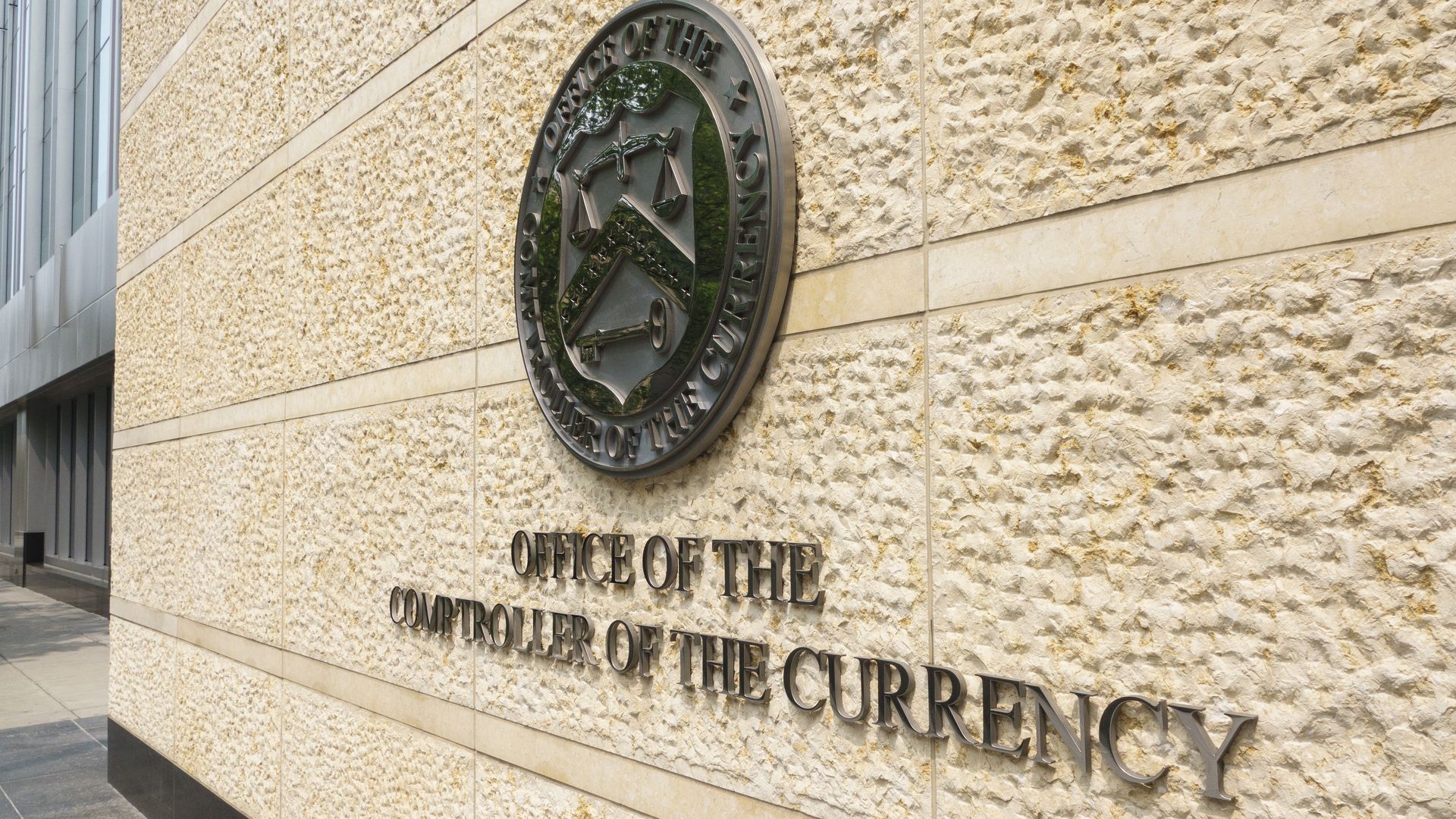
Photo: Kevin Carter/Getty Images
Some of the nation's largest banks denied financial services to liberal and conservative organizations over their political or religious views, according to a bank regulator report that documents specific cases.
Why it matters: The report shows instances of politically motivated debanking — a practice the Trump administration has accused major financial institutions of engaging in. But officials could not determine how widespread it was.
Zoom in: The Office of the Comptroller of the Currency (OCC) reviewed nearly 100,000 complaints and 420,000 pages of documents from nine major banks it supervises, including JPMorgan Chase, Bank of America and Capital One.
- The OCC found that the banks "largely lacked clear and measurable standards and objective risk-based criteria" for assessing reputational risks.
Between the lines: Building on preliminary findings released in December, the OCC detailed how political and reputational concerns influenced banking decisions between 2020 and September 2025.
According to the report:
- PNC declined a line of credit to a media company in 2021 after employees raised concerns about its conservative owners. One employee said the owners held public views "very contrary to PNC's beliefs/values," the report says.
- Capital One declined to serve organizations supporting abortion rights, a public education group whose political arm endorsed Democrats, and a gun rights organization.
- JPMorgan Chase repeatedly declined commercial services to a conservative retailer between 2021 and 2023. Employees later altered internal records to remove references to its political orientation.
- Bank of America sought to revive a relationship with a private prison customer after President Trump returned to office, despite little change in the underlying reputational risks.
Yes, but: The OCC acknowledged it could not comprehensively quantify debanking or its costs to affected customers.
- Not every case established that political discrimination caused a denial of services.
- TD Bank raised concerns about an anti-immigration nonprofit's views when considering a federal pandemic relief loan. But the group ultimately withdrew its application because it didn't qualify for the program.
What they're saying: "Today's report provides irrefutable evidence that the nation's largest banks have denied, debanked and discriminated against customers and lawful businesses," OCC chief Jonathan Gould said in a statement.
- Gould said the agency is considering further regulatory and supervisory changes, warning that banks' recent reforms may not go far enough.
The other side: Banks are legally required to vet customers for financial crime risks, so decisions that regulators view as political discrimination may also reflect legitimate compliance concerns.
- The OCC acknowledged that anti-money-laundering requirements can justify denying services, but warned that banks could also use compliance concerns as a "pretext" for turning away customers for unrelated reasons.
- Representatives for the banks did not immediately respond to a request for comment.
The big picture: Trump has made combating politically motivated debanking a priority of his second term, accusing major banks of denying services to conservatives over their beliefs.
- The president signed an executive order last year directing federal banking regulators to investigate the practice and take steps to prevent it.
- Trump sued JPMorgan Chase and the bank's chief Jamie Dimon in January, alleging the bank closed his accounts for political reasons. JPMorgan denies the allegation.
