Flu is showing up earlier this year

Add Axios as your preferred source to
see more of our stories on Google.
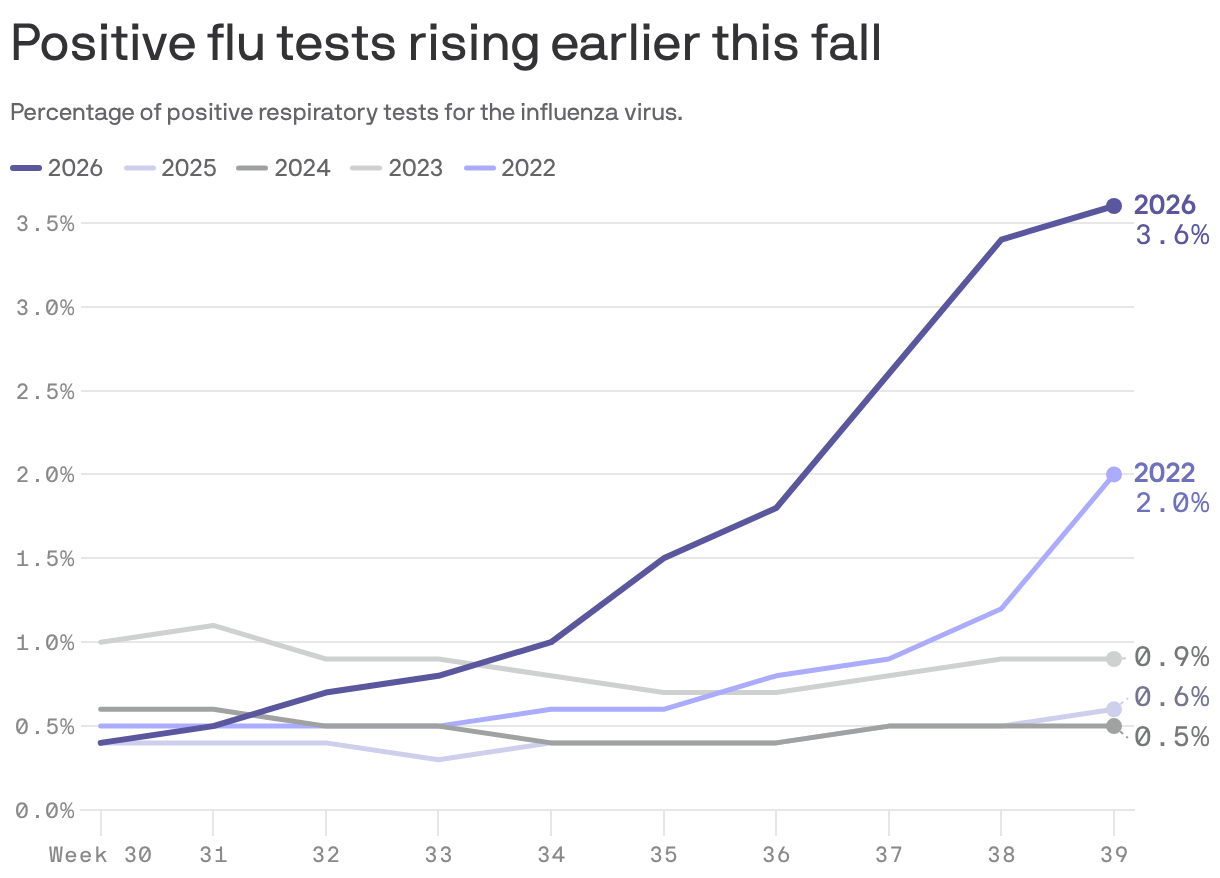
Early signs suggest flu season is starting sooner than in recent years.
Why it matters: If you're thinking about getting your flu shot, health experts suggest it's time to roll up your sleeve.
By the numbers: About 3.6% of flu tests came back positive in early October, compared with just 0.6% at the same point last year, according to CDC data.
- The fine print: CDC's published methodology shows no change in flu test positivity calculations.
Zoom out: Additional data, including outpatient reports, suggest flu activity is on the rise.
- The highest percentages of medical visits for flu-like illness are in children.
- Meanwhile: RSV activity remains very low in most of the country, while COVID activity is still elevated in some regions but declining nationally, per the CDC.
What they're saying: "'Get your flu shot now' is my best advice," Trish Perl, a professor of infectious diseases and epidemiology at UT Southwestern, tells Axios.
- It generally takes up to two weeks after vaccination for the immune system to develop maximum immune response.
The intrigue: This season, the new U.S.-approved mRNA flu vaccine is available to adults 50 and older.
- The move comes as the Trump administration has reshaped federal vaccine policy and put greater emphasis on vaccine safety and injury reporting.
- Yes, but: Serious reactions caused by vaccines are rare, and a health problem reported after vaccination does not necessarily mean the vaccine caused it, CDC has said.
The bottom line: The early rise in flu positivity is worth watching, but it does not yet tell us how severe the "reliably unreliable" flu season — as Perl describes it — will be.
