Tariff price increases can take a year to fully show up, New York Fed says

Add Axios as your preferred source to
see more of our stories on Google.
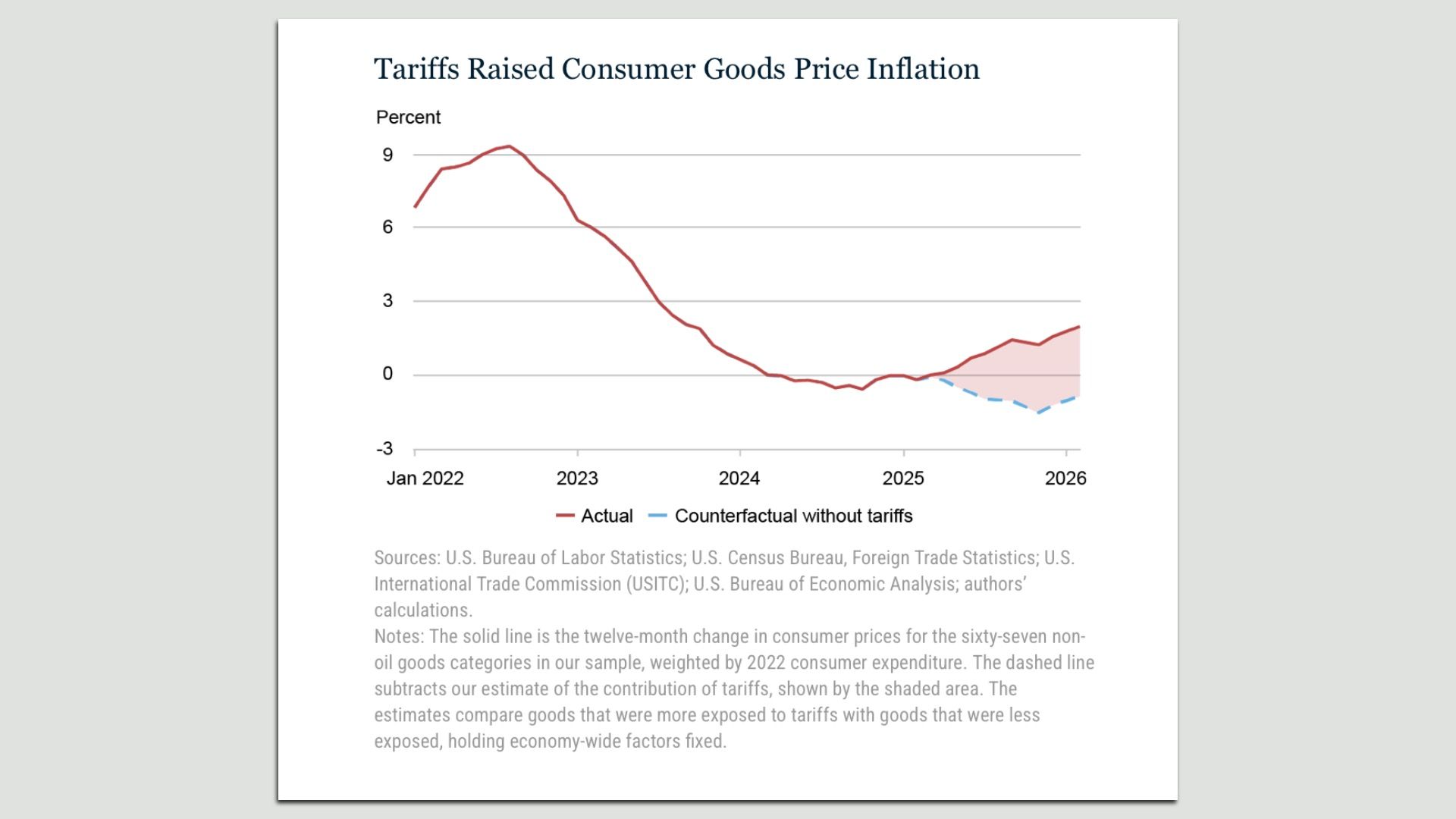
Screenshot: Federal Reserve Bank of New York
Tariff inflation has a long tail. Higher import costs can ripple through U.S. supply chains, with effects on domestically produced goods emerging as much as a year later, according to Federal Reserve Bank of New York researchers.
Why it matters: The inflation hit from 2025 tariffs is fading, but newer levies are still feeding through to prices as inflation is already too high for policymakers' comfort.
What they're saying: "For every percentage point increase in average tariffs, consumer goods prices increase by about a quarter of a percent after one year," New York Fed economists Mary Amiti, Sebastian Heise and David E. Weinstein wrote.
- The authors previously found that U.S. companies and consumers bore most tariff costs earlier this year — research that Trump economic officials sharply criticized.
How it works: Tariff price effects unfold in stages.
- Nearly 90% of a tariff increase passes through to import prices almost immediately.
- Retail prices move more slowly: About half the direct effect appears within three months, and nearly all within six months.
- Effects on U.S.-made goods more than double between six and 12 months. About one-third of the overall price increase comes from those goods.
State of play: The researchers estimate that President Trump's tariffs added 2.9 percentage points to consumer goods inflation by February 2026 (excluding services and oil).
- Without them, goods prices would have fallen slightly.
- The effect on consumer goods prices peaked near 3% in February and eased to about 2% by August after a Supreme Court ruling struck down Trump's emergency powers tariffs. Those were replaced by a lower 10% import tax.
What to watch: The economists expect tariff price pressures to pick up again as Canadian levies continue to filter through, with higher auto tariffs taking effect next year.
