Vinod Khosla talks Seahawks, AI and agents

Add Axios as your preferred source to
see more of our stories on Google.
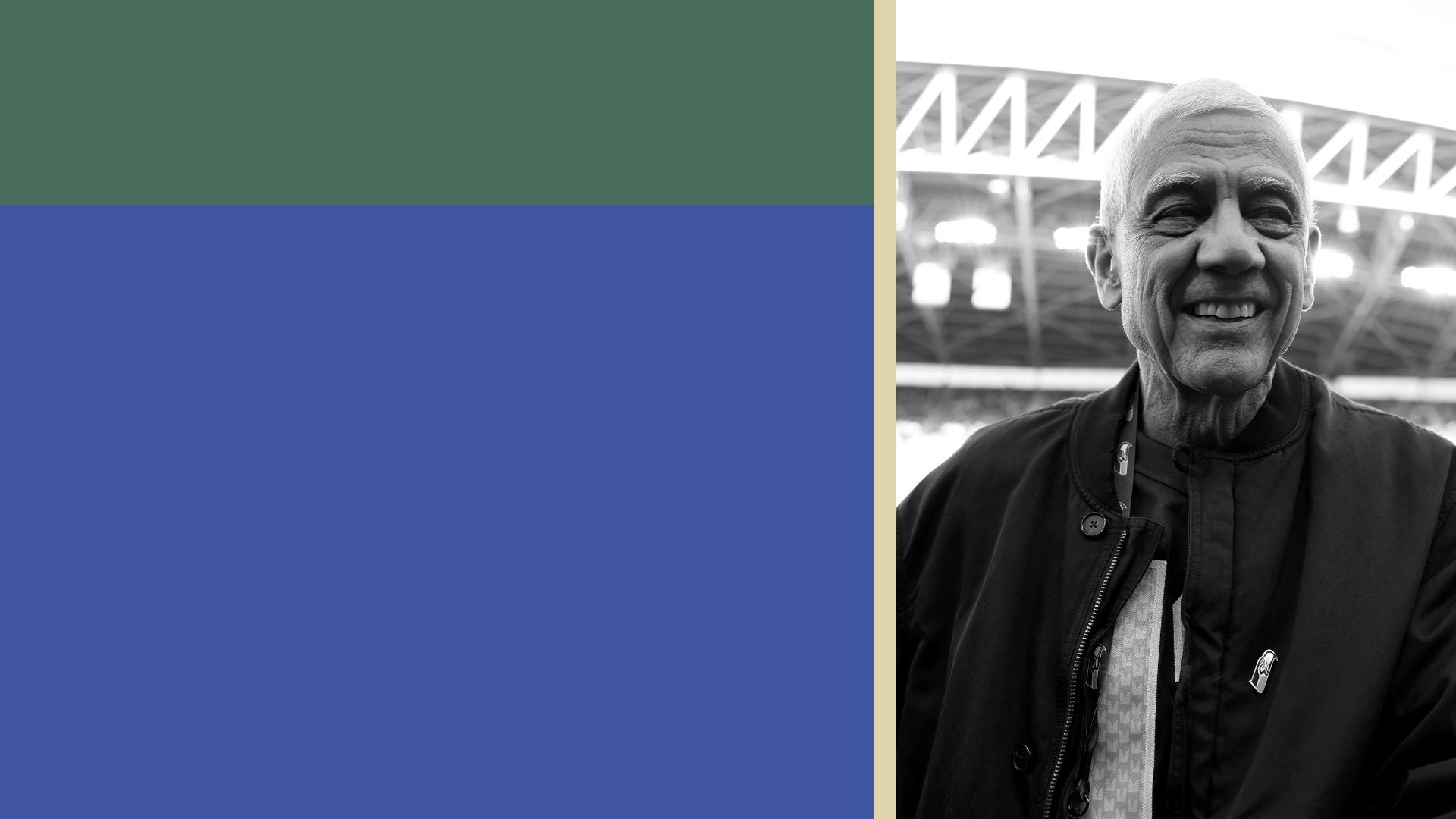
Photo collage: Dan Primack/Axios. Photo: Steph Chambers/Getty Images
Axios spoke on the phone with Vinod Khosla, the legendary venture capitalist, entrepreneur and newly minted NFL owner.
- What follows is a transcript of the conversation, which preceded the Factory/Cognition dustup, lightly edited for clarity and brevity:
🏈 Seattle Seahawks
Khosla last month paid a record $9.6 billion to buy the NFL club from Paul Allen's estate, after having spent several years as a minority owner of the San Francisco 49ers.
Axios: Had you been looking to buy an NFL team?
Khosla: No. This was the first one. And it wasn't really planned. I was with Joe Lacob, who's a friend and owns the [Golden State] Warriors, just a few months ago he said, 'You should really look at the Seahawks.'"
- "I told him that I hadn't even actually considered owning an NFL team, but we had the conversation and then began discussing it with my son — he and I have probably gone to half of all 49ers home games together over the past 28 years. My whole family loves football, but me and my son especially have a real passion for it."
- "It wasn't like this 10-year plan. It was a combination of passion, interest, and the convenience of having something that's an hour-and-20-minute flight. I wouldn't buy a team in Philadelphia or Washington, D.C. And the 49ers weren't going to be for sale any time soon."
Do you worry about instinctively cheering a 49ers touchdown when they play Seattle, and being caught on camera?
"No, I'm not confused."
Did the CTE issue give you any pause in buying a team?
"It's a risk that we looked at."
You've talked about being a steward of the Seahawks and preserving what Paul Allen built. But I don't think you've formally committed to keeping the team in Seattle long-term. Will you make that commitment?
"I will never say never. Will this team be in Seattle 500 years from now? But I have no current plans to change anything about the team, including the coach, president, operation or Lumen Field. It all functions well."
When that Lumen lease is up in 2032, the stadium will be around the age that other owners talk about renovations or new stadiums...
"Three months ago I wasn't even thinking about buying an NFL team. Now I ended up with a Super Bowl-winning team with one of the most amazing fan bases. But I know very little about running a team. I don't think I'll do anything but learn for a while."
✨ Artificial Intelligence
Khosla Ventures was an early investor in OpenAI, and has dozens of other AI portfolio companies.
What did you make of what came out of this week's White House meeting with top AI execs?
"The most interesting risk in AI is not the OpenAI and Anthropic models. It's open-source models. They're way more dangerous because they can't be monitored.
- "You go into Astra and try to do something like design an explosive or virus, they immediately know it. If you're doing it with Qwen, nobody knows it. Nobody is even monitoring. I don't know if this nuance has really come across."
- "Open-source should be allowed to run, but it should run on known platforms that can monitor what it's being used for, in the U.S. at least."
Some people hear that and just say you're talking your book, or endorsing regulatory capture.
"Bullshit. They can say that. They can say everyone is greedy and don't care about what happens to the planet. But much of my life has been about doing things that are impactful for the climate, and I tell my LPs that I care about impact more than I care about profits — even though we've delivered a lot of profits to them."
How do you square being a climate investor with being an AI investor, given the power needs?
"Yes, energy use is a problem. But it has spurred so much energy investment in things like fusion and super-hot geothermal. We're going to get a lot more clean energy sources because the demand finally is there for nonlinear growth. Otherwise it's all met by coal plants and nobody's shutting down coal plants, no matter what the environmentalists or I say."
- "Is this a problem between now and 2030? Yes. Is it a problem in 2035? No."
🕵🏻 Agents
Khosla recently suggested that trust, not data, will be key to determining which agent-makers succeed and which fail.
Isn't trust one of the few advantages that incumbents have over startups?
"Do you trust Facebook? Would you give them your credit card information?
- "The question will be if the business model is aligned with the consumer or not. I said several years ago that a personal agent for consumers is one of the largest opportunities if they truly represent the consumer against the onslaught of marketers that are trying to get consumers to do things, buy things, read things, and believe things."
Is that something you think the startup has to make explicit to the consumer?
"Yeah. We're not selling you to advertisers. That's not our market. We're serving you."
