SpaceX brings Starship home early after first orbital flight

Add Axios as your preferred source to
see more of our stories on Google.
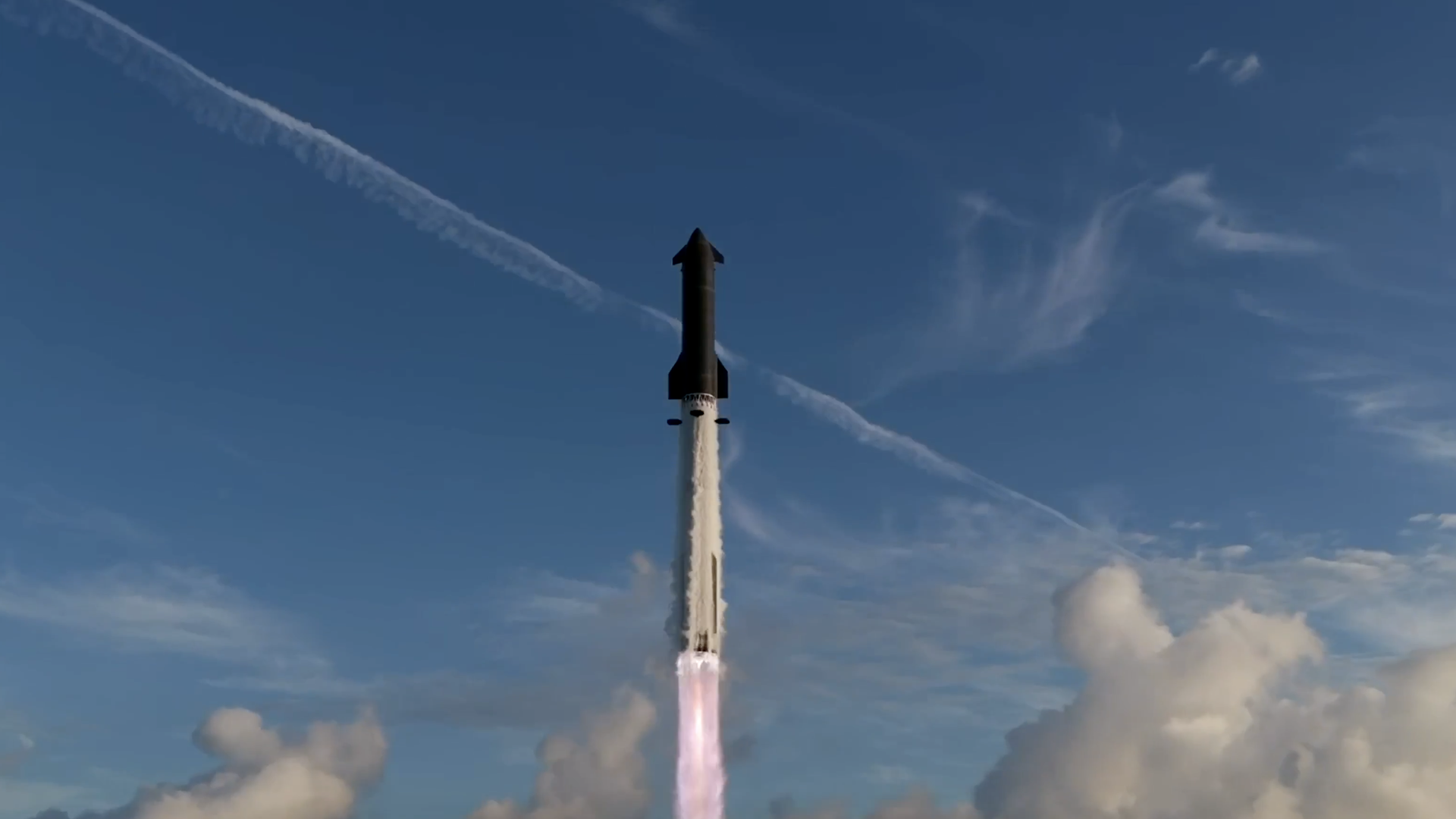
Screenshot: SpaceX
SpaceX's next-generation Starship rocket came back to Earth earlier than planned after its first orbital flight Monday, with an explosion visible on the company's livestream just after touchdown in the Pacific Ocean.
Why it matters: The massive, fully-reusable Starship is key to SpaceX's commercial spaceflight ambitions, while NASA is counting on a modified version for use as a lunar lander in its Artemis program.
Driving the news: Starship launched from South Texas just before 9 a.m. ET on a planned test flight of about 10 hours.
- It was set to orbit Earth about six times before splashing down in the Pacific Ocean, west of Chile. But SpaceX decided to bring it back to Earth after only about 3 hours.
- As part of the mission, Starship deployed 26 of the company's new, better-performing Starlink V3 internet satellites.
Zoom in: Starship's first-stage Super Heavy booster splashed down in the Gulf of America shortly after launch.
- SpaceX says this Super Heavy was modified after ice clogging issues interfered with a splashdown attempt on the last test flight.
What they're saying: "Flight tests until this point have intentionally flown passively safe suborbital trajectories to maximize public safety while allowing for maximum learning," SpaceX says in a mission summary.
- "By going to orbit, the next phase of developing Starship to be fully and rapidly reusable can begin."
What's next: SpaceX plans to eventually "catch" Starship in the arms of its launch tower — a feat it's accomplished with Super Heavy, but not Starship — but isn't making the attempt this time.
Editor's note: This story has been updated with the latest developments.
